

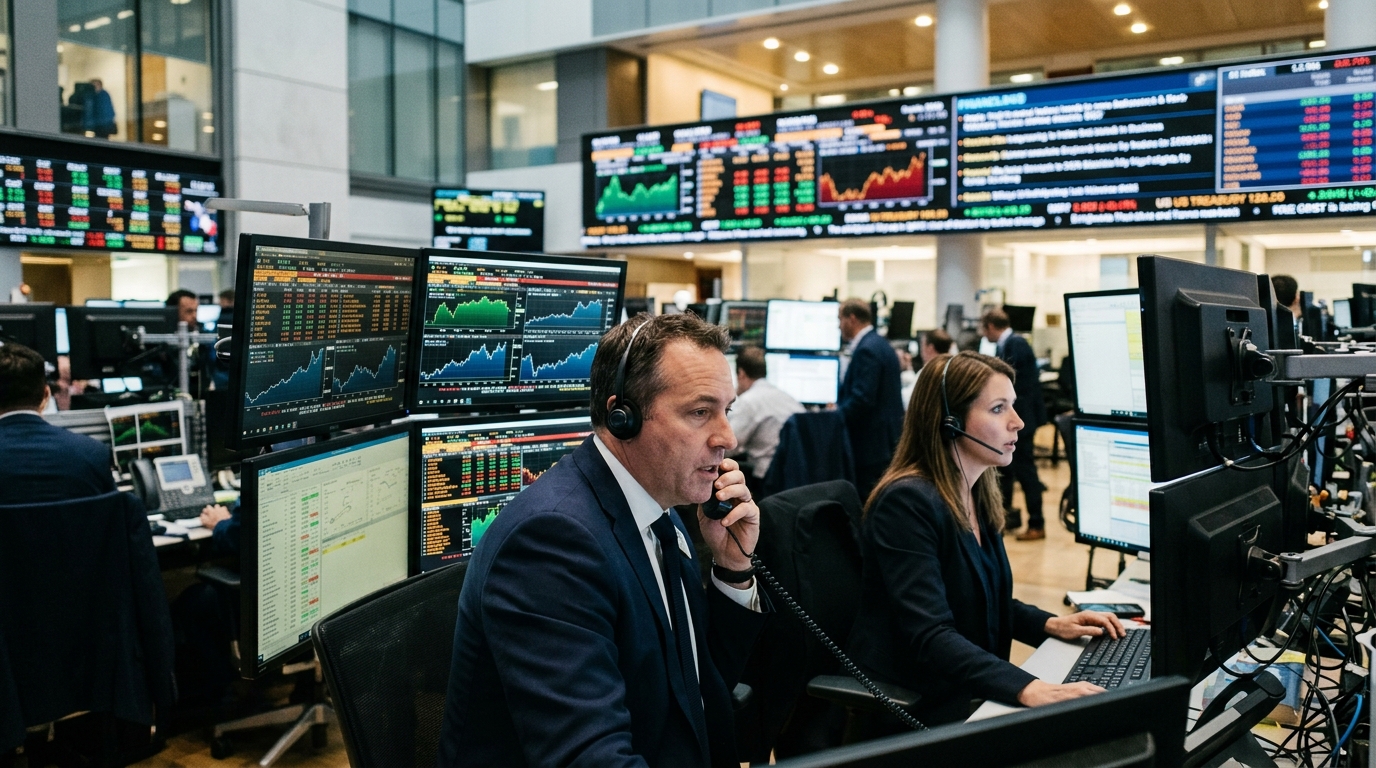
For decades, the investment playbook for Big Tech was straightforward: buy equities for growth and ignore bonds, as these companies were essentially "banks" sitting on mountains of cash. However, the dawn of Generative AI is upending this dogma. As tech titans—Microsoft, Alphabet, Meta, and Amazon—embark on an unprecedented capital expenditure (CapEx) cycle to build the infrastructure of the future, the bond market is emerging as a critical barometer for the industry's health and sustainability.
The Physicality of Digital Intelligence
Artificial Intelligence is often discussed in terms of software and neural networks, but its physical reality is massive and capital-intensive. It requires sprawling data centers, millions of specialized Nvidia GPUs, and, crucially, a continuous power supply that is stretching national grids to their breaking points. According to recent forecasts, Big Tech's aggregate CapEx for 2024 and 2025 is expected to exceed $200 billion annually. This scale of investment is so vast that even the most profitable companies on Earth cannot fund it solely through free cash flow without compromising their liquidity or their aggressive share buyback programs.
This is where the bond market enters the frame. Investors are no longer just scrutinizing quarterly earnings calls; they are closely monitoring corporate bond yields and spreads—the premium these companies pay over risk-free government debt. If the bond market begins to price in higher risk for a tech giant, it serves as an early warning signal that the AI spend might not be generating returns fast enough to cover the mounting debt service.
Interest Rates and the New Market Discipline
Unlike equity investors, who are often captivated by the narrative of future market dominance, bondholders are inherently more conservative. They care about a company's ability to meet its obligations. Silicon Valley's shift toward issuing debt to finance AI clusters introduces a new form of "market discipline" to the sector. When borrowing costs rise—as they have under the Federal Reserve's restrictive policy—the margin for error narrows significantly.
Analysts point out that the relationship between interest rates and tech stocks has become more nuanced. A spike in U.S. Treasury yields no longer just pressures tech stocks via the discount rate applied to future earnings; it also impacts the direct cost of financing the AI buildout. If a company like Microsoft or Google has to pay 5% or 6% to borrow billions, the return on investment (ROI) for AI projects must be substantially higher to justify the capital allocation. The era of "growth at any cost" is being replaced by a calculated assessment of yield versus risk.
Energy Constraints as Financial Risk
One factor often overlooked by traditional equity analysts but closely watched by the fixed-income market is the energy bottleneck. Building a data center is the relatively easy part; securing the gigawatts of electricity required to run it is the challenge. Tech companies are increasingly signing long-term Power Purchase Agreements (PPAs) and even investing in nuclear energy projects. These commitments represent long-term liabilities that bond investors analyze with a magnifying glass.
Furthermore, the bond market provides a reality check on the "AI hype cycle." While a CEO's vision might send a stock price soaring, the credit rating agencies and bond traders look at the debt-to-EBITDA ratios and interest coverage. If the capital intensity of AI leads to a deterioration in credit quality, the cost of capital will rise, creating a feedback loop that could slow down the very innovation the market is cheering for.
In conclusion, we are entering a new era where technology is no longer an "asset-light" sector. It has transformed into a capital-heavy industrial play. Like any heavy industry, its fate is now inextricably linked to the mechanics of the debt market. Investors who ignore the signals from the bond market risk missing the bigger picture: that the AI revolution will be won or lost not just in the code, but in the cost of the capital that fuels it.





