

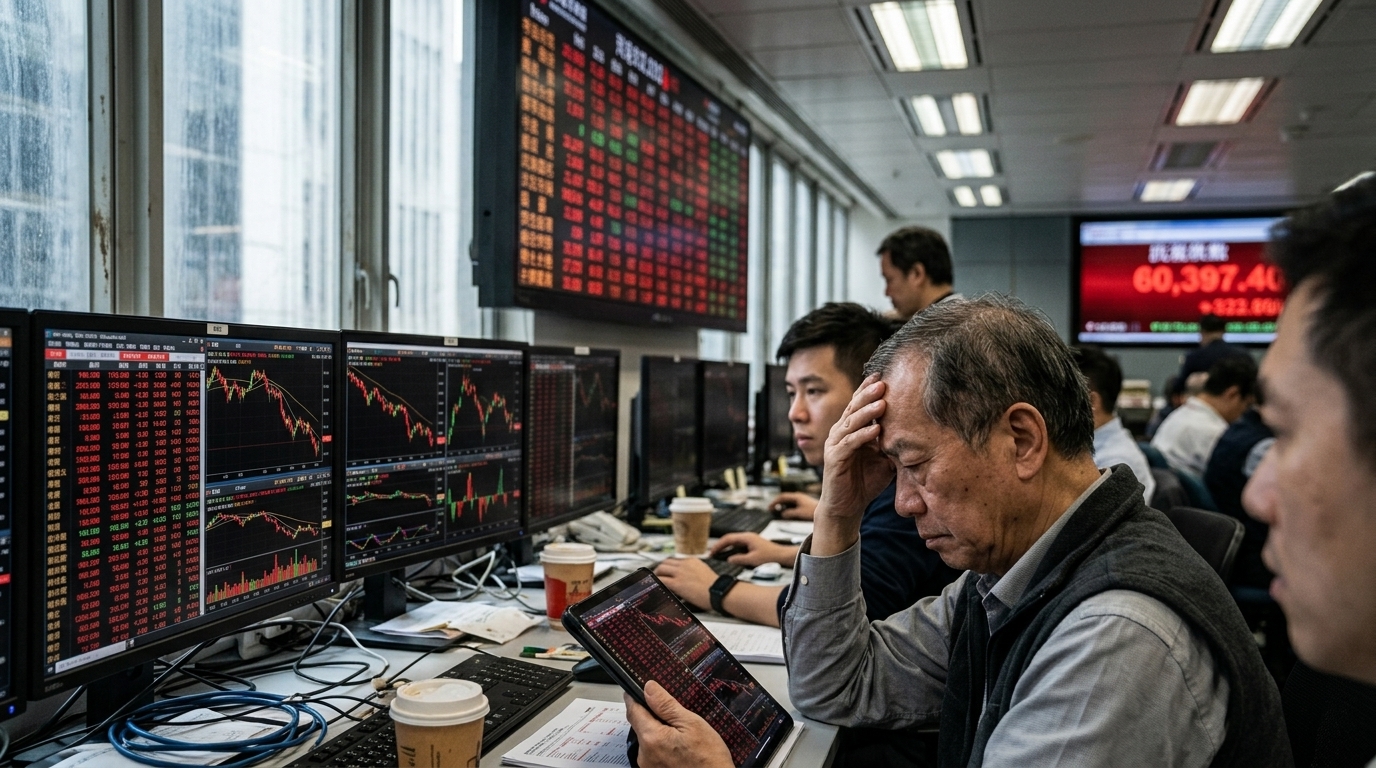
June 10, 2026, will likely be recorded as the day when the market's "faith" in Artificial Intelligence faced its harshest test yet. Following three years of relentless growth, Asian tech markets found themselves in the eye of the storm, with shares of TSMC, Samsung, and SoftBank recording double-digit losses within hours. What began as a simple correction is evolving into a profound existential crisis for the semiconductor industry and the venture capital that bet everything on AI.
The Fall of Titans: TSMC and Samsung
Taiwan Semiconductor Manufacturing Co. (TSMC), the backbone of global chip production, saw its market capitalization shrink dramatically. Despite positive results in previous quarters, analysts are now warning of "capex fatigue." Major US tech firms, the primary customers of TSMC, are beginning to reconsider the pace at which they purchase new AI processors, as their own revenues from AI services are not growing at the expected rate.
In Korea, Samsung Electronics took an equally heavy hit. The company's struggle to dominate the High Bandwidth Memory (HBM) market—essential for training large language models—has raised doubts about its ability to compete with SK Hynix. The drop in Samsung's stock reflects a broader fear: that AI hardware has reached a saturation point before software has had the chance to prove its value in the real economy.
SoftBank’s Gamble and the Vision of ASI
The case of SoftBank is particularly interesting. Masayoshi Son, who recently proclaimed that his destiny is to bring Artificial Super Intelligence (ASI) to the world, is seeing his Vision Fund under pressure. SoftBank has invested billions in startups promising a revolution through AI, yet many of these remain unprofitable. The market seems to be punishing a lack of realism and excessive exposure to a future that, while promising, still feels distant.
- Investors now demand a clear roadmap for monetization.
- Geopolitical tensions surrounding Taiwan add a "risk premium" that many are unwilling to pay.
- Rising interest rates in some Asian economies make cheap money for risky investments a thing of the past.
Is It Truly a Bubble?
The discussion about the "AI bubble" is not new, but today it gains new momentum. Unlike the dot-com bubble of 2000, today's tech leaders have massive cash reserves and real products. However, the valuation of these companies was based on "perfect growth" scenarios. When reality—in the form of reduced demand or technical difficulties in implementing AI at scale—knocks on the door, the fall is inevitable.
"We are not seeing the end of AI, but the end of investor innocence. The technology will continue to evolve, but the era where every company with '.ai' in its name saw its stock double is definitively over," says a leading analyst from Singapore.
In conclusion, the plunge in Asian markets serves as a wake-up call. Artificial Intelligence remains a transformative force, but the path to its universal adoption will be fraught with obstacles, volatility, and harsh economic reality. The winners of the next phase will not be those who promise the future, but those who can finance it sustainably.





