

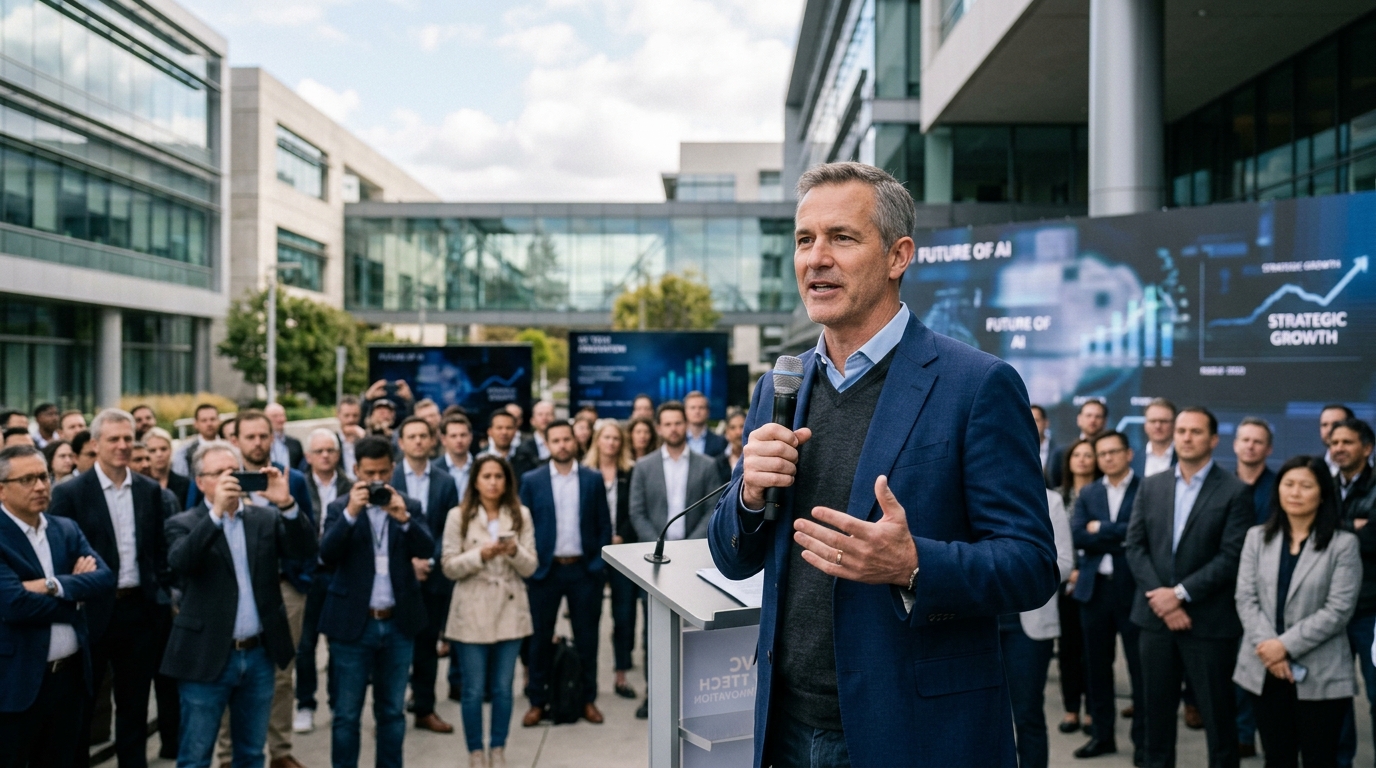
In the high-stakes world of venture capital, the hunt for the next 'unicorn' has traditionally relied on intuition, networking, and exhaustive manual analysis. However, Bessemer Venture Partners’ recent move to appoint its first Chief AI Officer (CAIO) serves as the prologue to a radical transformation in the VC industry. The news, initially reported by Bloomberg, is not just about a high-level hire; it is the formal admission that Artificial Intelligence (AI) is evolving from a speculative investment target into the foundational bedrock of the investment process itself.
From Investing in AI to Operating with AI
For decades, VCs functioned as the gatekeepers of capital that fueled technological innovation. Today, these same institutions are being forced to innovate internally to survive. The role of the Chief AI Officer at Bessemer is not limited to evaluating startups that use AI. Instead, the mission is to integrate Large Language Models (LLMs) and predictive analytics into every facet of the firm’s operations: from identifying early-stage opportunities to optimizing portfolio management.
The challenge is immense. With thousands of pitch decks arriving daily, a firm’s ability to filter the 'noise' and identify true gems will determine its returns for the next decade. The CAIO is tasked with building proprietary systems that can analyze market data, social media trends, and GitHub code activity in real-time, providing partners with analytical 'superpowers' that no single human could possess.
The Battle for Alpha in the Data Age
In financial theory, 'alpha' represents an investor’s ability to beat the market. In the past, alpha was derived from privileged information or close relationships with founders. Today, alpha is shifting toward the speed and precision of data processing. Other firms, such as EQT with its 'Motherbrain' system, have already led the way, using algorithms to identify companies before they even begin seeking funding.
- Automated Deal Sourcing: Using AI to track user traffic on new apps and hiring patterns across industries.
- Deep Due Diligence: Rapidly comparing a startup’s financials against thousands of global competitors.
- Portfolio Support: Providing AI-driven tools to funded companies to help them scale their own operations efficiently.
However, this technological arms race carries risks. If every major VC uses similar AI models, there is a danger of 'investment homogenization.' If algorithms are trained on the same historical data, they may replicate the same biases, funding only specific types of founders and overlooking the unorthodox innovation that often emerges from the fringes.
The Human Element and the Ethics of Automation
Despite the rise of the CAIO, Bessemer and its peers insist that AI will not replace the investor but augment them. The final decision on a multi-million dollar investment remains an act of trust in a human founder. AI can confirm that a market is large and a product is functional, but it cannot (yet) evaluate the grit, ethical integrity, or vision of a leader during times of crisis.
"Artificial Intelligence is the new electricity for the financial sector. Those who do not plug into the grid will be left in the dark," market analysts suggest.
In conclusion, the appointment of a Chief AI Officer at a firm like Bessemer marks the official start of an era where efficiency will be measured by algorithmic power. For startup founders, this means their first 'meeting' with an investor might not be with a human, but with an algorithm evaluating their digital footprint. The challenge for VCs is to maintain their human-centric nature while embracing the cold logic of data-driven decision-making.





