

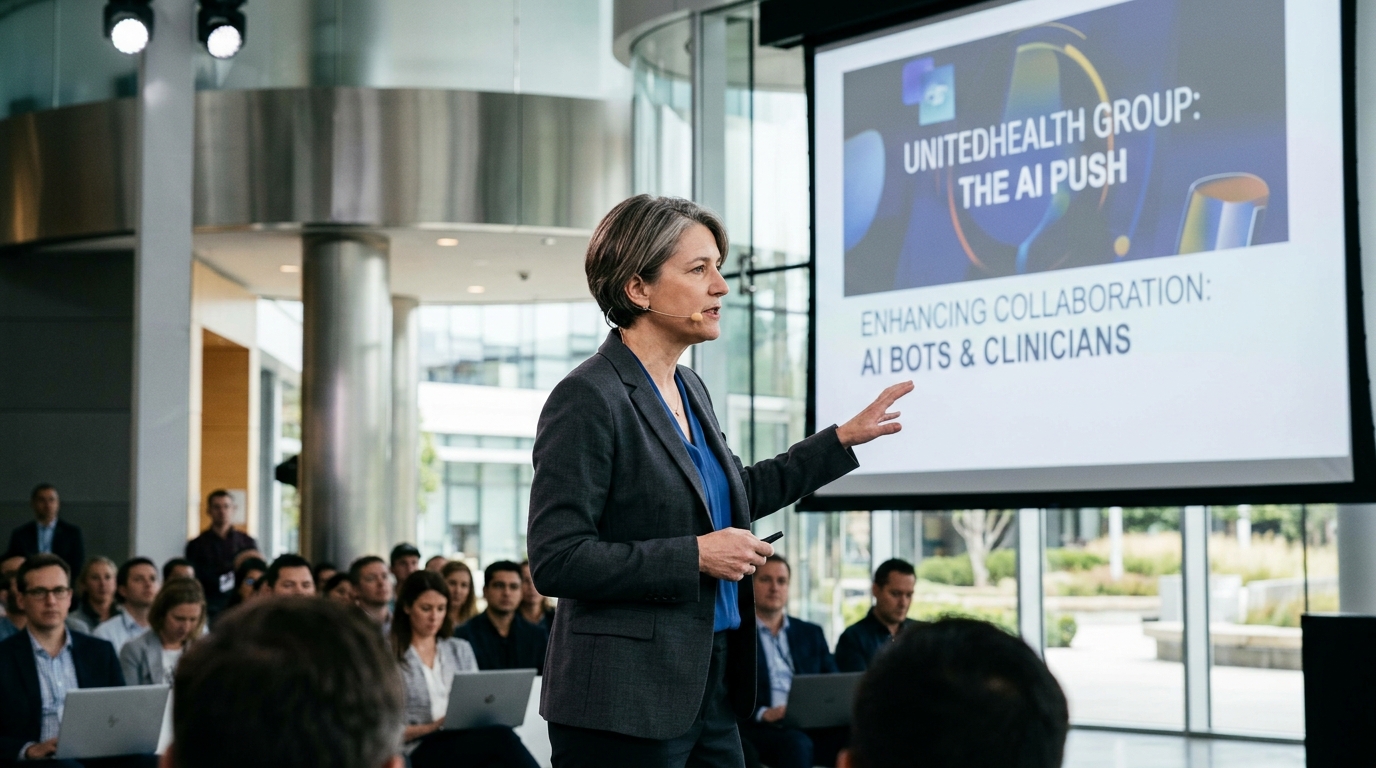
In an era where healthcare bureaucracy threatens to stifle both providers and patients, UnitedHealth Group Inc. (UHG) has decided to play a massive hand: a $3 billion investment in Artificial Intelligence. This staggering expenditure isn't just about backend data processing; it's bringing AI agents to the front lines of medical communication, with bots now making phone calls to doctors' offices to schedule patient appointments.
Automating the Physician's Daily Grind
The move by UnitedHealth, the world's largest health insurer, serves as a bold experiment in how generative AI can replace the most tedious administrative tasks. The system, currently in pilot phases, allows digital assistants to converse with medical office staff, confirm availability, and book appointments on behalf of policyholders. The goal is to reduce the "friction" that often leads to delays in patient care and administrative burnout.
However, the AI application doesn't stop at scheduling. According to internal reports, the technology is now being used to read and summarize medical charts. As UnitedHealth nurses travel to patients' homes for clinical visits, the AI reads aloud key highlights of the patient's history through a voice interface. This allows clinicians to prepare for the visit without having to flip through dozens of digital pages while driving or prepping equipment.
From Controversy to Acceptance
This pivot comes at a critical juncture for UnitedHealth. In recent years, the company faced intense scrutiny and lawsuits over its use of the NaviHealth algorithm. That specific tool was accused of automatically denying coverage for post-acute care for elderly patients, allegedly prioritizing cost-cutting over clinical necessity. The new $3 billion investment appears to be an attempt to rebrand AI as a supportive tool rather than a "digital executioner" of benefit cuts.
- Analyzing millions of customer calls to identify root causes of systemic complaints.
- Automating preventative care scheduling to lower long-term hospitalization costs.
- Deploying voice assistants to provide real-time guidance for home-health nurses.
UnitedHealth argues that AI can help identify gaps in care—for instance, when a diabetic patient misses their regular screenings. By analyzing vast datasets, the system can trigger a call (either by a bot or a human) to get the patient back on track. This theoretically improves population health outcomes while simultaneously protecting the insurer's bottom line by avoiding expensive emergency interventions.
The Risks and the Human Touch
Despite the promises of efficiency, the concept of bots talking to doctors raises significant concerns. There is the persistent risk of AI "hallucinations," where the system might convey incorrect information regarding medication dosages or patient history. Furthermore, many physicians worry about the further dehumanization of medicine. If an AI bot speaks to a medical receptionist who might eventually use an AI bot to answer, we enter a surreal loop where machines negotiate human health amongst themselves.
"The challenge is not to replace the human, but to remove the bureaucratic weight that prevents them from being human," UnitedHealth executives claim.
In conclusion, UnitedHealth’s mammoth investment is the largest bet in the history of digital health. If successful, it will set the standard for how insurance companies operate in the 21st century. If it fails or reveals new flaws in algorithmic judgment, it will embolden critics calling for stricter regulatory oversight of the software that manages the life and death of millions.





