

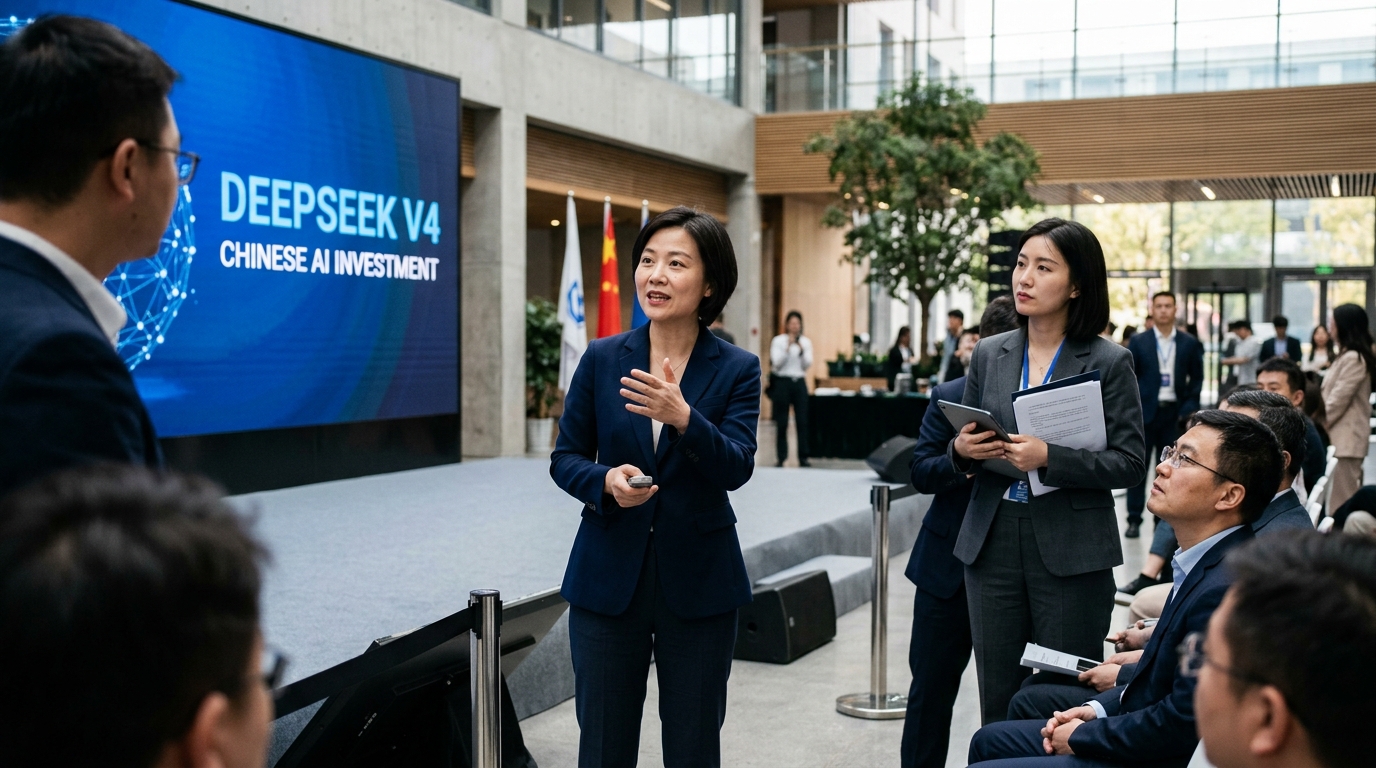
In the wake of the global disruption caused by the emergence of DeepSeek models, investment bank UBS has released a comprehensive report analyzing the transformation of the Chinese AI ecosystem. The launch of DeepSeek V4 is not merely a technological upgrade; it is the symbol of a strategic shift toward efficiency and domestic self-reliance. According to UBS analysts, DeepSeek's success is accelerating the adoption of domestic computing resources, creating a new investment landscape where Alibaba (09988.HK) and Zhipu AI emerge as dominant players.
The Architecture of Efficiency as a Response to Constraints
DeepSeek V4 continues the tradition of its predecessors, utilizing the Mixture-of-Experts (MoE) architecture to achieve GPT-4 level performance at a fraction of the training and operational costs. For China, this is not just a matter of economics, but of survival. Under the pressure of US export restrictions on high-end semiconductors (such as NVIDIA's H100), the ability to produce powerful AI with fewer computing resources is the 'holy grail' of Chinese technology.
The UBS report highlights that V4 has been specifically optimized to run on domestic infrastructure, such as Huawei's Ascend processors and Moore Threads' solutions. This 'convergence of software and hardware' allows Chinese companies to bypass embargoes, proving that innovation can flourish even under restrictive regimes. UBS notes that demand for domestic cloud computing services, particularly from Alibaba Cloud, is expected to skyrocket as more enterprises rush to integrate DeepSeek into their operations.
Alibaba and Zhipu AI: The Protagonists of the New Market
UBS maintains a particularly bullish stance on Alibaba, considering the group to hold a unique market position. Alibaba does not only offer its own model (Qwen) but also serves as the primary infrastructure provider for the DeepSeek ecosystem. Alibaba's ability to offer scalable computing power at competitive prices makes it the undisputed leader in the Chinese AI cloud market.
Meanwhile, Zhipu AI, one of the 'four new tigers' of Chinese AI, is gaining investor confidence. Zhipu has managed to create a comprehensive technology stack, from the base model to enterprise applications. UBS estimates that Zhipu AI will benefit from the increased acceptance of open-source models and the need of Chinese companies for local support and customization, avoiding reliance on Western APIs.
Impact on the Global Chessboard
The UBS analysis is not limited to the narrow confines of the Chinese market. It points out that the 'DeepSeek effect' is forcing global giants like OpenAI and Google to rethink their strategies. If China can produce world-class AI at 1/10th of the cost, then the narrative that 'more compute always leads to better AI' begins to crumble. This changes the industry's economics, shifting value from brute force to clever architecture and algorithm optimization.
- Alibaba Cloud is boosting its profit margins by optimizing DeepSeek on its own infrastructure.
- Zhipu AI is establishing itself as the preferred partner for the state sector and large Chinese enterprises.
- Domestic chipmakers see their first real opportunity to replace NVIDIA on a massive scale.
In conclusion, the UBS report serves as a vote of confidence in the resilience of Chinese technology. Despite geopolitical challenges, the arrival of DeepSeek V4 marks a new phase of maturity, where the emphasis is on commercial application and energy efficiency—elements that will define the winner of the next decade in the field of artificial intelligence.





