

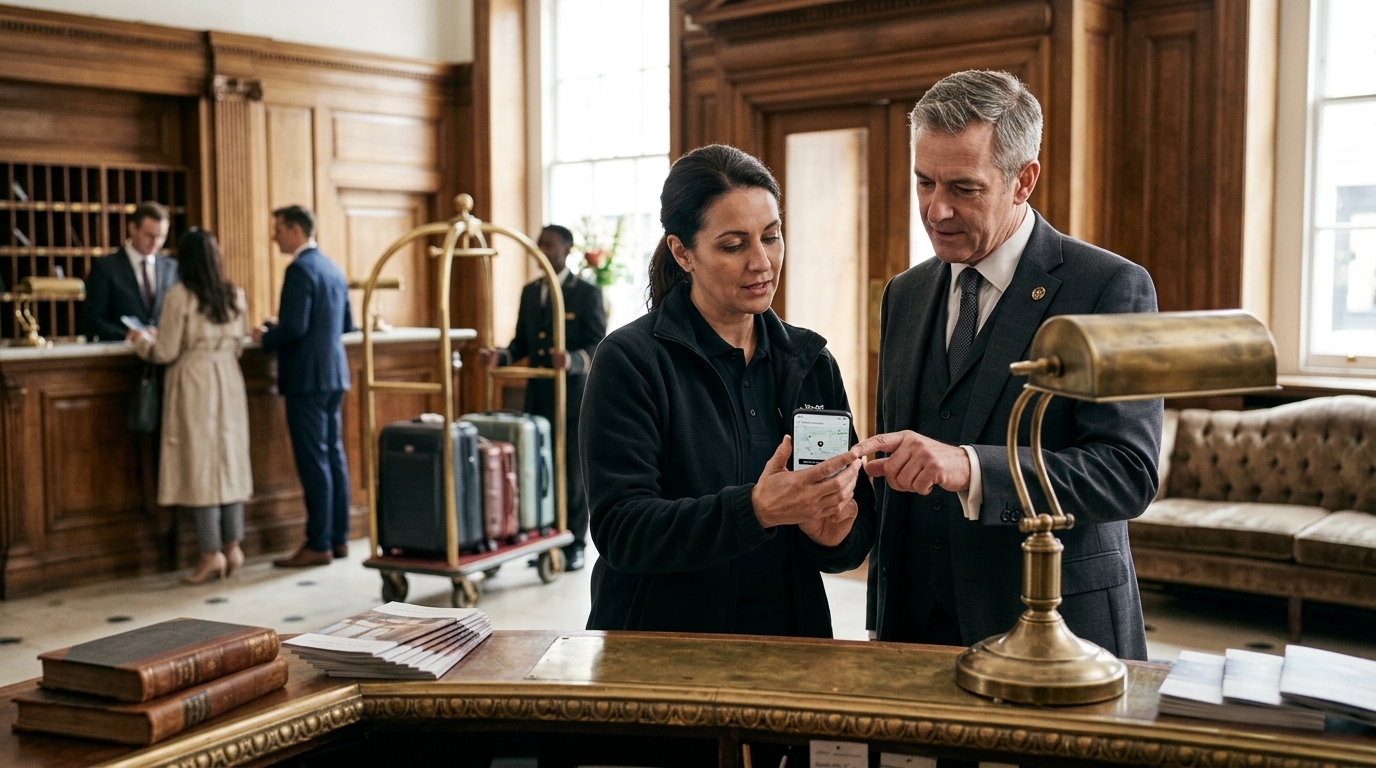
The era when Uber was merely an app to hail a ride is long gone. Today, the company that revolutionized urban mobility is taking its next giant leap toward total travel dominance. By integrating hotel bookings directly into its platform, Uber aims to become the ultimate digital concierge for every traveler, from the moment they step out of their front door to the moment they unlock their hotel room suite.
The "Super App" Strategy and the WeChat Blueprint
This expansion comes as no surprise to those closely following the trajectory of Uber CEO Dara Khosrowshahi. Having previously led Expedia, Khosrowshahi has long harbored the ambition of transforming Uber into a "Super App," modeled after Asian giants like WeChat or Grab. In those ecosystems, users can perform almost any digital task—from messaging and paying bills to booking entire vacations—without ever leaving the application’s environment.
The addition of hotels is the final piece of the "travel flywheel" puzzle. Uber isn't just trying to sell rooms; it's building a closed-loop ecosystem. A user books a hotel via Uber, earns Uber One loyalty points, uses the app for an airport transfer, and orders dinner through Uber Eats on their first night. This synergy increases the Customer Lifetime Value (CLV) and makes the app an indispensable tool rather than a transactional utility.
Expedia Partnership and the AI Revolution
To bring this vision to life, Uber didn't reinvent the wheel. Instead, it forged a strategic partnership with Expedia and Vrbo, tapping into their massive inventory of global accommodations. However, the true innovation lies in the interface. Uber is introducing advanced AI-powered voice search, allowing users to describe their needs in natural language.
"Find me a hotel in London near Soho with a rooftop bar and late check-out," is a query the app can now process intuitively. This shift toward "conversational commerce" signals that Uber understands the next frontier of tech isn't about better menus or buttons—it's about AI's ability to understand human intent in real-time. By removing the friction of manual filtering, Uber positions itself as a more human-centric platform than traditional Online Travel Agencies (OTAs).
Market Disruption and the Battle for the Traveler’s Wallet
The implications for the global travel industry are profound. Uber is entering a space dominated by Booking Holdings and Airbnb, but it holds a unique trump card: the "last mile." While traditional booking sites struggle to integrate ground transportation seamlessly, Uber starts with the ride. For a traveler, the convenience of having their ride, their room, and their meals managed by a single identity and payment method is a powerful value proposition.
However, the road ahead isn't without obstacles. The hospitality industry is notoriously fragmented, and commission structures are a constant source of tension between platforms and providers. Furthermore, data privacy remains a significant concern. Uber will now know not just where you go, but where you sleep, what you eat, and how you spend your leisure time. This concentration of personal data will undoubtedly face scrutiny from regulators, particularly in the EU under the Digital Markets Act (DMA) and GDPR.
Conclusion: The Future of Frictionless Travel
Uber is no longer a transportation company; it is a logistics firm for the human experience. By adding hotels, it is betting on a future where travel is a seamless flow, stripped of the stress of coordinating multiple apps and services. If Uber can convince users that the convenience of its ecosystem outweighs the concerns over its growing market power, it may well become the West's first true Super App, permanently altering the landscape of the global tourism industry.





