

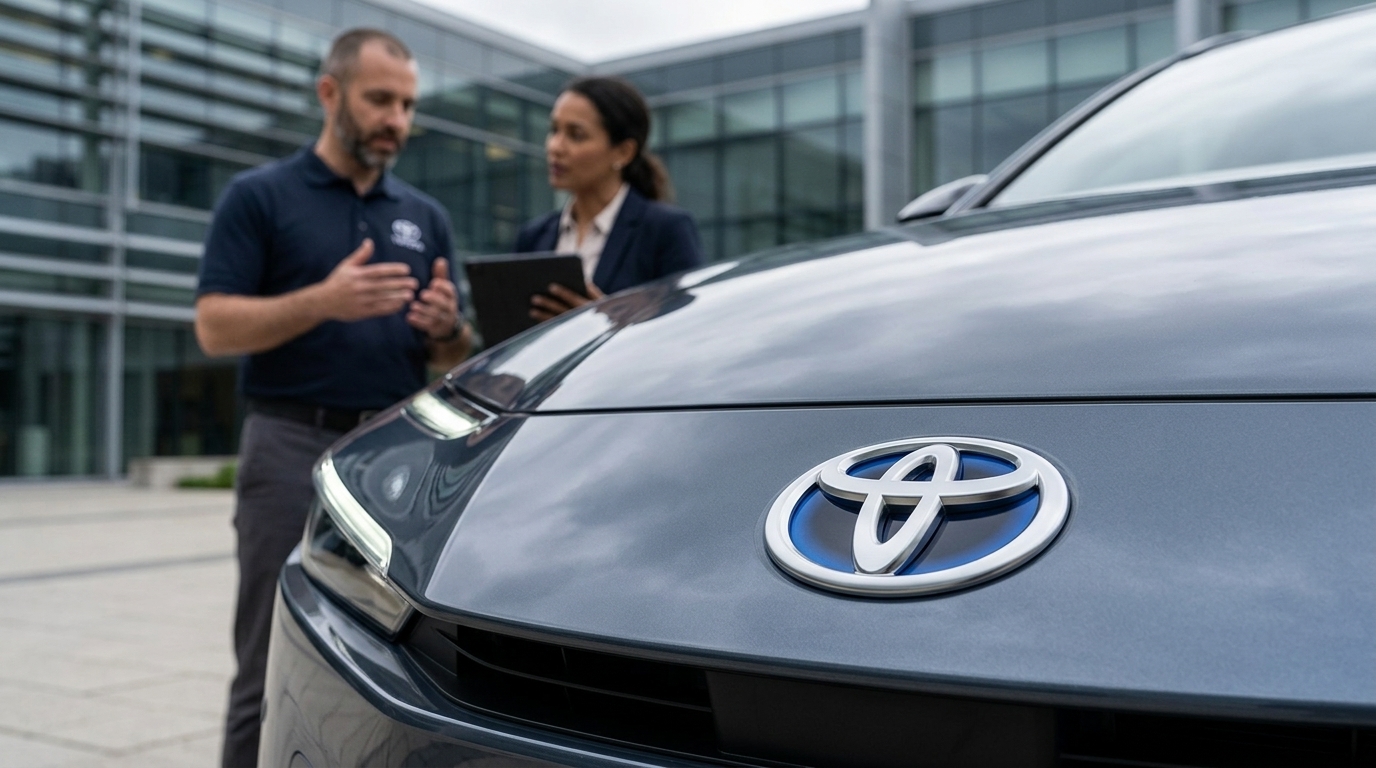
For decades, Toyota Motor Corporation has been the undisputed leader of green mobility, not through Battery Electric Vehicles (BEVs), but through the hybrid technology it pioneered with the Prius. However, as we approach the latter half of the 2020s, the Japanese giant is realizing that its "strategic patience" must give way to dynamic acceleration. 2026 is now emerging as the milestone year for Toyota’s transformation, with the company aiming for 1.5 million EV sales annually, signaling a radical shift in its corporate culture and production structure.
The Transition from Hybrids to Full Electrification
Toyota’s historical caution toward battery electric vehicles was not accidental. Under the leadership of Akio Toyoda, the company advocated for a "multi-pathway approach," arguing that the world was not yet ready for full electrification due to infrastructure and raw material shortages. However, the rapid rise of Tesla and the dominance of Chinese automakers like BYD forced the new management under Koji Sato to reconsider. Toyota now acknowledges that to maintain its global leadership, it must also lead in the zero-emission sector.
The 2026 plan does not merely involve launching new models but an overhaul of how cars are built. Toyota is adopting "Gigacasting" technology, a method pioneered by Tesla, which allows for the casting of large sections of the chassis as single pieces. This drastically reduces complexity, production costs, and vehicle weight, allowing the company to compete on equal terms with the new market entrants.
Technological Edge and Solid-State Batteries
Toyota’s big bet for 2026 and beyond is battery technology. The company is investing billions in the development of solid-state batteries, which promise ranges exceeding 1,000 kilometers and charging times of under 10 minutes. While mass production is expected slightly later, the next-generation lithium-ion batteries to be introduced in 2026 will offer 20% more range at a 40% lower cost compared to the current bZ4X model.
- Development of a new dedicated EV-only platform.
- Integration of the Arene operating system for advanced connectivity.
- Expansion of battery production in the US and Japan.
- Target of 3.5 million EV sales by 2030.
The Geopolitics of the Auto Industry and Competition
Toyota's pivot is directly influenced by the international political landscape. Stricter European Union regulations and the subsidies provided by the U.S. Inflation Reduction Act (IRA) make the acceleration of EVs the only viable path. At the same time, in China—the world’s largest auto market—Toyota saw its market share threatened by domestic manufacturers offering affordable and technologically advanced electric models. Toyota’s response in 2026 will be a series of "smart" electric vehicles that combine traditional Japanese reliability with digital innovation.
"It is not just about changing the engine; it is about redefining our relationship with the car as a digital product," a company executive recently stated.
In conclusion, Toyota is not just looking to catch up with the competition but to leapfrog it using its massive scale and financial prowess. 2026 will be the year that determines if the global automotive giant can transform into a cutting-edge technology company while maintaining the profitability that made it the world’s most valuable automaker.





