

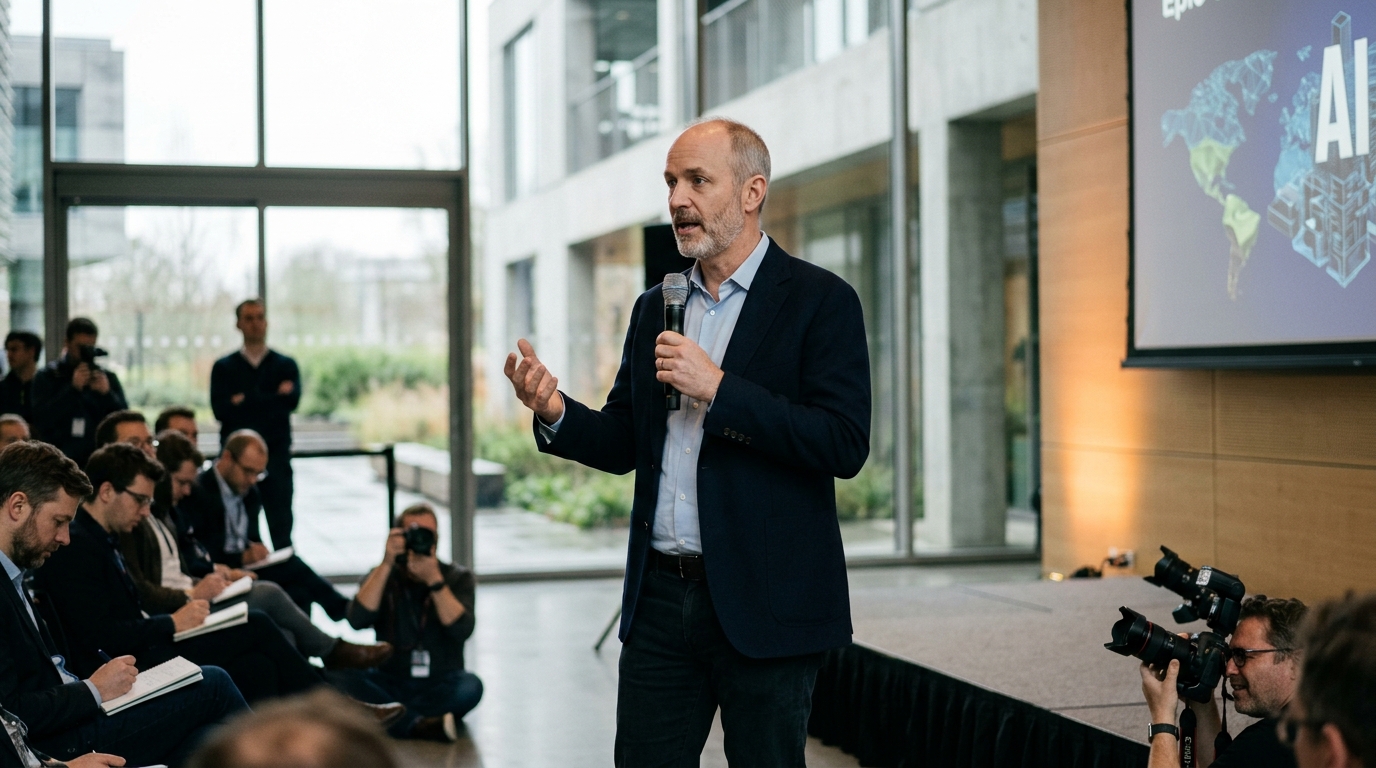
The video game industry is at a critical crossroads, where the production costs of top-tier (AAA) titles have skyrocketed to levels that threaten the viability of even the most successful franchises. In this context, recent statements by Tim Sweeney, CEO of Epic Games, have caused a stir. Sweeney argued that if artificial intelligence had been integrated earlier and more deeply into the development process, games like Bungie's Destiny could be highly profitable today, instead of struggling with economic stagnation and mass layoffs.
The AAA Crisis and the Destiny Paradigm
Destiny 2, despite its massive player base and undeniable quality, has become the symbol of the "cost crisis" in the industry. Bungie, the developer acquired by Sony for $3.6 billion, recently found itself in a whirlwind of turmoil, with hundreds of layoffs and reports of missing financial targets. Sweeney points out that the problem lies not in creativity, but in the logistics of content production.
According to the Epic CEO, creating a world like Destiny's requires thousands of hours of labor from artists, designers, and programmers for every new expansion. This model of "handcrafted" production on a blockbuster scale is no longer sustainable. "If we could reduce the cost of asset production by 90% through AI, Destiny wouldn't just be sustainable; it would be a profit-generating machine," he explained in a recent intervention.
AI as a Survival Tool
Sweeney's proposal is not about replacing creators, but about enhancing their productivity. Generative AI can be used in several areas:
- Environment Creation: Automatic generation of landscapes, buildings, and textures that would otherwise take months of work.
- Dialogue and NPCs: Using Large Language Models (LLMs) to create dynamic dialogues that don't need to be written and recorded one by one.
- Testing and Bug Fixing: AI agents that "play" the game millions of times to identify bugs, drastically reducing QA (Quality Assurance) time.
For Sweeney, Epic's Unreal Engine is already at the forefront of this transition, incorporating tools that allow small teams to produce content that previously required armies of employees. This, he claims, is the only future for live-service games that require a constant stream of new content to keep players engaged.
The Ethical Dimension and Creator Pushback
However, Sweeney's vision is not without its critics. Many creators fear that over-reliance on AI will lead to a "homogenization" of art, where games lose their soul and distinctiveness. Furthermore, there is the immediate risk to jobs. If AI can do the work of ten artists, what happens to the other nine?
"Technology must serve the vision, not dictate it. The risk is that we end up with games that are technically proficient but emotionally hollow," industry analysts say.
Sweeney counters these fears, arguing that cost reduction will allow more risky and creative projects to receive funding, as the financial risk of failure will be lower. In the case of Destiny, AI could have allowed Bungie to experiment with more mechanics and stories without the fear that a commercial failure would mean the studio's destruction.
Conclusion: A New Era for Gaming
The discussion opened by Tim Sweeney touches the core of modern entertainment. As players demand increasingly impressive graphics and vast worlds, the industry must find a way to balance quality with cost. Artificial intelligence seems to be the only way out, but its implementation will require delicate handling so as not to sacrifice human creativity on the altar of profitability. Destiny may be the example of the past, but AI will surely be the protagonist of the future.





