

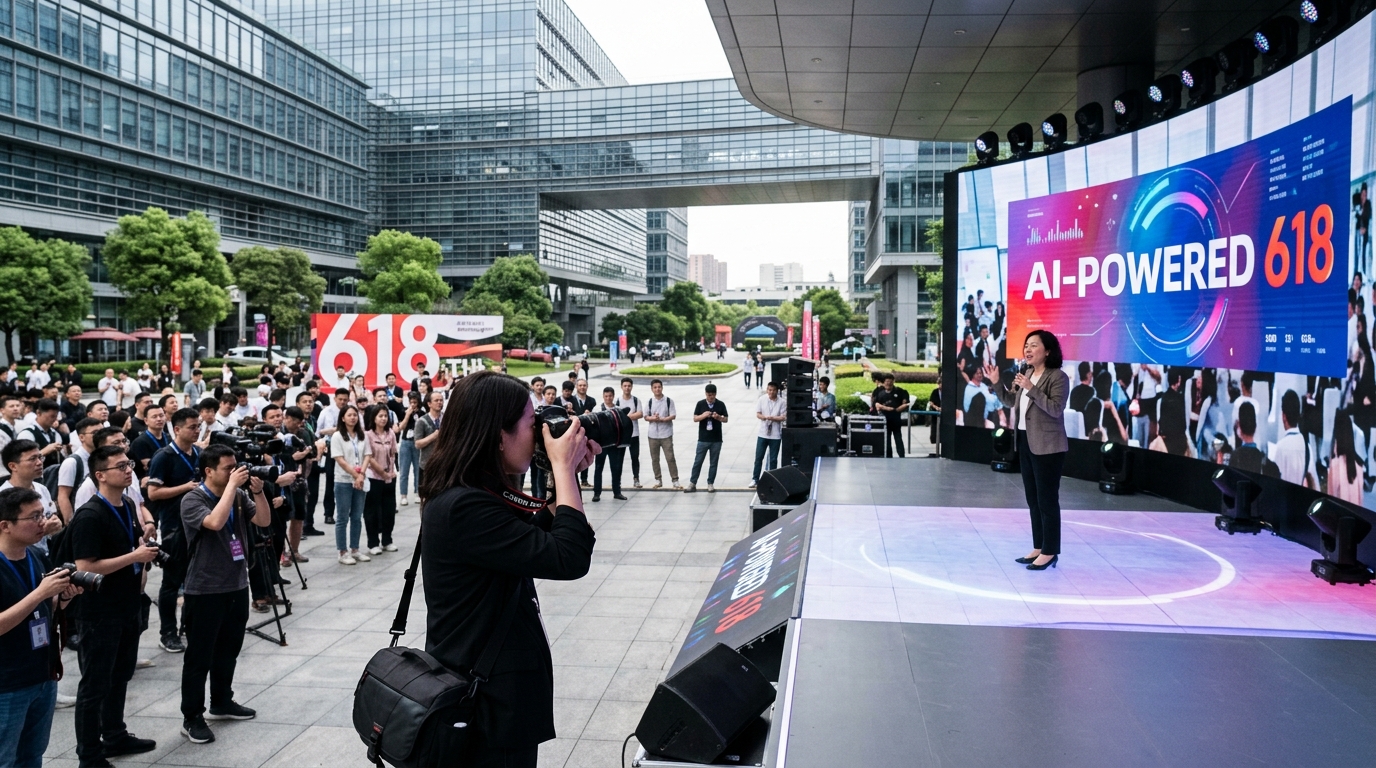
As the calendar turns to June 2026, China is once again gripped by the frenzy of "618"—the world's second-largest shopping extravaganza after Singles' Day. What began in 2004 as a modest anniversary celebration for JD.com has evolved into a titanic clash between Alibaba, Pinduoduo, and Douyin. However, this year's iteration isn't just about massive discounts; it is a profound demonstration of Artificial Intelligence (AI) prowess, as companies strive to engage an increasingly cautious Chinese consumer.
The Generative AI Revolution in Retail
The most significant shift in this year's 618 is the massive deployment of generative AI. Platforms are no longer merely using AI for algorithmic product recommendations; they are using it to create real-time content. Thousands of "digital humans" (AI avatars) have replaced traditional hosts in livestreaming sessions, working 24/7 at a fraction of the cost. These digital salespeople can answer customer queries, demonstrate products, and close deals with a startling degree of naturalism.
According to market analysts, the use of AI tools has reduced operating costs for small and medium-sized merchants by up to 80%. Alibaba, through Tmall, introduced an "AI shopping assistant" this year that acts as a personal stylist and tech consultant, analyzing user needs before suggesting the perfect product. This hyper-personalization at scale is the giants' answer to the growing consumer fatigue toward traditional advertising and complex promotional mechanics.
A Return to Simplicity and the Logistics War
After years of consumer complaints regarding labyrinthine coupon systems and confusing pre-order rules, Chinese platforms have executed a strategic pivot: a return to simplicity. JD.com and Tmall scrapped pre-sale periods entirely this year, offering direct discounts from day one. This move is underpinned by a sophisticated logistics network powered by AI-driven demand forecasting.
"Technology is no longer a supplement to retail; it is the backbone that enables survival in a low-margin environment," says a Beijing-based industry executive.
Autonomous delivery vehicles and drones have increased their presence in first-tier cities like Shanghai and Shenzhen. A company's ability to deliver a product within hours of an order—thanks to predictive shipping where items are moved to local hubs before a customer even clicks "buy"—has become the new competitive frontier.
Economic Barometer and Structural Challenges
The 618 festival serves as more than a celebration of consumerism; it is a critical barometer for the health of the Chinese economy. With domestic consumption showing signs of cooling due to the ongoing property sector crisis, Beijing is closely monitoring the results. Companies are forced to balance profitability with the necessity of offering the market's lowest prices. Pinduoduo, which built its empire on rock-bottom pricing, continues to exert immense pressure on its rivals, leading to a price war that benefits consumers but strains suppliers.
- Data integration allows for faster inventory turnover and reduced waste.
- AI is narrowing the gap between urban and rural access to premium goods.
- Sustainability is taking center stage, with AI optimizing delivery routes to minimize carbon footprints.
In conclusion, this year's 618 marks the end of the "growth at all costs" era and the beginning of "intelligent efficiency." The winners will not necessarily be those with the highest Gross Merchandise Volume (GMV), but those who successfully integrate technology in a way that restores consumer trust and long-term loyalty.





