

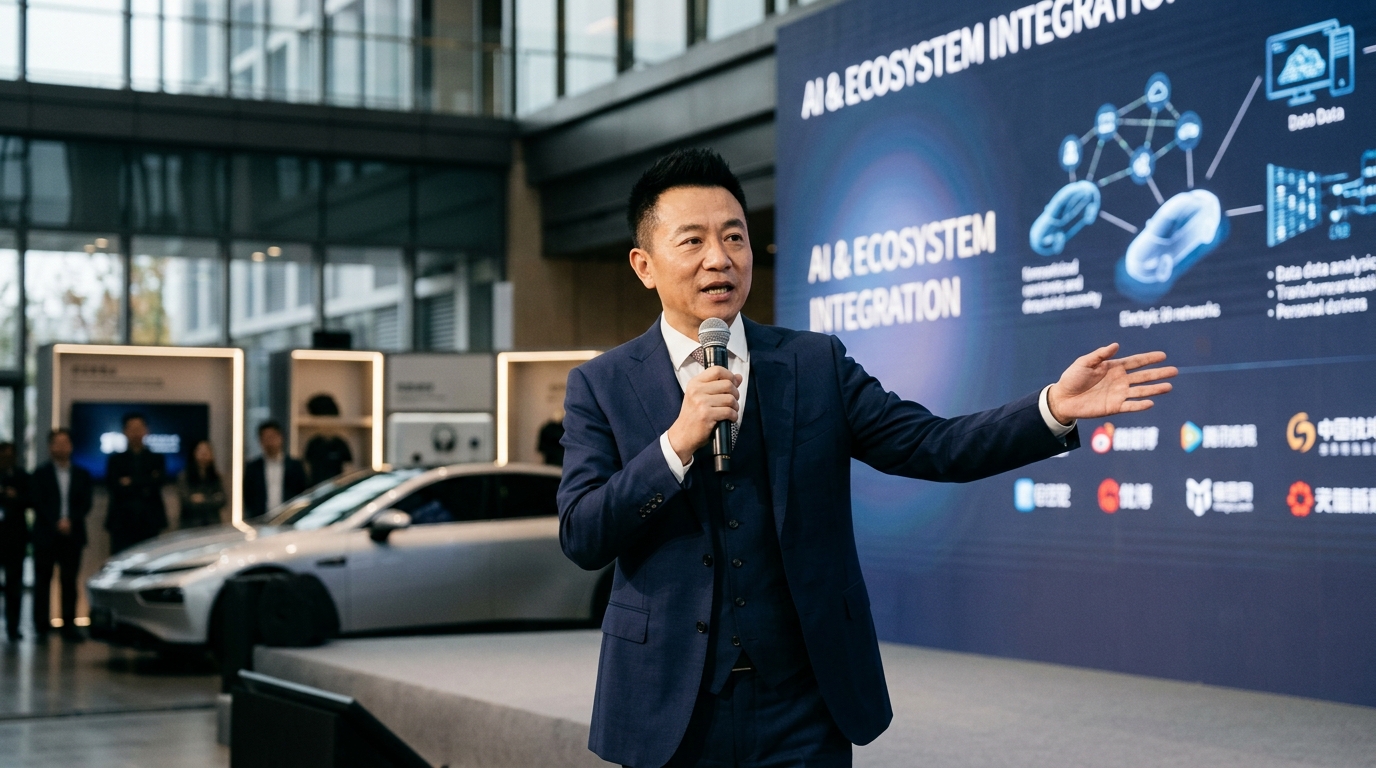
For years, the narrative surrounding the Chinese automotive industry was simplistic: cheap labor, state subsidies, and aggressive pricing designed to undercut Western giants. However, as of May 2026, the landscape has fundamentally shifted. Chinese electric vehicle (EV) makers are no longer competing with Tesla solely on price. They have opened a bold new front centered on technological superiority, Artificial Intelligence integration, and the creation of digital ecosystems that make the car feel more like a smartphone on wheels than a traditional mode of transport.
The Shift from Hardware to Software
Elon Musk’s Tesla was the pioneer of the "Software-Defined Vehicle" (SDV), but Chinese rivals like Xpeng and NIO have now closed the gap. The battle for autonomous driving in China is more intense than ever. While Tesla’s Full Self-Driving (FSD) is still struggling to adapt to the chaotic streets of Chinese megacities, Xpeng has already deployed its XNGP system, which operates without the need for high-definition maps, covering hundreds of cities across the country.
This pivot toward software is not accidental. Chinese consumers, who are on average younger and more tech-savvy than their European or American counterparts, view a car’s software as being just as critical as its battery range. A vehicle’s ability to recognize voice commands in local dialects, integrate seamlessly with apps like WeChat, and provide advanced entertainment features is now a prerequisite, not a luxury.
The Xiaomi Phenomenon: The Car as an Extension of the Home
Perhaps the most striking development over the past year is the meteoric rise of Xiaomi in the EV space. The company that became a household name for its smartphones managed what Apple famously abandoned: creating a car that is an integral part of a broader ecosystem. Through its "Human x Car x Home" strategy, Xiaomi allows users to control their home appliances from the car’s dashboard and vice versa.
"We aren't just selling a vehicle; we are selling an upgraded digital life," a company executive recently stated in Beijing.
This approach has put Tesla on the defensive. Despite the recent refresh of the Model 3, Tesla’s aesthetic and functionality are beginning to look "Spartan" compared to the cabins of Chinese models featuring OLED screens, built-in aromatherapy systems, and massage seats that rival those of a Mercedes-Benz S-Class, but at a fraction of the price.
BYD: Vertical Integration as a Strategic Weapon
If Xiaomi is the king of software, BYD remains the master of the supply chain. BYD’s ability to manufacture its own batteries, semiconductors, and powertrains gives it a cost advantage that even Tesla finds difficult to match. However, BYD is not resting on its laurels. With its new luxury line, Yangwang, the company is entering the high-end segment, proving it can produce cutting-edge technology, such as the DiSus suspension system that allows a car to drive even on three wheels.
Geopolitical Challenges and the Road Ahead
The global expansion of these companies is not without hurdles. The European Union and the United States have erected tariff barriers, citing unfair competition. However, Chinese manufacturers are responding by investing in local factories in Hungary, Turkey, and Mexico. Their strategy has shifted from "Made in China" to "Engineered by China for the World."
In conclusion, Tesla is no longer facing mere copycats, but innovators who are defining the future of mobility. Elon Musk may have won the first round of electrification, but the second round—that of intelligent mobility—will be decided by algorithms and ecosystems, areas where Chinese rivals appear more prepared than ever.





