

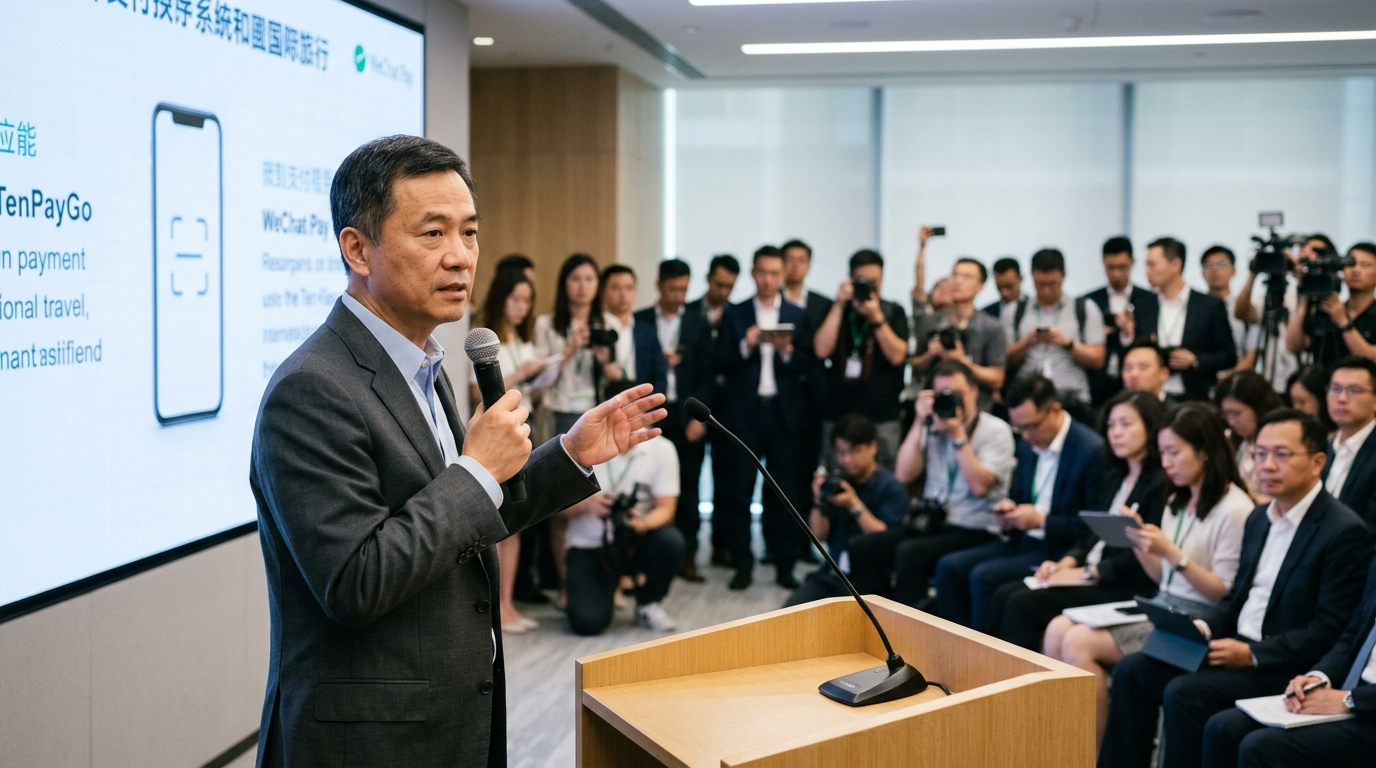
For years, China has been a digital enigma for foreign visitors. Despite its technological prowess, the country’s transition to a cashless society created a paradox: tourists, armed with Visa and Mastercard credit cards, often found themselves unable to buy even a bottle of water. The domestic ecosystem relied almost exclusively on WeChat Pay and Alipay, which required Chinese bank accounts. Today, Tencent Holdings Ltd. is attempting to provide a definitive solution with the trial launch of TenPayGo.
According to a report by Jiemian News published on Sunday, June 28, 2026, Tencent has begun testing a specialized application aimed exclusively at international travelers. TenPayGo is not just a payment wallet; it is a gateway to daily life in China, integrating services that were previously inaccessible to those who did not speak Chinese or possess a local ID.
The 'Open Door' Strategy
Tencent’s move is not an isolated event but part of a broader national strategy by Beijing to revitalize inbound tourism. Following the pandemic, China saw foreign visitor numbers recover slowly. The government responded by expanding visa-free entry policies for many European and Asian countries. However, the 'digital barrier' remained the primary complaint of travelers.
TenPayGo aims to simplify the KYC (Know Your Customer) process. While linking a foreign card to WeChat was previously a labyrinthine process fraught with rejections, the new app promises rapid identification via passport and immediate connection to international financial networks. Tencent appears to have received the 'green light' from regulators to ease restrictions, recognizing that the financial isolation of tourists damages the country’s global image.
Beyond Payments: A Survival Ecosystem
The problem in China was never just about money; it was about access to services. In the China of 2026, you cannot hail a taxi on the street or view a restaurant menu without scanning a QR code. TenPayGo integrates 'mini-programs' for ride-hailing (Didi), booking train tickets, and using the subway in major metropolises like Shanghai and Beijing.
- International Interface: The app is designed with Western UI/UX standards, avoiding the 'clutter' of the main WeChat app.
- Multilingual Support: It offers full translation of services, allowing users to order food without knowing a single character.
- Transaction Transparency: It provides real-time currency conversion, so travelers know exactly what they are spending in Euros or Dollars.
Privacy and the Surveillance Question
Despite the convenience, the launch of TenPayGo raises questions about personal data. For the app to function, foreign users must hand over biometric data and location tracking to a company under the close supervision of the Chinese Communist Party. For many analysts, this is the price of admission to China’s 'utopia' of convenience.
"China is not just opening its borders, but its digital systems as well. However, convenience always comes with an invisible contract of data surrender," say tech market sources in Hong Kong.
Tencent, for its part, assures that it adheres to international data protection standards for foreign users, but geopolitical distrust remains high. Nevertheless, for the average tourist wanting to navigate the Forbidden City, the ability to pay via smartphone outweighs abstract privacy concerns.
Competition with Alipay
Ant Group, the company behind Alipay, had already made strides with its 'International Version' of the app. Tencent’s response with TenPayGo indicates that the competition for the 'foreigner’s wallet' is intensifying. Tencent is betting on the widespread acceptance of WeChat Pay in every corner of China—from luxury malls to street vendors—to gain the upper hand.
In conclusion, TenPayGo represents a critical experiment. If successful, it will mark the end of China’s digital isolation and make the country a far more attractive destination for the generation of digital nomads and demanding tourists. It is proof that even the highest walls can become permeable when the economic stakes are high enough.





