

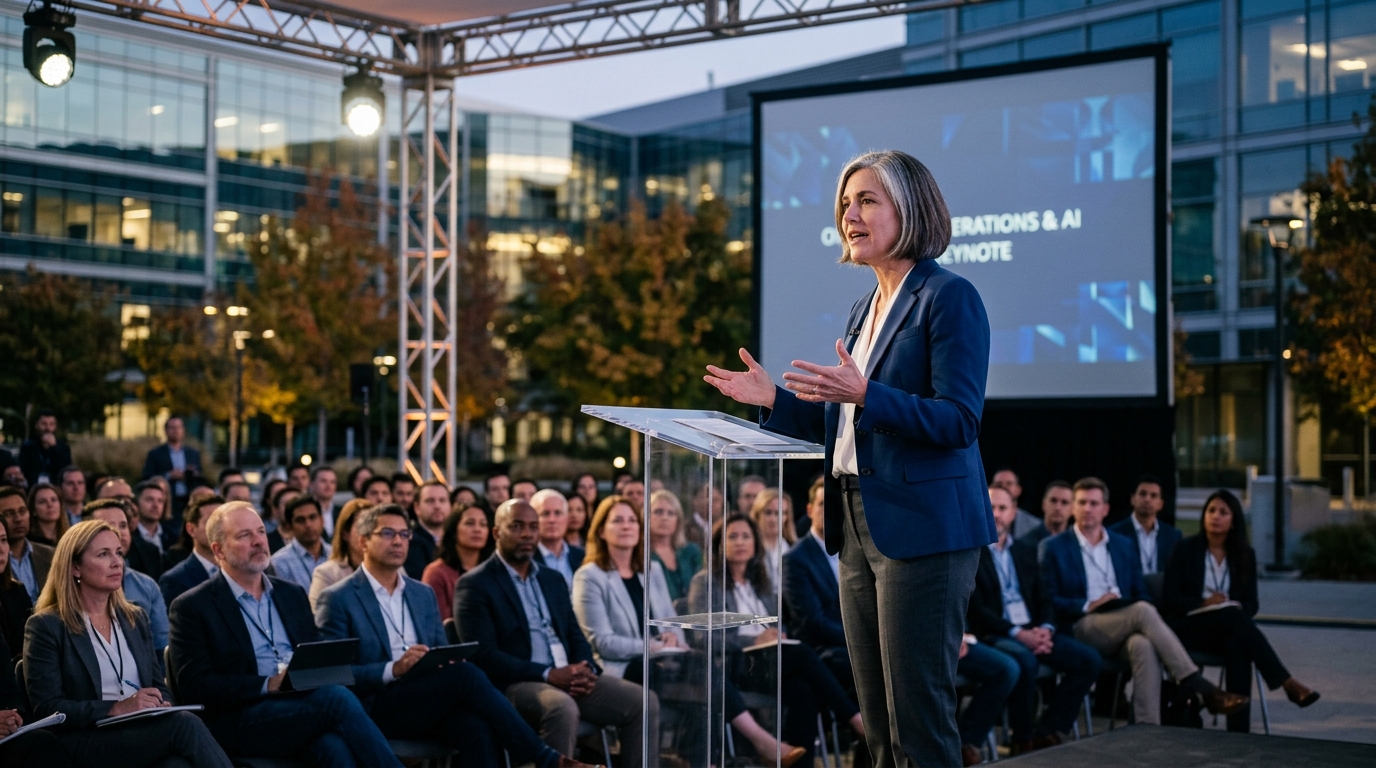
In an era where technological advancement moves at a pace that often outstrips human adaptability, Susan Frew, one of the most prominent voices in business transformation, is sending a clear message: fear of Artificial Intelligence (AI) is the greatest enemy of growth. Speaking recently to representatives of the service industry, Frew emphasized that AI is not a threat destined to replace humans, but a "super-partner" that can liberate businesses from the shackles of bureaucracy and inefficiency.
From Traditional Management to Digital Automation
Frew, who has built her reputation helping companies in traditional sectors—such as pest control and construction—modernize, argues that AI offers a unique opportunity to restructure daily operations. According to her, the key lies not in adopting technology for its own sake, but in identifying those points where human intervention is redundant or slows down processes. Using AI tools for appointment scheduling, route optimization for technicians, and automated customer service is no longer a luxury, but a prerequisite for maintaining a competitive advantage.
"Many business owners look at AI and see science fiction," Frew says. "What they should see is the potential to reduce their operating costs by 30% while simultaneously increasing customer satisfaction." Frew’s analysis focuses on the fact that AI can handle vast amounts of data in real-time, something that no human brain—no matter how experienced—can achieve with the same speed and precision.
The Human Factor in the Age of Algorithms
One of the biggest misconceptions Frew seeks to dismantle is that AI will make humans obsolete. On the contrary, she argues that automating "boring" and repetitive tasks allows employees to focus on what truly matters: human connection and complex problem-solving. In the service industry, empathy and personal communication remain irreplaceable. AI, therefore, acts as the backbone that allows the technician or salesperson to be better prepared, better informed, and ultimately more effective in their contact with the customer.
"AI is not going to take your job. Someone who knows how to use AI will," Frew points out, echoing a sentiment that is becoming increasingly relevant in the business world of 2026.
Implementation Strategy: Small Steps, Big Results
For small and medium-sized enterprises (SMEs) feeling overwhelmed by developments, Frew suggests a gradual approach. A company does not need to invest millions in proprietary AI models. The market is now full of SaaS (Software as a Service) solutions that integrate advanced intelligence for specific tasks. The first step is mapping processes: Where is time being lost? Where do most errors occur? Usually, the answer lies in data management and communication. Integrating an AI chatbot that understands the context of customer inquiries or a predictive maintenance system can yield immediate results.
Furthermore, Frew underscores the importance of education. Business leaders must invest in upskilling their staff. AI is not a "black box" that operates on its own; it requires people who know how to ask the right questions (prompt engineering) and evaluate the results with critical thinking. At this point, Europe and other regions have a golden opportunity to bridge the gap with tech leaders by adopting a more human-centric yet technologically advanced approach to business.
The Future is Already Here
Concluding her analysis, Susan Frew reminds us that industrial history is full of moments where technology changed the rules of the game. Just as electricity and the internet transformed the 20th century, AI is defining the 21st. Businesses that choose to ignore this reality, entrenched behind the fear of the unknown, risk becoming the "dinosaurs" of the new digital economy. Transformation is not just a technical upgrade; it is a mindset shift that places innovation at the heart of business strategy.





