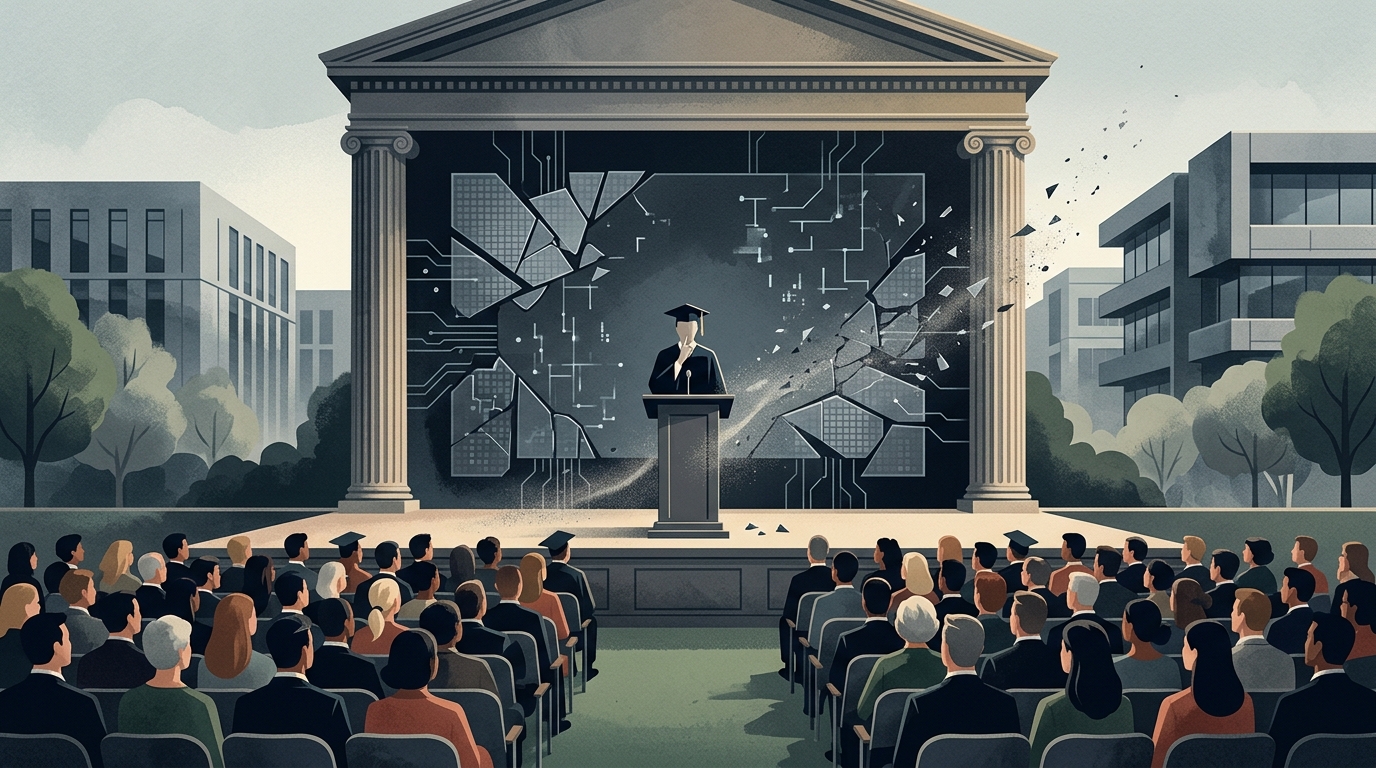
At the epicenter of Silicon Valley, where the pulse of the technological revolution beats louder than anywhere else, Sundar Pichai stood before the graduates of Stanford University. In an era where Google’s name has become synonymous with the Artificial Intelligence arms race, many expected a triumphant discourse on the future of algorithms. Instead, Pichai chose silence—or rather, a very specific form of omission. The absence of AI from the core of his speech was not a random occurrence, but a strategic and deeply human choice that resonated across the global tech community.
Resilience as the New Software
Pichai, a Stanford alumnus himself (MS '95), returned to his alma mater not as the architect of Gemini or Search Generative Experience, but as a man reflecting on his own journey. The central theme of his address revolved around the concept of resilience. In a world changing at breakneck speed, the Google CEO argued that the ability to adapt to failure is far more critical than technical expertise.
"Technology will continue to evolve, but your values must remain constant," he noted. This approach was viewed by many analysts as an attempt to decouple Google’s image from "cold" computing power and reconnect it with social responsibility. At a time when graduates of top-tier universities are anxious about job security due to automation, Pichai chose to reassure them by focusing on what AI cannot replace: character, persistence, and human judgment.
A Strategic Omission?
But why would the man leading the most significant pivot in Google’s history avoid mentioning the "holy grail" of our time? Interpretations vary. On one hand, there is the assessment that "AI fatigue" has begun to affect even its most ardent supporters. With every product launch saturated with the term "AI," Pichai’s decision to speak about something else acted as a breath of fresh air.
On the other hand, this move could be interpreted as an attempt to manage expectations or avoid the thorny issues that accompany AI, such as ethics and labor market impacts. By bypassing the subject, Pichai also bypassed the criticism that often follows his public statements regarding the future of work.
"Not talking about AI at Stanford in 2026 is like not talking about the internal combustion engine in 1950s Detroit. It is a statement in itself," commented one industry analyst.
The Message to the AI Generation
Despite the absence of the word, the spirit of technological change was present. Pichai urged graduates to be "open-minded" and not afraid to start over. He touched upon the hardships he faced when he first arrived in the U.S. from India, emphasizing that success is not a linear path but a series of course corrections. This message is particularly vital for the Class of 2026, which is tasked with navigating a labor landscape undergoing radical transformation.
The speech concluded with a call for creativity and service. Pichai reminded the audience that technology is merely a tool in their hands and that true progress is measured by the impact their actions have on the lives of others. Perhaps, in the end, the greatest service the Google CEO provided to the graduates was exactly that: a reminder that, despite the dominance of machines, the human remains the protagonist of history.