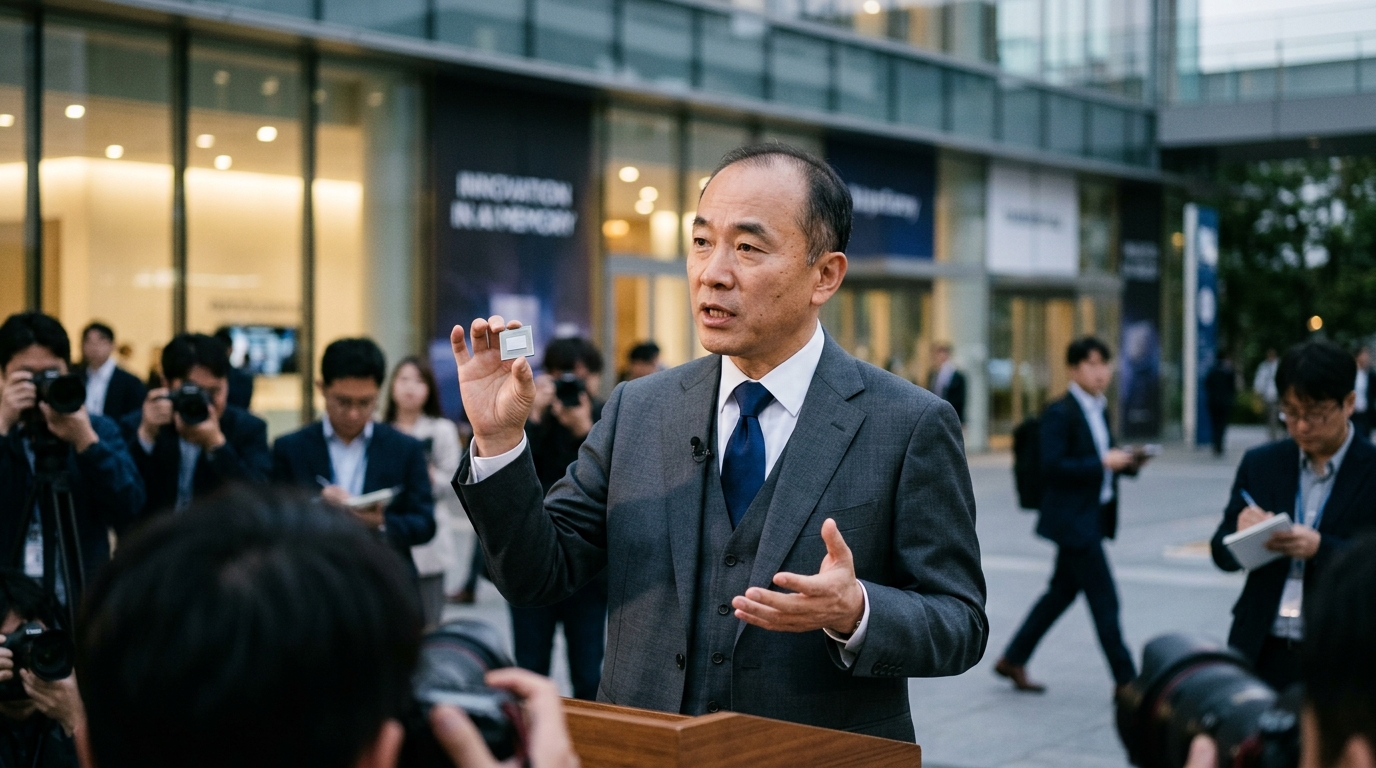
In a move poised to reshape the global semiconductor landscape, South Korea’s SK Hynix Inc. has announced its intention to raise a staggering $29.4 billion (approximately 45.45 trillion won) through a historic listing on the United States stock market. According to regulatory filings submitted on Wednesday, June 24, 2026, trading is expected to commence on July 10, marking what could be one of the top five largest share sales in the history of global capital markets.
The Strategic Imperative of High Bandwidth Memory (HBM)
SK Hynix’s decision is not merely a financial maneuver but a strategic response to the explosive demand for Artificial Intelligence chips. The company has established itself as the primary supplier for Nvidia, providing the critical High Bandwidth Memory (HBM) essential for running complex large language models and AI applications. As the world enters a new phase of digital transformation, the need for faster, more efficient memory has positioned SK Hynix as a central pillar of technological infrastructure.
The funds raised are earmarked for constructing new production lines and bolstering Research and Development (R&D). The company aims to accelerate the transition toward next-generation HBM4 chips, which promise even greater data processing speeds. In an industry where technological superiority is measured in nanometers and milliseconds, SK Hynix is seeking to create a significant buffer between itself and its rivals, namely Samsung Electronics and the US-based Micron Technology.
Why the US? The Geopolitics of Semiconductors
The choice of Wall Street for such a massive capital raise highlights the shifting center of gravity in tech financing. Although SK Hynix is a Korean entity, its deep integration into the US AI ecosystem—via Nvidia and major cloud providers like Microsoft and Amazon—makes a US listing a logical progression. Furthermore, this move grants the company access to a broader and more liquid investor base, which has shown a willingness to pay premium valuations for companies at the heart of the AI revolution.
“This move isn’t just about the capital. It’s about cementing SK Hynix as a global powerhouse that transcends geographic borders,” market analysts noted.
However, the move also carries geopolitical weight. With the US pushing to strengthen domestic semiconductor manufacturing through the CHIPS Act, SK Hynix’s presence in American markets may facilitate future collaborations or subsidies for US-based facilities, such as the chip packaging plant already announced in Indiana.
Challenges and Risks on the Horizon
Despite the optimism, a $29 billion undertaking is not without its risks. The semiconductor market is traditionally cyclical. Concerns persist that the current AI frenzy could lead to oversupply if the demand for AI applications fails to meet corporate expectations. Moreover, competition from Samsung is relentless. Having reorganized its chip division, Samsung is aggressively seeking to reclaim lost ground in the HBM market, which could eventually squeeze SK Hynix’s profit margins.
Additionally, exchange rate volatility remains an unpredictable factor. Converting 45.45 trillion won into dollars depends on market fluctuations, which could impact the final amount reaching the company’s coffers. Nonetheless, the timing is considered ideal, as investment sentiment for technology remains at historic highs, fueled by Nvidia’s consistent record-breaking performance.
Conclusion: A New Era for SK Hynix
July 10, 2026, will be recorded as a milestone date for global technology. If SK Hynix achieves its goal, it will possess the necessary 'war chest' to lead the memory market for the next decade. In a world where data is the new oil, SK Hynix aspires to be the refinery powering the engines of artificial intelligence, making it indispensable to every facet of the modern economy.