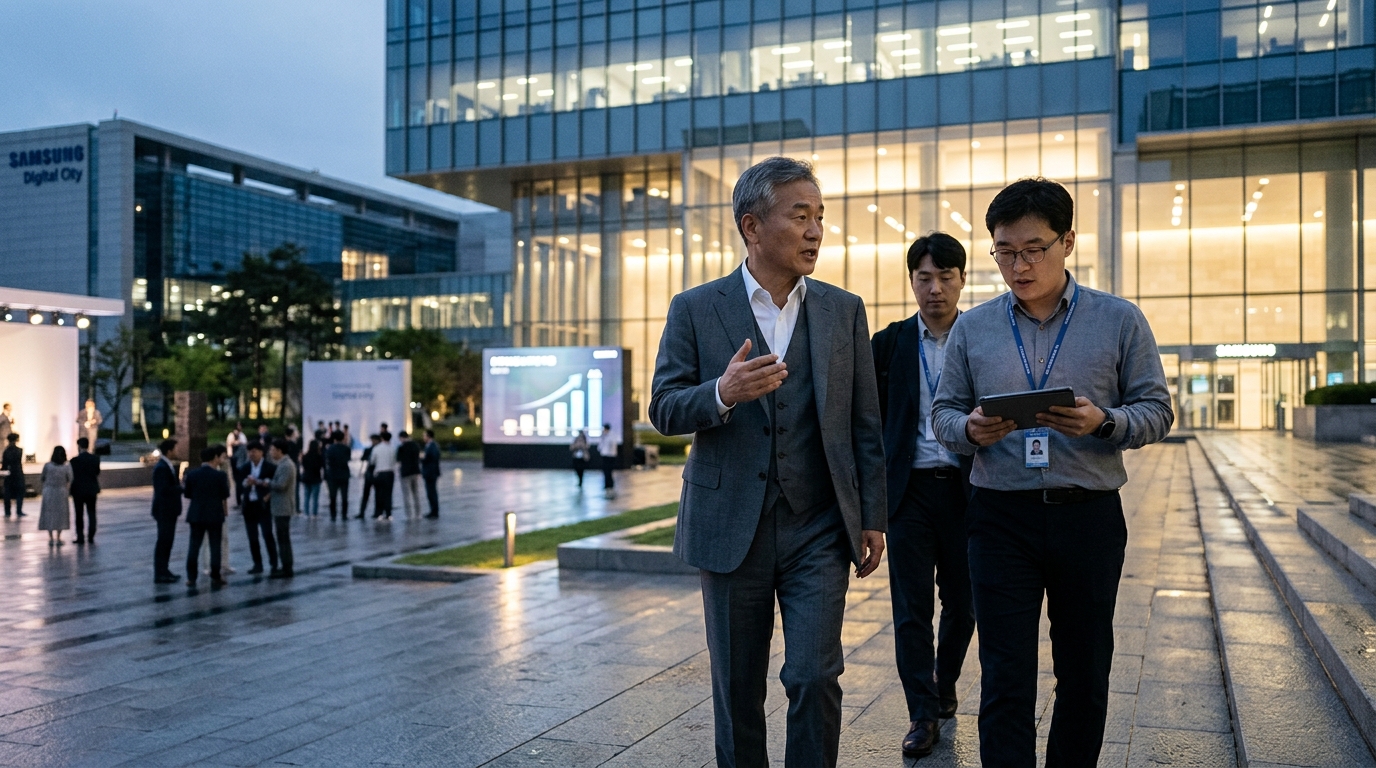
Samsung Electronics’ recent financial disclosure is more than just a win for shareholders; it marks a pivotal moment in the global technology landscape. Following a challenging period characterized by a semiconductor glut and macroeconomic instability, the South Korean conglomerate reported a staggering surge in operating profit—ranging from 15 to 19 times higher than the previous year's historic lows. This exponential growth is no accident; it is the direct result of a strategic pivot toward the Artificial Intelligence (AI) revolution.
The Silicon Engine: HBM Dominance and the Nvidia Connection
The core of Samsung's profitability lies in High Bandwidth Memory (HBM). As the appetite for AI servers and Graphics Processing Units (GPUs) from giants like Nvidia reached fever pitch, Samsung successfully addressed the supply gap. Despite fierce competition from domestic rival SK Hynix, Samsung accelerated the production of HBM3E chips, which are critical for training Large Language Models (LLMs) and handling massive datasets.
Market analysts note that prices for traditional DRAM and NAND Flash memory also saw significant rebounds as inventories stabilized and data center demand surged. This "dual engine"—comprising specialized AI memory and a recovering general memory market—allowed Samsung’s semiconductor division to swing from deep losses to multi-billion dollar profits in just a few quarters. The company’s ability to retool its fabrication plants with such speed underscores its technical resilience and manufacturing prowess.
Galaxy AI: Bringing Intelligence to the Edge
Beyond the foundry and the server room, Samsung is betting heavily on "Edge AI." The Galaxy S24 series and the latest generation of foldables integrate AI capabilities directly onto the device, reducing the need for constant cloud connectivity. This strategy not only drives hardware sales but also builds an ecosystem where AI becomes an indispensable daily tool for the average consumer.
- Real-time call translation across multiple languages.
- Advanced photo editing powered by generative AI.
- Productivity tools that summarize complex documents and organize workflows.
These features have allowed Samsung to maintain its edge in the global smartphone market against Apple, which has only recently begun to articulate its own AI roadmap. The success of the mobile division acts as a financial buffer, providing the semiconductor arm with the capital needed to innovate and scale without the immediate pressure of liquidity constraints.
Challenges: Labor Unrest and Geopolitical Chess
However, the ascent is not without its perils. Samsung is currently facing unprecedented labor challenges, with its largest worker union in South Korea staging strikes for better pay and transparent bonus structures. In an industry where precision and delivery timelines are paramount, prolonged labor disputes could jeopardize the delicate chip supply chain.
"Artificial Intelligence is a golden opportunity, but internal stability and human capital management will determine if Samsung remains the undisputed leader," noted a senior market analyst in Seoul.
Furthermore, the geopolitical friction between the US and China directly impacts Samsung’s long-term strategy. Export controls on advanced technology to China are forcing the company to redraw its manufacturing map, committing billions to new facilities in Texas while trying to balance the demands of two global superpowers. Samsung’s ability to navigate these diplomatic minefields will be the true test of its leadership in the coming years.
Conclusion: A New Era of Growth
Samsung’s profit leap is not a temporary bubble but a confirmation that the AI economy has matured. By dominating next-generation memory and embedding AI into consumer hardware, the company is transforming from a hardware manufacturer into a central pillar of the digital future. The question is no longer whether AI will generate profit, but who will control the infrastructure upon which the world of 2030 will be built.