

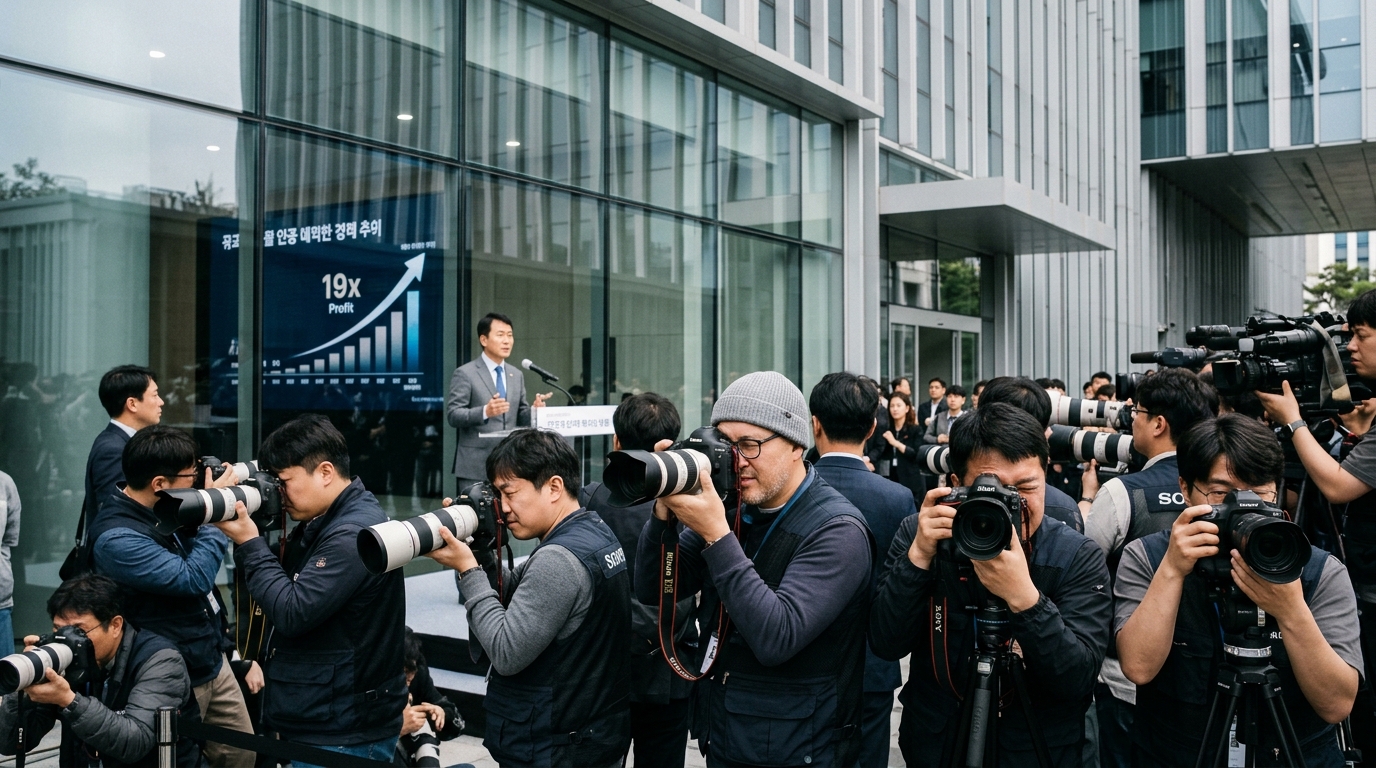
The global technology market is witnessing one of the most spectacular turnarounds in its history. South Korean titan Samsung Electronics has released a preliminary earnings guidance projecting a staggering 19-fold increase in operating profit. This development is more than just a financial headline; it is a definitive confirmation that the Artificial Intelligence (AI) revolution has moved into a hardware-centric phase where infrastructure is the ultimate gatekeeper of progress.
The Semiconductor Renaissance and the HBM Phenomenon
After a grueling two-year slump caused by a post-pandemic decline in smartphone and PC demand, Samsung is finally reaping the rewards of the generative AI boom. The catalyst for this resurgence is High Bandwidth Memory (HBM). These specialized chips are the essential oxygen for Nvidia’s Graphics Processing Units (GPUs), which serve as the backbone for modern AI data centers worldwide.
The insatiable demand for HBM3 and the next-generation HBM3E has created a significant supply crunch. This scarcity has allowed Samsung to leverage pricing power, driving memory chip prices—specifically DRAM—up by more than 20% year-over-year. This price correction has single-handedly transformed the company's balance sheet from cautionary to celebratory.
A Strategic Battle: Samsung vs. SK Hynix and Micron
Despite the eye-popping growth figures, Samsung’s path has been fraught with competitive friction. Its domestic rival, SK Hynix, initially secured a first-mover advantage as the primary supplier for Nvidia’s H100 and B200 chips. Samsung has spent the last year in a high-stakes sprint to gain certification for its own 8-layer and 12-layer HBM3E products.
- Ramping up production capacity at facilities in Pyeongtaek and Taylor, Texas.
- Investing billions in Extreme Ultraviolet (EUV) lithography for precision manufacturing.
- Targeting the emerging 'On-Device AI' market for PCs and smartphones.
Samsung’s strategy extends beyond the server room. The company is betting heavily on 'AI at the edge'—the integration of complex AI models directly into consumer hardware. This shift requires significantly higher memory density per device, creating a secondary wave of demand that analysts expect will sustain growth through 2027 and beyond.
Geopolitics and the Silicon Chessboard
The resurgence of Samsung carries profound geopolitical weight. As the United States and China remain locked in a 'Chip War,' South Korea’s strategic importance as a semiconductor powerhouse has never been higher. Bolstered by subsidies from the U.S. CHIPS Act, Samsung is diversifying its manufacturing footprint, ensuring that the AI supply chain remains resilient against potential conflicts in the Taiwan Strait.
"We are not just seeing a cyclical recovery; we are witnessing a structural shift in how humanity consumes computational power," says a senior industry analyst in Seoul.
However, this 'AI-or-bust' strategy is not without risks. If the AI software market fails to monetize at the expected rate, or if the current investment cycle hits a plateau, the demand for high-end silicon could soften. For now, Samsung is the primary beneficiary of the 'pick and shovel' play: in the AI gold rush, the ones selling the silicon are the ones striking it rich first.





