

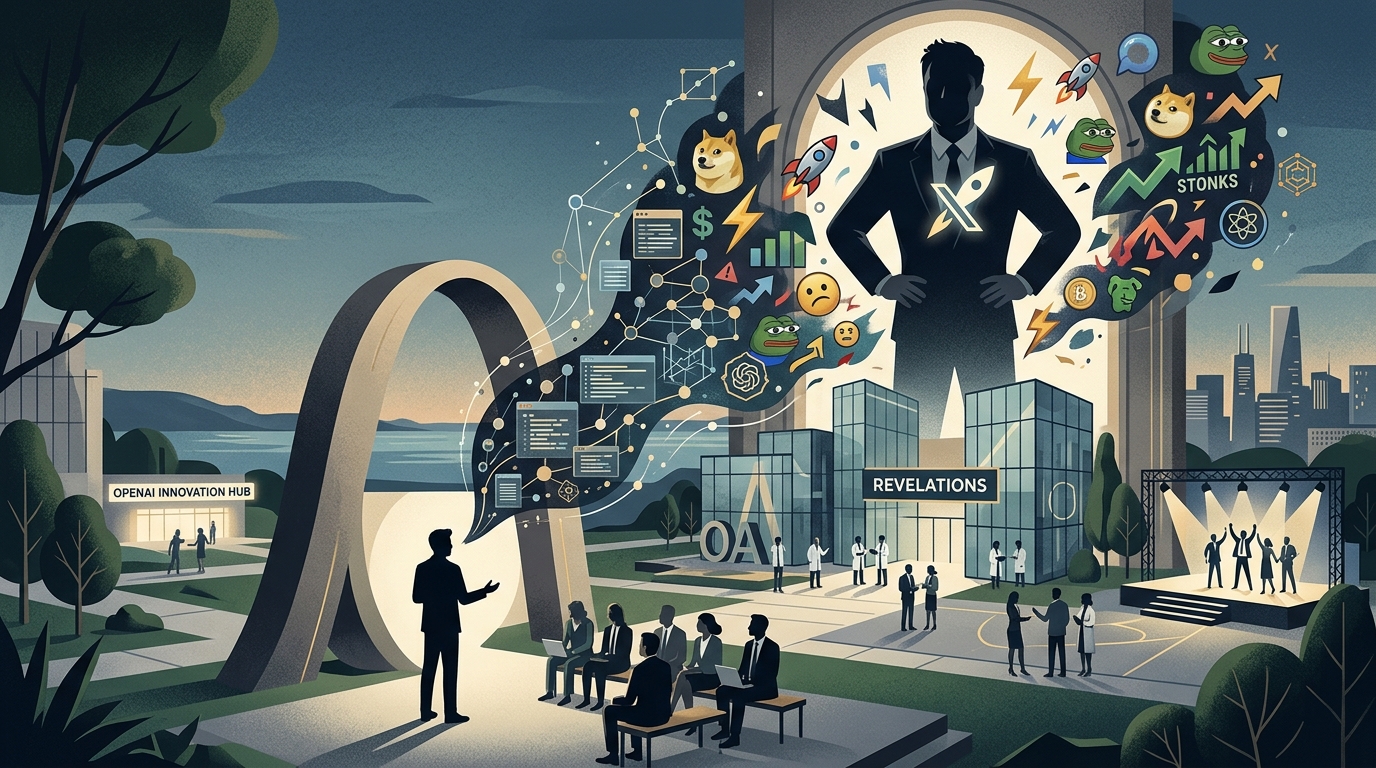
The courtroom in California has become the stage for one of the most surreal revelations in Silicon Valley history. As the legal battle between OpenAI and Elon Musk escalates, Sam Altman, the company's CEO, has provided testimony that sheds light on the idiosyncratic management methods of the world's richest man. According to Altman, during the critical early years of OpenAI, Musk frequently diverted the board's agenda, insisting on showing memes on his phone instead of discussing AI safety or funding strategies.
The Courtroom Drama: Beyond the Non-Profit Myth
The trial, which began with Musk's accusation that OpenAI betrayed its original mission as a non-profit to become a "de facto subsidiary of Microsoft," has evolved into a war of characters. Altman's testimony about the memes is not just an anecdote; it is part of a broader legal strategy to present Musk as an unstable and uncommitted leader whose departure from the company in 2018 was inevitable for its survival.
According to transcripts filed, Altman described scenes where the team was trying to solve complex problems regarding Artificial General Intelligence (AGI), while Musk was laughing at internet images. "There was a sense that for Elon, OpenAI was just another toy or a personal project to combat boredom," said a source close to the defense. This image stands in stark contrast to Musk's official rhetoric, where he presents himself as the "guardian angel" of humanity against the risks of AI.
Memes as a Distraction or a Philosophy?
For those who know Elon Musk, his love for memes is no secret. It is the "language" he uses to communicate with his millions of followers on X (formerly Twitter). However, the revelation that this behavior carried over into OpenAI's closed-door sessions raises questions about the seriousness of governance during that period. OpenAI's lawyers argue that Musk wanted total control and, when he didn't get it, he tried to undermine the company.
- Altman's side views the use of memes as evidence of a lack of professionalism.
- Musk, on the other hand, argues through his lawyers that humor was a way to relieve pressure.
- The conflict highlights the gap between Musk's "culture of chaos" and the "corporate discipline" imposed by Altman.
Altman's strategy seems to be paying off in the court of public opinion, positioning himself as the "adult in the room." Nevertheless, the core of the trial remains legal: Was there a breach of contract? OpenAI, from an organization that promised to share its technology with the world, has transformed into a closed giant with a valuation approaching $100 billion. Musk's memes, however amusing or annoying, may be the least significant part of a story that concerns the future of human intelligence.
A Relationship Beyond Repair: From Allies to Arch-nemeses
The relationship between the two men began with vision and enthusiasm in 2015. Today, their enmity is personal. Musk has founded xAI, his own competing company, and uses every platform to attack Altman, often calling him dishonest. The revelation about the meetings is Altman's response to Musk's aggression. It is a reminder that the "prophet" of technology can be an extremely difficult partner in day-to-day operations.
"You cannot build the future of humanity if your attention is distracted by the next viral joke," Altman reportedly told his close associates.
As the trial continues, the stakes remain high. If Musk wins, OpenAI may be forced to open-source its code, which would change the landscape of the AI market. If Altman wins, he will consolidate his dominance and leave Musk on the sidelines of OpenAI's history, as an eccentric investor who preferred memes over the hard work of building a technological titan.





