

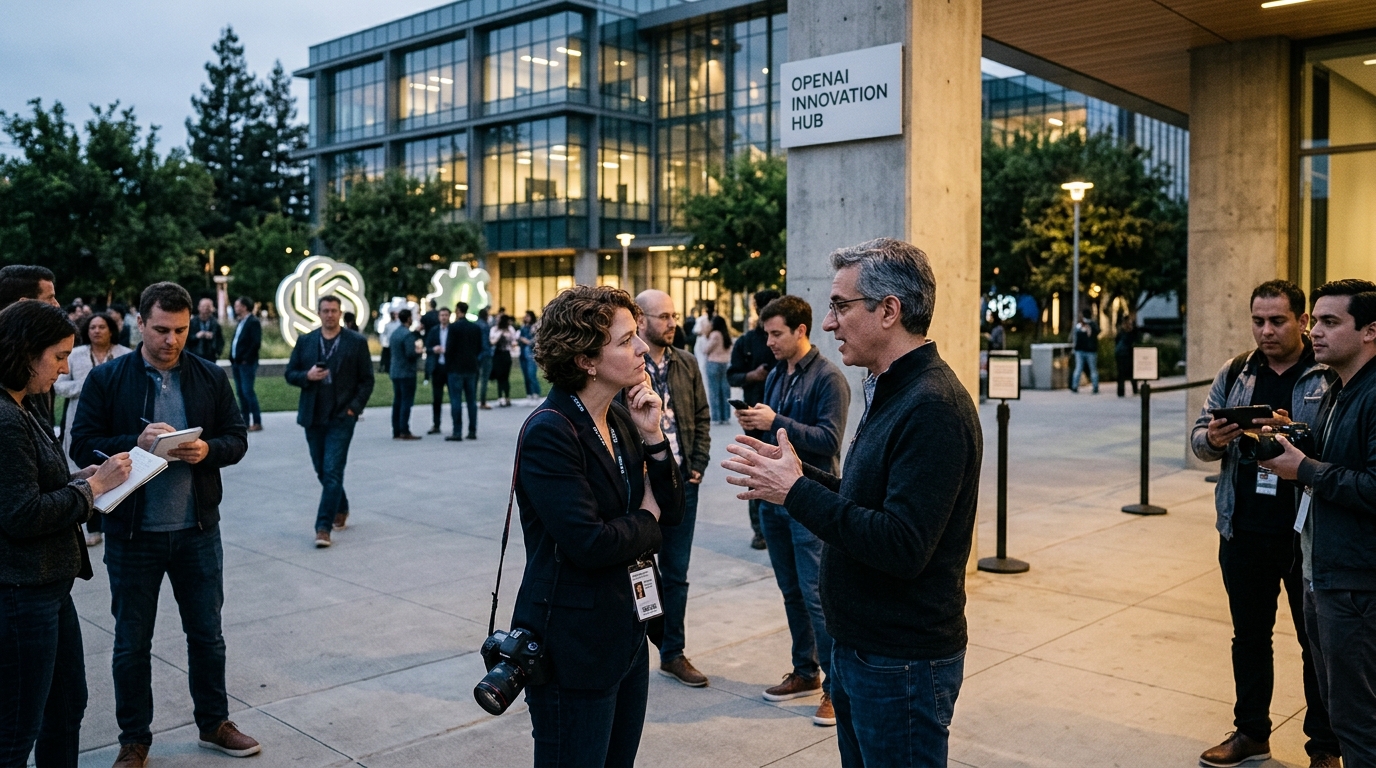
At a time when Silicon Valley is under the microscope regarding the actual economic returns of Artificial Intelligence, OpenAI is attempting to shift the narrative. Kevin Weil, the man holding the revenue reins at the AI giant, recently stated that the company's enterprise operations are not just steady, but exhibiting "accelerating momentum." This statement serves as a direct rebuttal to reports suggesting the company was falling short of its ambitious 2026 growth targets.
The Clash of Figures: Reality vs. Hype
A recent Bloomberg Tech report ignited a conversation many in the industry feared: is the generative AI bubble beginning to deflate? Reports of missed internal revenue targets caused ripples of concern, but Weil remains undeterred. According to him, the adoption of ChatGPT Enterprise and OpenAI’s APIs by major organizations has entered a phase of maturity. It is no longer about experimental pilots; it is about deep integration into core workflows.
OpenAI claims that 92% of Fortune 500 companies are already utilizing its platforms. However, the question remains: is this usage sufficient to cover staggering operational costs? Training next-generation models, such as the anticipated GPT-5, requires billions in capital. Revenue acceleration isn't just a goal; it's a matter of survival for a company burning cash at rates that would alarm any traditional investor.
The Pivot Toward 'Agents'
One of the key pillars of this acceleration, according to OpenAI’s analysis, is the transition from simple chatbots to autonomous AI agents. Businesses are no longer looking for a tool that merely writes emails or summarizes text. They are seeking systems capable of executing complex tasks, interacting with databases, and making low-risk decisions autonomously.
- Automating customer support departments with zero human intervention.
- Real-time data analysis for predicting supply chain trends.
- Code generation and automated security auditing in software environments.
This shift toward agentic capabilities allows OpenAI to command higher premiums, as the value provided is directly measurable in hours of labor saved. Weil emphasizes that demand for the 'o1' model—the so-called reasoning model—has exceeded expectations in the enterprise sector, as companies value its ability to "think" before responding.
Competition and the Microsoft Paradox
One cannot analyze OpenAI’s trajectory without mentioning Microsoft. While their partnership remains the cornerstone of their strategy, the balance is delicate. Microsoft is aggressively pushing its own Copilot, which is powered by OpenAI technology, creating a peculiar internal rivalry for dominance over the corporate desktop.
"The market is large enough for multiple players, but OpenAI offers a level of flexibility that traditional software providers struggle to match," says a market executive.
At the same time, Anthropic with Claude and Google with Gemini are applying downward pressure on pricing. OpenAI must prove that the superiority of its models justifies a higher price point. The acceleration Weil refers to might be the result of an aggressive pricing strategy aimed at locking customers into their ecosystem before competitors can catch up.
Conclusion: The 2026 Stakes
As we head into the latter half of 2026, OpenAI is in a state of transformation from a research-led organization into a ruthless commercial entity. Kevin Weil’s statements are designed to reassure investors ahead of a potential new funding round or even an Initial Public Offering (IPO) that is being heavily discussed in Wall Street corridors. OpenAI’s ultimate success will be judged not just by how intelligent its models are, but by whether it can translate that intelligence into sustainable, long-term profit.





