

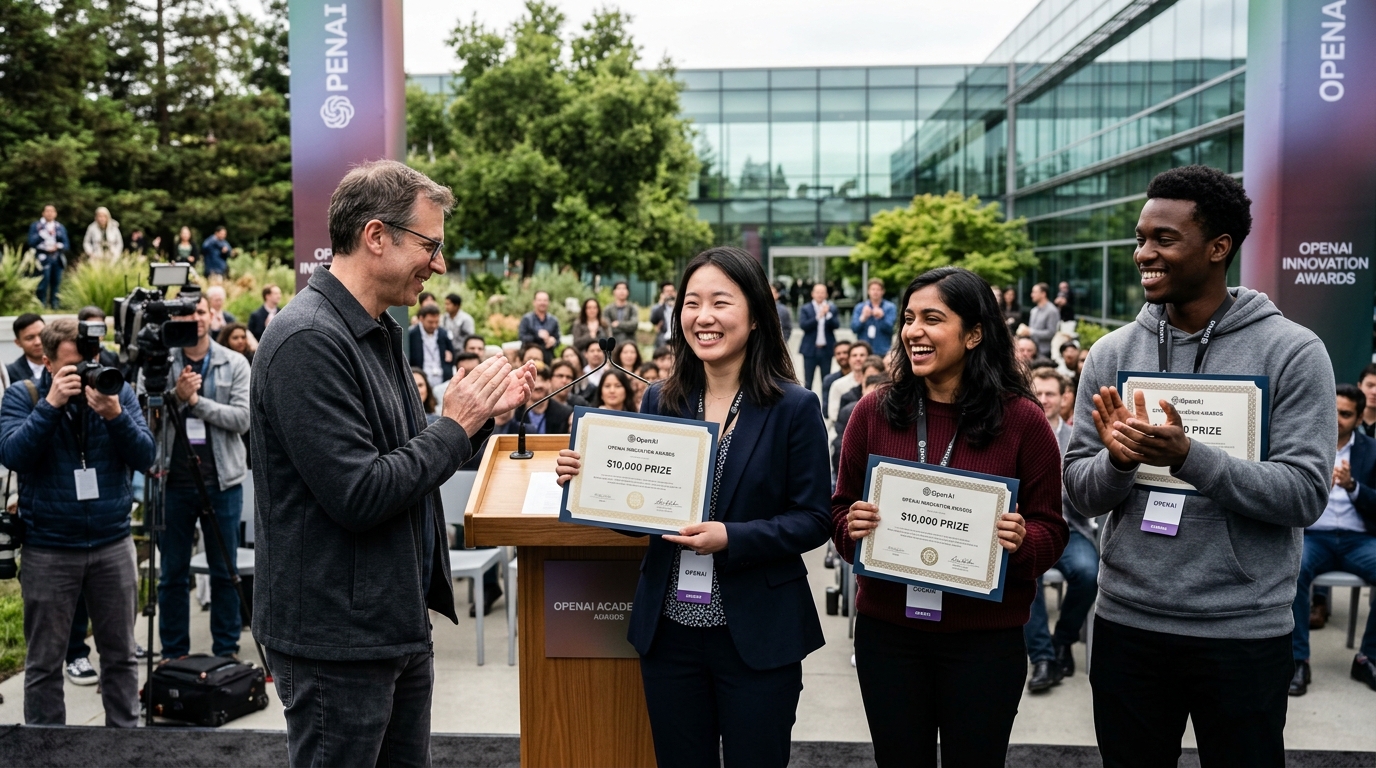
In a move that highlights its strategy to cultivate an ecosystem of loyal users and creators from an early age, OpenAI has announced it is awarding $10,000 prizes to students for innovative uses of its artificial intelligence tools. This initiative, extensively covered by Fast Company, is not merely an act of corporate social responsibility but a clear signal of how tech giants are attempting to shape the future of work and education.
The New Generation of AI-Native Creators
The prize winners did not limit themselves to simple productivity apps. Instead, they presented solutions touching on sensitive areas such as accessibility, environmental sustainability, and educational equity. For instance, one awardee developed a system using GPT-4 to convert visual data into detailed real-time audio descriptions, helping visually impaired individuals navigate unfamiliar environments.
Another student utilized OpenAI's APIs to create a personalized 'study assistant' that adapts to the user's learning style, analyzing weaknesses and suggesting specific exercises. These applications demonstrate that AI in the hands of students is no longer just a tool for avoiding homework but a platform for building real-world solutions.
OpenAI's Strategy and the War for Talent
OpenAI's decision to offer these prizes comes at a time when competition in the AI sector is fiercer than ever. With Google, Anthropic, and Meta all vying for developer attention, OpenAI knows its dominance depends on how many people choose to build on its models. By offering $10,000—a significant sum for any student—the company is essentially purchasing the mindshare and loyalty of the next generation of software engineers.
Furthermore, these awards serve as an informal talent scouting mechanism. Rather than searching blindly for talent, OpenAI is creating a pool of candidates who have already proven they can use its technology in creative and effective ways. It is a low-cost investment with potentially massive returns in terms of human capital.
Ethical Concerns and Platform Dependency
Despite the excitement, the initiative raises significant questions. Encouraging students to base their projects exclusively on proprietary models like those from OpenAI can lead to 'vendor lock-in' early in their careers. What happens if OpenAI decides to hike API prices or change terms of service? Students who have invested time and energy into learning a specific ecosystem may find themselves at a disadvantage.
There are also concerns regarding data privacy. Many of these student projects use user data to train or refine their applications. Ensuring this data is handled ethically, especially when the creators are still in a learning phase, remains a challenge the industry must address head-on.
Conclusion: The Future of Innovation
The OpenAI prizes represent a milestone in the relationship between the AI industry and the academic community. They show that innovation is not just happening in billion-dollar labs but also in dorm rooms. As AI becomes increasingly accessible, the ability to use it to solve meaningful problems will be the skill that defines success in the 21st century. OpenAI, with these $10,000 checks, is not just rewarding the past; it is betting on the future.





