

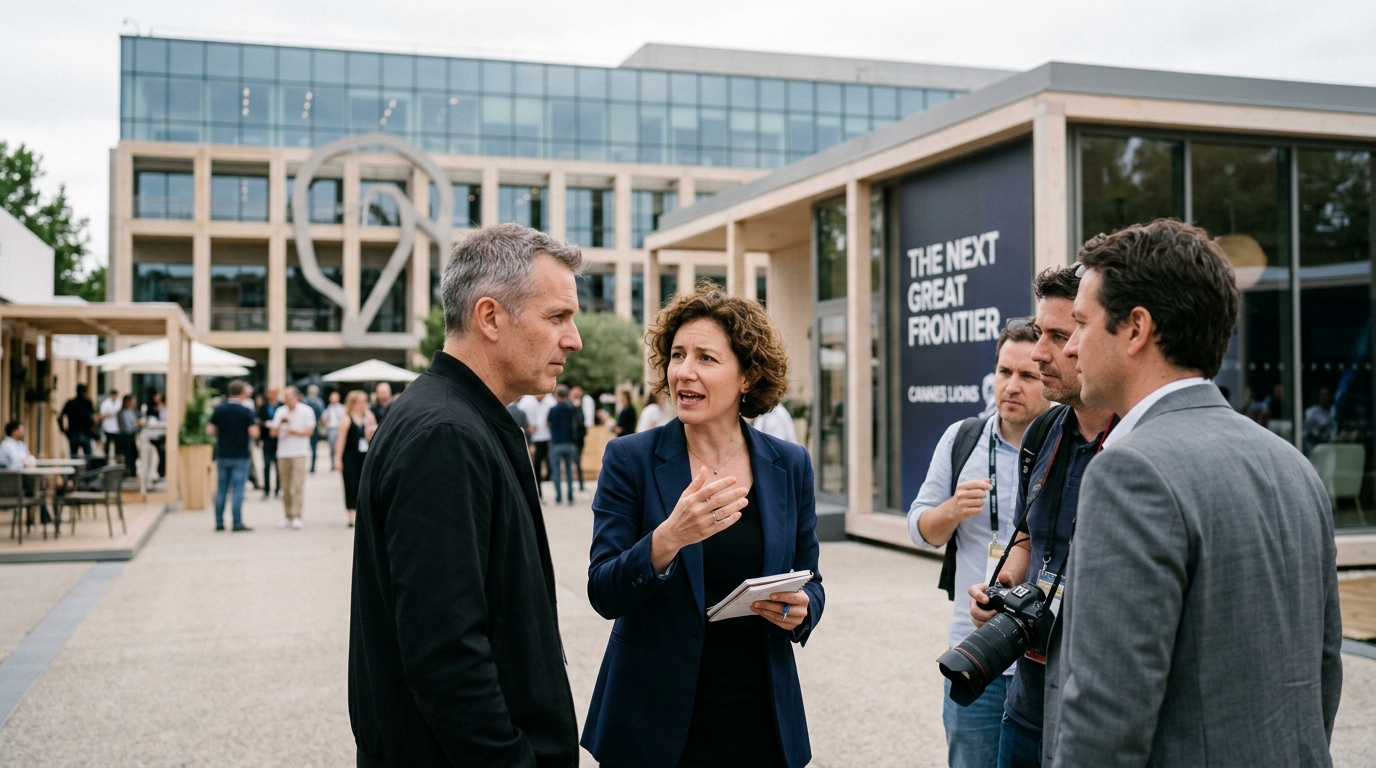
At the glittering backdrop of the Cannes Lions International Festival of Creativity, where high aesthetics meet the billions of the advertising industry, OpenAI made its most talked-about appearance to date. It is no longer just a software company showcasing the capabilities of artificial intelligence, but an emerging media giant seeking to upend the status quo dominated by Google and Meta. The core message of their presentation was clear: advertising in the age of Generative AI will not be a mere list of links, but a continuous, personalized conversation.
The Strategic Pivot Toward Revenue
For years, OpenAI relied on multi-billion dollar investments from Microsoft and user subscriptions. However, as the operating costs of Large Language Models (LLMs) remain astronomical, the need for a sustainable and scalable revenue stream has become imperative. Entering the advertising space is not just an option; it is a strategic necessity. In Cannes, OpenAI’s leadership team, led by Chief Operating Officer Sarah Friar, demonstrated how ChatGPT can function as an "intelligent intermediary" between consumers and products.
Unlike traditional search, where a user receives a list of results, OpenAI proposes an experience where the brand is organically integrated into the response. For instance, if a user asks for advice on planning a trip to Italy, ChatGPT won’t just suggest destinations; it could offer specific deals from partner airlines or hotels, integrated in a way that feels like natural advice rather than an intrusive banner.
The Challenge of Trust and Authenticity
The big question looming over the Croisette is whether users will accept the commodification of their personal conversations with AI. OpenAI argues that its approach will be "less intrusive" than current models. However, analysts warn of the risk of the "illusion of neutrality." If a user perceives the AI as an objective assistant, discovering that its answers are influenced by paid partnerships could shatter their trust.
"Advertising in AI must be useful, not just visible. It must add value to the conversation, otherwise, it risks destroying the magic of the technology," an OpenAI executive stated during a private dinner with top advertisers.
Furthermore, there is the technical issue of "hallucinations." Advertisers worry that the AI could misrepresent a product’s features or associate it with inappropriate content. OpenAI promises strict filters and brand safety tools, allowing companies to precisely define the context in which they appear.
Impact on the Marketing Ecosystem
This move sends shivers through Alphabet (Google). If ChatGPT becomes the primary gateway for users to access the internet, the traditional Google Ads model will take a significant hit. Simultaneously, advertising agencies are being forced to reinvent themselves. It is no longer enough to create a beautiful video or a poster; it requires the creation of "conversational content" that can adapt in real-time to user queries.
- Personalization at Scale: Every advertisement will be unique to each individual user based on their specific intent.
- Shift in Metrics: Clicks might be replaced by "depth of engagement" within a conversation.
- New Forms of Partnership: Brands will train specialized "GPTs" to serve their customers directly within the ecosystem.
In conclusion, OpenAI's presence at Cannes marks the end of the honeymoon period for AI as a free experiment. The technology is entering its mature phase of commercialization, and the battle for consumer attention—and their wallets—now flows through the algorithms of large language models. Whether this leads to more useful advertising or a new era of digital manipulation remains to be seen.





