

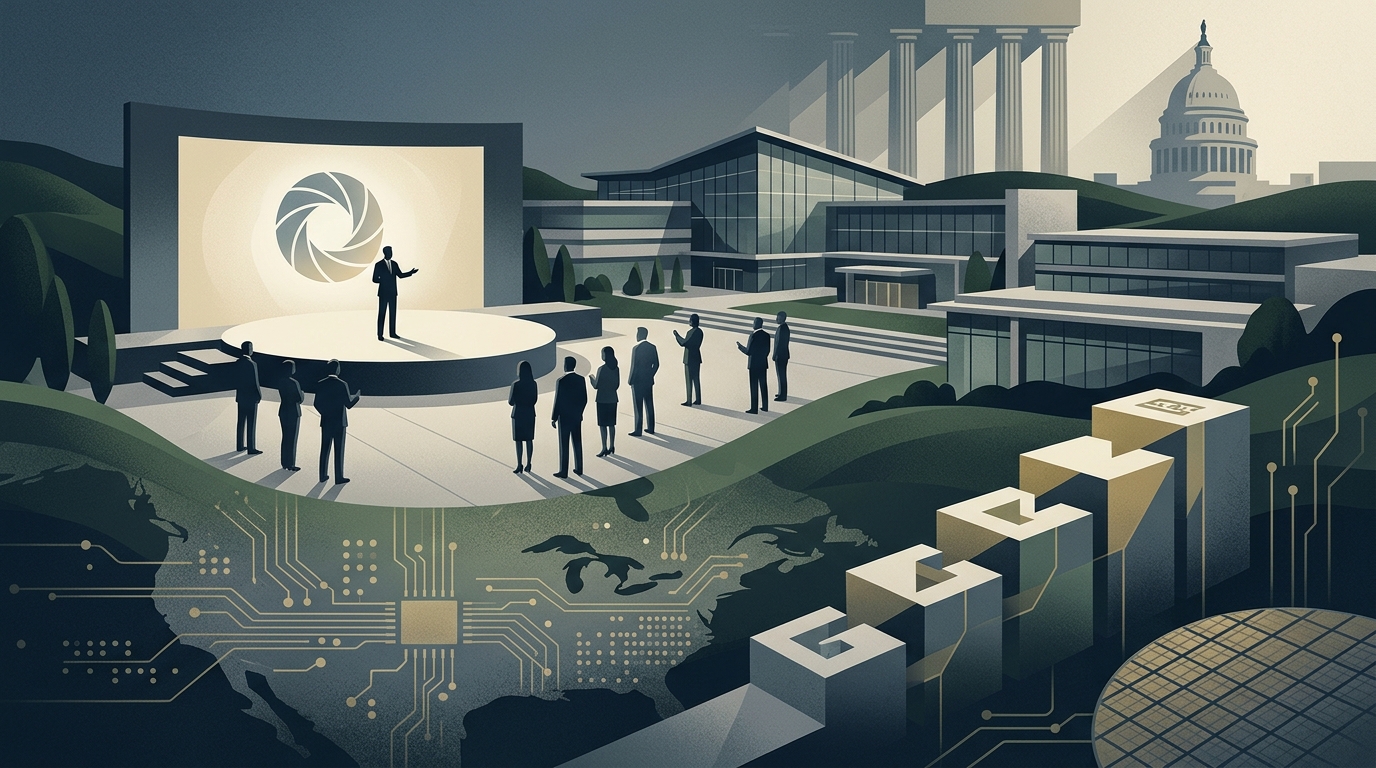
In a move that could dismantle decades of economic orthodoxy in Silicon Valley, OpenAI, the powerhouse behind ChatGPT, is reportedly in preliminary discussions to grant a 5% equity stake to the United States federal government. This proposal, emerging at a pivotal moment for the Donald Trump administration, is far more than a mere business transaction; it is a geopolitical manifesto. If realized, it would transition OpenAI from a private entity into a "national champion," inextricably linking the trajectory of American power to the evolution of artificial intelligence.
The Transformation of OpenAI and the 'Stargate' Vision
OpenAI is currently undergoing a fundamental metamorphosis. Shifting from its non-profit roots toward a for-profit "Public Benefit Corporation," the company is seeking a new structural identity. Within this context, the 5% equity offer serves as a potential quid pro quo for the massive infrastructural support required to maintain American AI leadership. Sam Altman, OpenAI’s CEO, has consistently argued that the path to Artificial General Intelligence (AGI) demands energy and computing power on a scale that perhaps only a sovereign state can facilitate.
Central to this strategy is the so-called "Stargate" project—a projected $100 billion investment aimed at constructing massive data centers. OpenAI requires expedited permitting, direct access to the power grid, and sovereign protection against global competitors. By offering equity, the company is effectively attempting to secure political favor and national security status, insulating itself from antitrust pressures and international rivalry, particularly from China.
The Political Dimension: Trump and Technological Nationalism
The Trump administration has signaled a clear preference for "America First" policies within the tech sector. The concept of a government stake in a leading AI firm aligns seamlessly with a narrative of strengthening national sovereignty. However, this proposal raises profound questions regarding technological independence. Can an AI, partially owned by the government, remain an objective arbiter of information? Or does it risk becoming an instrument for state-aligned narratives and surveillance?
Critics argue that this move mirrors the state-led capitalism models of East Asia, where the state and corporate titans function as a unified apparatus. For a Silicon Valley that has traditionally championed libertarian ideals, this pivot is nothing short of revolutionary. Nevertheless, the perceived existential threat posed by China’s AI advancements appears to be overriding ideological hesitations in Washington and San Francisco alike.
Economic Implications and the Microsoft Factor
Microsoft, OpenAI’s primary backer to date, is watching these developments with calculated interest. While a government stake could complicate existing commercial agreements, it might also mitigate long-term regulatory risks. With OpenAI’s valuation hovering around $150 billion, a 5% stake translates to roughly $7.5 billion. For the U.S. Treasury, this represents a significant potential windfall, but also the burden of overseeing an asset that will influence every sector of the global economy.
- Acceleration of domestic semiconductor production and energy infrastructure.
- Establishment of a regulatory environment that favors "national champions" over decentralized competitors.
- Integration of AI capabilities into military and intelligence frameworks with direct federal oversight.
Ultimately, OpenAI’s proposal is not just about shares and dividends. It is about who will hold the keys to the 21st century’s most potent technology. If the Trump administration accepts this gambit, we will enter a new era of state-sponsored innovation where the boundaries between public interest and private profit become permanently blurred.





