

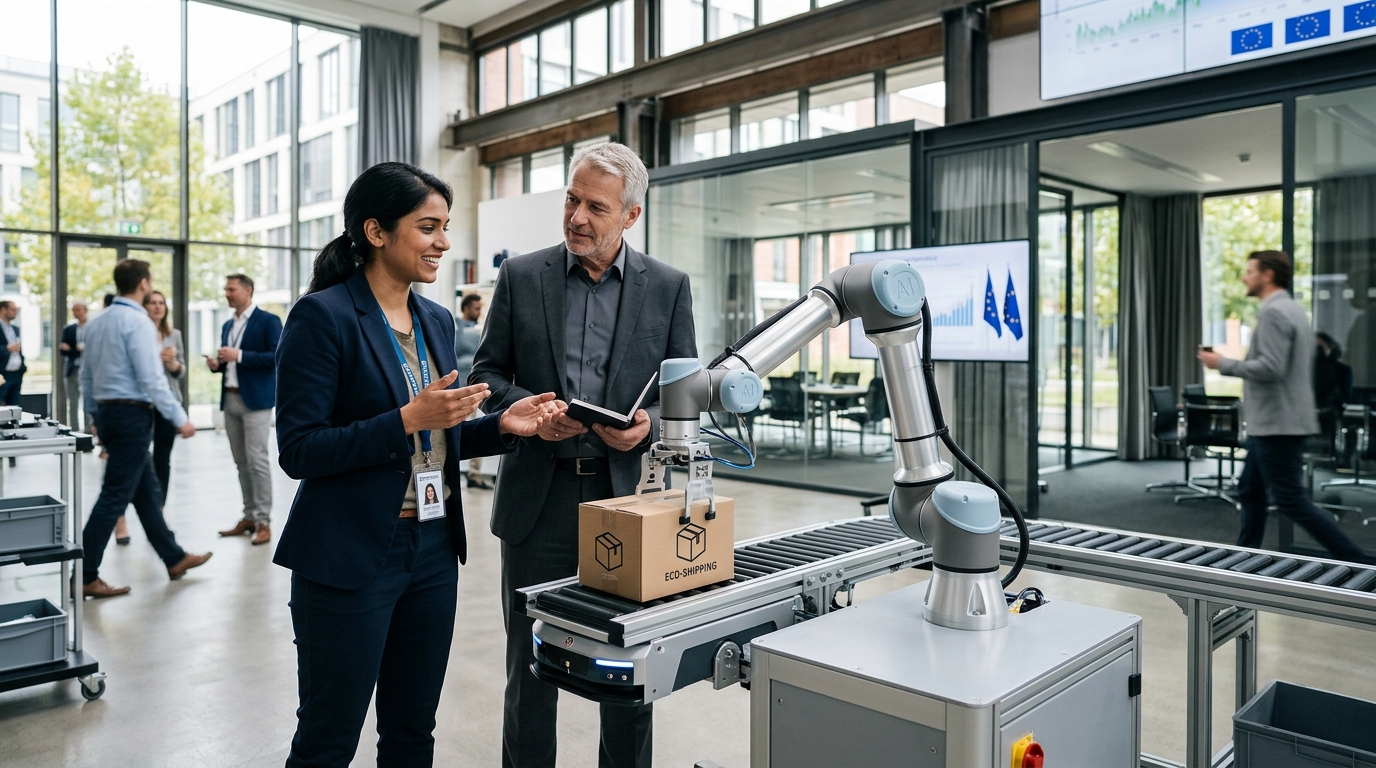
At the heart of the digital economy, Europe is attempting more than a simple infrastructure upgrade: it is trying to redesign the relationship between machine and worker. As we move through the first half of 2026, e-commerce on the continent is no longer characterized solely by delivery speed, but by the intelligence of distribution. From Norwegian warehouses to French logistics centers, European AI solutions are creating a new paradigm that balances profitability with social responsibility.
The Rise of 'Cobots' and Warehouse Automation
The image of dark warehouses where robots move in total isolation is giving way to 'cobots' (collaborative robots). Companies like Norway's AutoStore and France's Exotec have managed to impose their systems globally, offering solutions that do not simply replace humans but work alongside them. These systems use advanced AI algorithms to predict demand in real-time, moving products most likely to be ordered to more accessible points in the warehouse.
The European approach differs radically from that of the American giant Amazon. While competition often pushes the limits of human endurance, European solutions incorporate ergonomic data and constraints imposed by strict EU labor laws. AI here acts not only as a production accelerator but also as a safety guarantor, predicting worker fatigue or suggesting alternative routes to avoid accidents.
Hyper-personalization and the LLM Revolution in Retail
Beyond warehouse walls, AI is drastically changing the consumer experience. The use of Large Language Models (LLMs) trained in European languages and cultural contexts allows businesses to offer a shopping experience reminiscent of a traditional neighborhood shopkeeper, on a digital scale. AI assistants no longer respond with canned phrases; they understand the tone, intent, and preferences of the customer, while complying with strict GDPR standards.
This 'hyper-personalization' allows small and medium-sized European enterprises to compete on equal terms with giants. By analyzing vast volumes of data without violating privacy, algorithms can recommend products that perfectly fit the consumer's lifestyle, while simultaneously reducing the rate of returns — one of the greatest costs and environmental burdens of e-commerce.
Ethics and the Green Supply Chain
One of the most important pillars of European strategy is sustainability. AI is used to optimize last-mile delivery routes, reducing CO2 emissions by 20-30%. Furthermore, AI solutions help predict inventory surpluses, preventing overproduction and resource waste. Within the framework of the EU Green Deal, technology is not just a tool for profit, but a means to achieve climate goals.
The implementation of the AI Act, the world's first comprehensive legal framework for artificial intelligence, gives European companies a comparative advantage: trust. Consumers are more willing to interact with systems they know are audited, transparent, and do not use their data unfairly. This 'European quality mark' in AI is starting to become an exportable product as other regions of the world seek regulatory models.
Conclusions for the Future
The challenge for Europe is to maintain this pace of innovation without sacrificing its values. The collaboration of robots and humans in e-commerce is a precursor to how AI can be organically integrated into society. If the first phase of e-commerce was about digitizing the market, the current phase is about humanizing the technology that supports it. Europe, with the solutions it proposes, shows that there is a third way between unchecked techno-capitalism and state control.





