

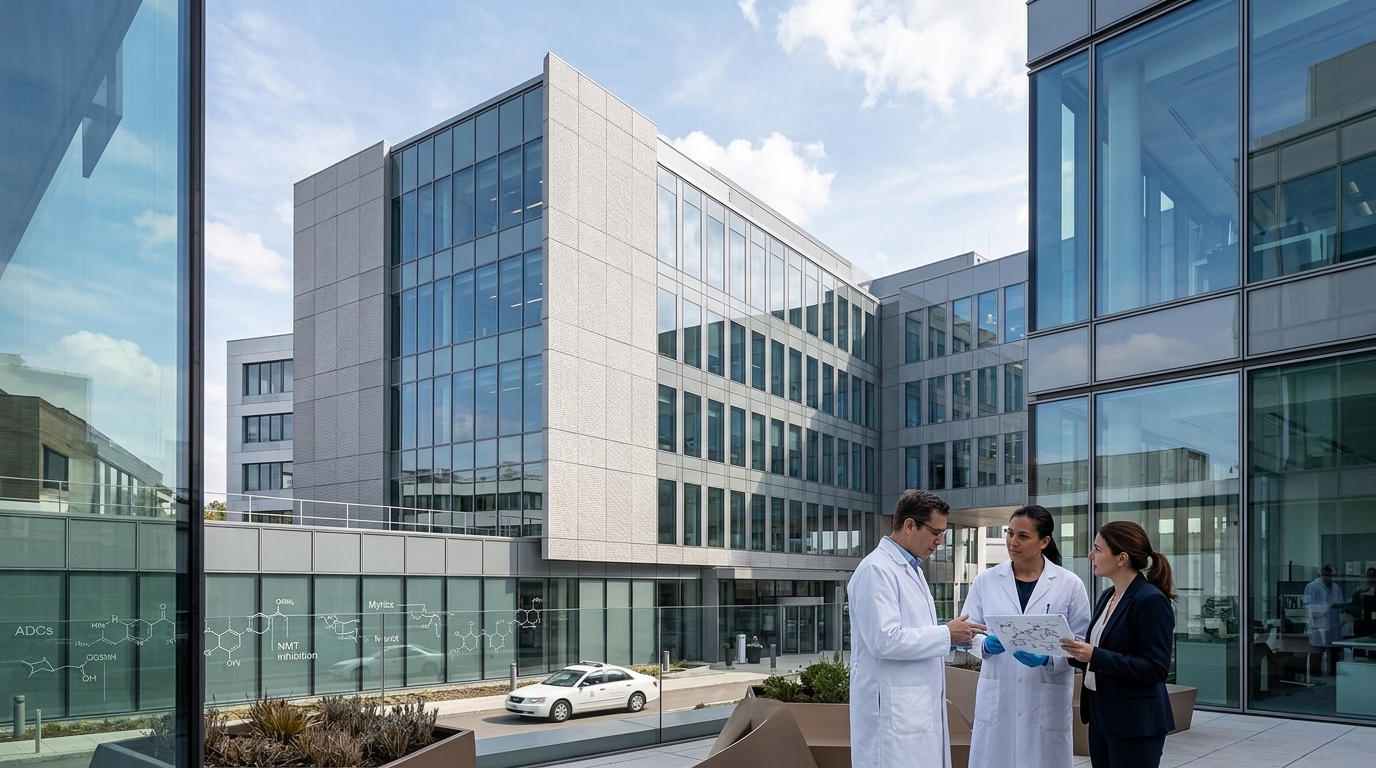
In a move that underscores the intense activity within the biotechnology sector and the relentless pursuit of next-generation oncological therapies, Novartis has announced a definitive agreement to acquire Myricx Bio. The deal, which could reach a total value of $1.1 billion, brings a pioneering platform into the Swiss giant's portfolio, promising to reshape the treatment landscape for solid tumors.
The Science of Precision: ADCs and Myricx's Innovation
Antibody-Drug Conjugates (ADCs) are often described by the scientific community as "smart bombs." Their philosophy is simple yet technically formidable: they combine the exquisite targeting of monoclonal antibodies with the destructive power of cytotoxic drugs. The antibody identifies specific proteins on the surface of cancer cells and delivers the drug "payload" directly to the target, minimizing collateral damage to healthy tissues.
However, Myricx Bio, a spin-out from London's Imperial College and the Francis Crick Institute, brings something unique to the table. Its platform focuses on N-myristoyltransferase (NMT) inhibition. This is an entirely new mechanism of action for ADCs. While most existing therapies use payloads that damage DNA or microtubules, Myricx targets protein modification—an approach that could prove effective in tumors that have developed resistance to traditional chemotherapies.
Novartis's Strategic Metamorphosis
This acquisition is not an isolated event but part of a broader strategic blueprint. Under the leadership of CEO Vas Narasimhan, Novartis has undergone a radical restructuring, spinning off its generics division (Sandoz) to focus exclusively on high-value innovative medicines. Oncology remains the central pillar of this strategy.
"The investment in Myricx reflects our conviction that the next phase of oncology will be defined by our ability to deliver more potent payloads with even greater precision," sources close to the company's leadership stated.
By integrating NMT technology, Novartis hopes to create a new class of ADCs that could offer solutions in difficult cases, such as lung and breast cancer, where current therapies are reaching their limits. The deal includes an upfront payment of $250 million, with the remainder payable based on clinical and commercial milestones—a structure that mitigates risk for the buyer while offering substantial returns for Myricx's backers.
Competition and the London Ecosystem
The ADC market has turned into a battlefield for pharmaceutical titans. Following Pfizer’s $43 billion acquisition of Seagen and aggressive moves by AbbVie and AstraZeneca, Novartis had to act swiftly to maintain its competitive edge. Myricx Bio stands as a "jewel in the crown" of the UK's biotech ecosystem, proving that academic research in London can yield world-class commercial opportunities.
Despite the challenges facing the UK economy post-Brexit, the life sciences sector remains one of the most resilient and attractive for foreign investment. Myricx's success sends a powerful message that innovation knows no borders, provided there is adequate funding and scientific talent available.
Challenges and Future Outlook
Of course, the road from the laboratory to the pharmacy is long and fraught with failure. The clinical trials of Myricx’s lead candidates will be the ultimate test. Novartis must demonstrate that NMT inhibition is safe for patients and does not cause excessive toxicity—a common hurdle for first-generation ADCs.
In conclusion, the Novartis-Myricx deal is a bold bet on the future of precision medicine. If the technology delivers, Novartis will possess a powerful tool that could potentially transform cancer from a terminal diagnosis into a manageable chronic condition for millions of people worldwide.





