

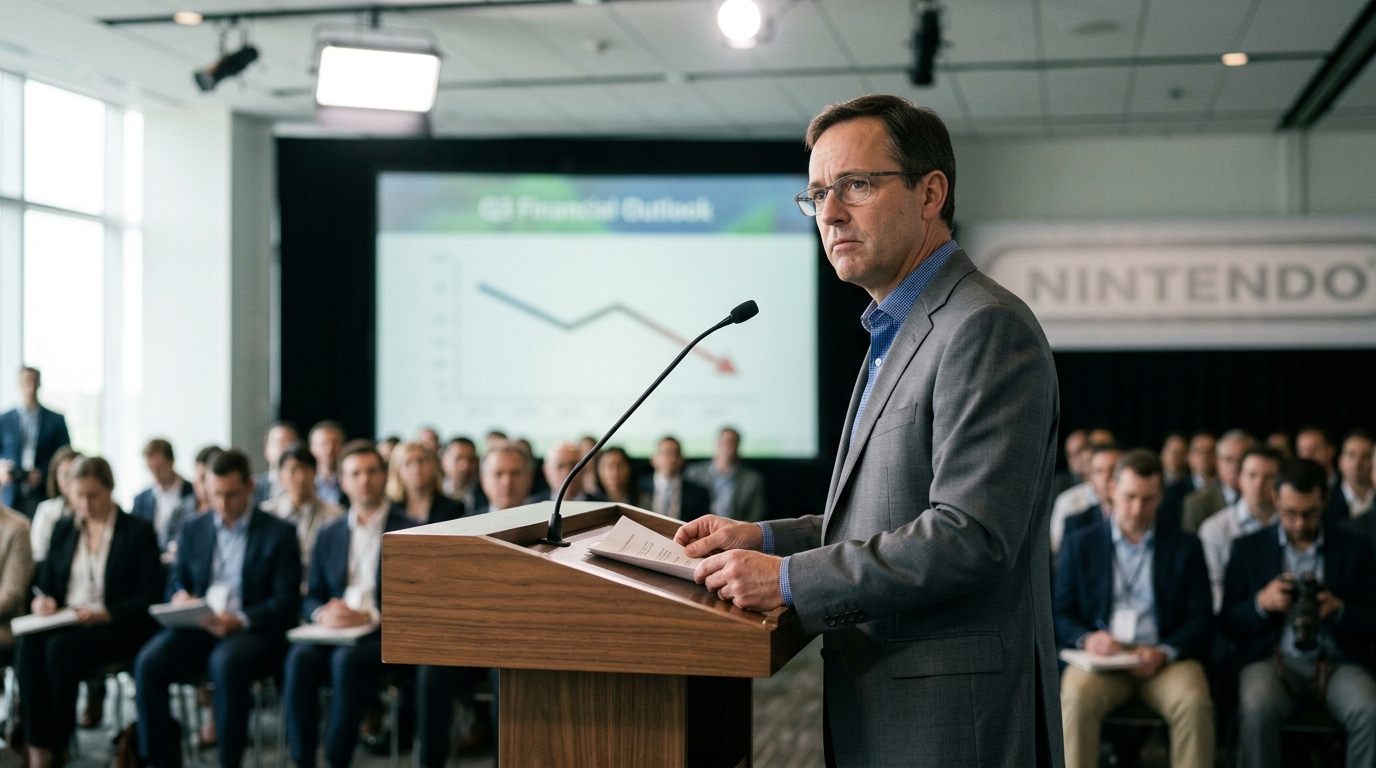
In a move that has sent ripples through the global gaming industry, Nintendo Co. has officially signaled its intent to raise the retail price of its next-generation console, the Switch 2, from $450 to $500. This decision, coming at a time of heightening competition and shifting consumer spending habits, reflects the intense profitability pressures facing the Kyoto-based giant as it grapples with rising component costs and a complex macroeconomic environment.
The announcement was coupled with a conservative earnings forecast for the console's second year on the market, leading to a noticeable dip in Nintendo's share price on the Tokyo Stock Exchange. Analysts suggest that Nintendo is at a critical juncture, attempting to balance its commitment to technological evolution with its long-standing reputation as a provider of accessible, family-oriented entertainment.
The Margin Squeeze and Manufacturing Realities
The $50 price hike is not merely a tactical revenue grab; it is a direct response to the escalating costs of modern hardware manufacturing. The Switch 2, which features sophisticated technologies such as Nvidia's DLSS (Deep Learning Super Sampling) for AI-driven image upscaling, requires significantly more expensive internal components than its predecessor. Global inflationary pressures and volatility in the raw materials market have made the initial $450 price point increasingly difficult to sustain without eroding the company's operating margins.
According to internal sources cited by Bloomberg, Nintendo had initially hoped that production efficiencies would scale quickly enough to keep the price below the psychological $500 threshold. However, persistent shortages of specialized sensors and rising logistics costs forced the leadership in Kyoto to reconsider. This move places the Switch 2 in direct pricing competition with the PlayStation 5 and Xbox Series X—a territory Nintendo has traditionally avoided in favor of its "Blue Ocean" strategy of catering to a broader, less tech-obsessed audience.
Disappointing Forecasts and the Software Gap
Beyond the price adjustment, investors reacted sharply to Nintendo's cautious outlook for software sales in the 2026-2027 fiscal year. Despite a strong initial launch lineup, the lack of confirmed "system-seller" titles—such as a new mainline Mario or Zelda game—for the upcoming period has caused concern. Nintendo appears to be relying on remasters and smaller-scale iterations to bridge the gap, a strategy that market observers view as potentially insufficient to maintain the momentum of a $500 device.
History has shown that Nintendo consoles live and die by their exclusive content. If the price rises to $500 without a commensurate increase in the perceived value of the software library, the early adoption curve could flatten significantly. Analysts at Jefferies noted that "Nintendo is asking consumers to pay premium prices for hardware that, while improved, still trails the raw power of Sony and Microsoft's offerings." The value proposition must therefore shift entirely to the uniqueness of the Nintendo experience.
The Challenge of AI and Portable Competition
A fascinating element of the Switch 2's value proposition is its integration of AI capabilities. The device is not just a more powerful handheld; it is a platform that leverages algorithms to deliver visual fidelity that previously required much bulkier hardware. This investment in R&D is a primary driver of the price hike. Nintendo is betting that consumers will recognize that "intelligent" performance is worth the extra cost, even if the raw specifications don't match a high-end PC.
However, the landscape has changed since the original Switch launched in 2017. The rise of cloud gaming and powerful handheld PCs like the Steam Deck has crowded the market. Nintendo is no longer the sole provider of high-quality portable gaming. At $500, the Switch 2 enters a tier where consumers are more discerning and less loyal if the user experience or performance-to-price ratio falters. Nintendo's ability to maintain its closed, highly profitable ecosystem will be tested as never before over the next twelve months.
In conclusion, Nintendo's move is a high-stakes gamble. By raising the price, the company protects its bottom line in the short term but risks alienating a segment of its traditional fanbase. Whether the Switch 2 can replicate the historic triumph of its predecessor will now depend less on the hardware itself and more on the creative magic that the developers in Kyoto can conjure to justify the premium entry fee.





