

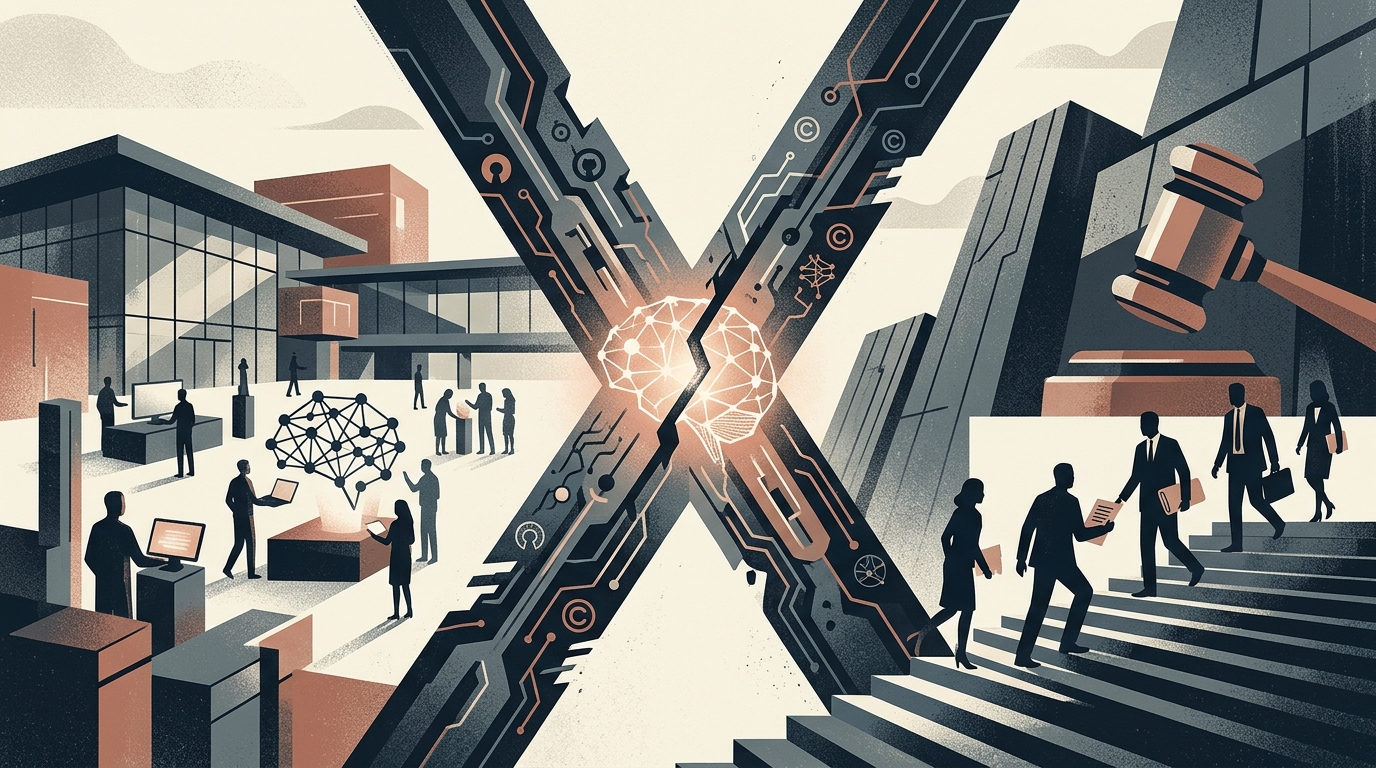
The legal battle between Elon Musk and OpenAI, the organization he helped co-found, is far more than a simple breach-of-contract case. It is an existential clash over who controls the most powerful technology humanity has ever devised. As of May 2026, the case has escalated beyond the courtrooms of San Francisco, touching upon the very foundations of AI ethics and the role of Big Tech in shaping our collective future.
The Betrayal of a 'Founding Agreement'
At the heart of Musk’s lawsuit is the allegation that OpenAI has betrayed its original mission: to develop Artificial General Intelligence (AGI) for the benefit of humanity, free from the pressures of commercial profit. Musk contends that OpenAI’s intimate partnership with Microsoft has turned the organization into a "de facto closed-source subsidiary" of the software giant. According to court filings, Musk argues that the pivot to a closed-source model starting with GPT-4 represents a flagrant violation of the promises made to him when he invested tens of millions of dollars during the company's infancy.
OpenAI, led by CEO Sam Altman, has fired back by releasing past emails suggesting that Musk was not only aware of but supported the need for massive capital—which only a for-profit structure could attract—to compete with Google’s DeepMind. OpenAI’s legal team maintains that no formal "founding agreement" ever existed in the way Musk describes, but rather a shared vision that had to evolve to meet the staggering realities of compute costs and infrastructure requirements.
The AGI Threshold and the Microsoft Factor
One of the most critical aspects of the trial is the definition of AGI. OpenAI’s licensing agreement with Microsoft stipulates that Microsoft only has rights to OpenAI’s technology until the point it is deemed to have achieved AGI. Musk claims that the company's latest models have already touched or surpassed the AGI threshold, meaning OpenAI should legally be required to halt commercial exploitation via Microsoft and release the technology to the public.
- The legal interpretation of "what constitutes AGI" will set a global precedent for the entire industry.
- The transparency paradox: Is safety a valid excuse for maintaining a closed-source monopoly?
- The governance of OpenAI and the influence of its board remain under intense scrutiny following the 2023 leadership crisis.
Economic and Geopolitical Implications
The outcome of this fight will dictate the future of AI investment. Should Musk prevail, OpenAI could be forced to open-source its proprietary models, a move that would send shockwaves through Microsoft’s market valuation and fundamentally alter the dynamics of global tech competition. Conversely, a victory for OpenAI would solidify the model of "guarded development," where a handful of corporations hold the keys to superintelligence, citing national security and safety as justifications for gatekeeping.
"This isn't about the money; it's about whether AI belongs to everyone or a handful of billionaires," Musk recently stated, though critics are quick to point out that he is simultaneously building his own rival AI firm, xAI.
In conclusion, Musk vs. OpenAI is a mirror reflecting the contradictions of our era. On one side stands the ideal of open science and democratic oversight; on the other, the raw capital requirements for building the most complex machine in history. The court's decision will resonate for decades, determining whether AI will be an open book for humanity or a locked vault for shareholders.





