

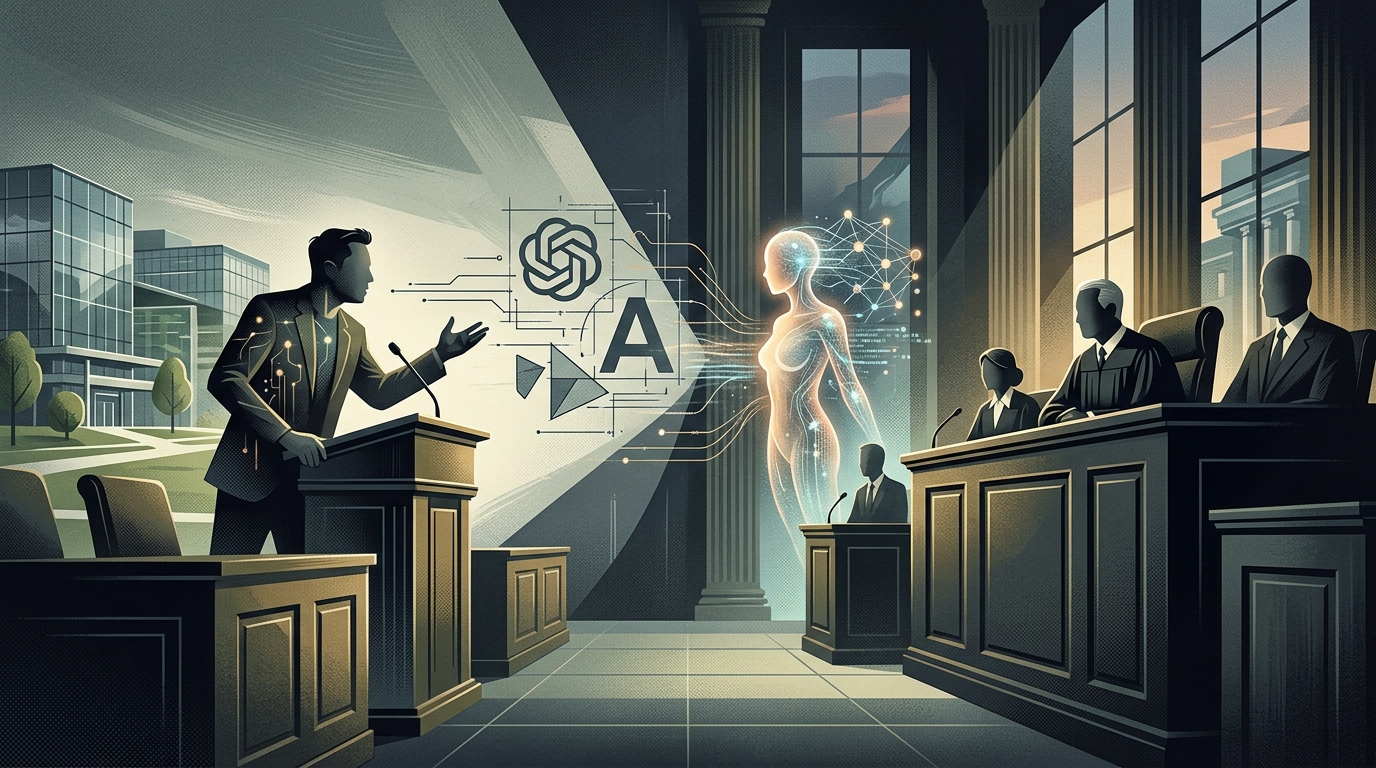
The saga of OpenAI began at a Silicon Valley dinner in 2015, with a promise to save humanity from the existential risks of uncontrolled Artificial Intelligence. Today, in May 2026, that promise has devolved into one of the most bitter, public, and legally convoluted disputes in the history of technology. The courtroom battle between Elon Musk and OpenAI—the company he helped found—is no longer just about code or algorithms; it is about power, billions of dollars, and the very narrative of who gets to control the future of intelligence.
The Betrayal of Ideals and the Pivot to Profit
At the heart of Musk’s lawsuit is the allegation that OpenAI betrayed its founding mission: to remain a non-profit organization developing Artificial General Intelligence (AGI) for the benefit of humanity, free from corporate constraints. Musk argues that the company’s close partnership with Microsoft has transformed it into a "de facto closed-source subsidiary" of the Redmond-based tech giant. To Musk, OpenAI is no longer the "open" beacon of knowledge he envisioned, but a profit-generating machine sacrificing safety at the altar of commercial dominance.
However, OpenAI’s defense, led by CEO Sam Altman, has painted a starkly different picture. By releasing internal emails, the company revealed that Musk was not only aware of the pivot toward a for-profit model but had suggested it himself when he realized that achieving AGI would require billions of dollars in compute power. The revelation that Musk wanted to merge OpenAI with Tesla or take full control of the entity in 2018 has severely damaged his persona as the "altruistic protector" of AI ethics.
Legal Substance: Contracts vs. Handshakes
Legally, the case moves through uncharted territory. Musk’s legal team is attempting to prove the existence of a "Founding Agreement" which, while never signed as a formal contract, is allegedly reflected in early communications and the company’s certificate of incorporation. OpenAI counters that no such binding agreement ever existed and that Musk’s claims are legally baseless, characterizing the lawsuit as an attempt by the billionaire to undermine a competitor that has outpaced his own efforts at xAI.
The proceedings have exposed the inner workings of OpenAI’s board, particularly following the dramatic attempted ouster and subsequent reinstatement of Altman in late 2023. Witness testimonies describe an atmosphere of intense suspicion, where philosophical disagreements over AI safety clash with the urgent need for product development (such as GPT-5 and Sora). The courtroom has become a theater for the personal grievances of individuals who hold the keys to the next stage of digital evolution.
Implications for the AI Ecosystem
Beyond the personal drama, the case carries heavy implications for the entire industry. First, it brings the "Open Source vs. Closed Source" debate to a legal head. If OpenAI is fully vindicated, the model of closed, commercial development will be solidified as the industry standard, potentially discouraging transparency. If Musk manages to force a return to "open" roots, it could compel the company to reveal trade secrets, affecting Microsoft’s stock and market stability.
Furthermore, the dispute highlights the failure of self-regulation in Silicon Valley. The fact that the fate of the century’s most powerful technology is being decided in a courtroom due to personal ego clashes underscores the need for clearer institutional frameworks from governments. Regulators in the EU and the US are watching closely, as revelations about OpenAI’s governance structure could trigger new antitrust investigations into the nature of its partnership with Microsoft.
Conclusion: A Race with No Winners
As the trial proceeds, it is becoming clear that there will be no true winners. OpenAI has lost its halo as a "non-profit savior," appearing instead as a ruthless corporate player. Elon Musk, on the other hand, seems caught in a contradictory rhetoric, decrying profit-seeking while simultaneously leading xAI, his own for-profit competitor. Ultimately, this "humiliating" drama serves as a reminder that Artificial Intelligence, despite its digital nature, remains a deeply human creation, bound by the passions, ambitions, and flaws of its architects.





