

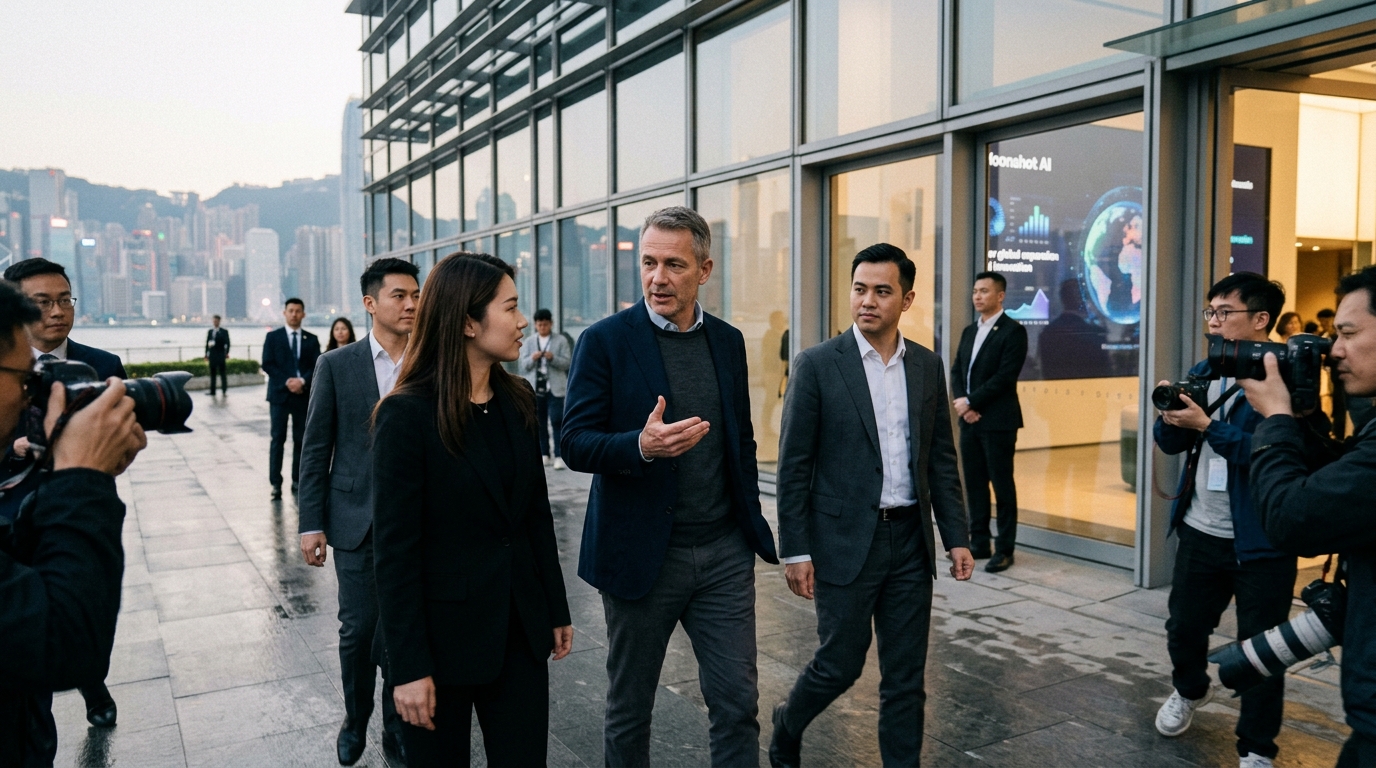
In the rapidly evolving landscape of global technology, Moonshot AI, one of China's most promising artificial intelligence startups, appears to be making a definitive move toward financial maturity. According to reports from AASTOCKS, the company is restructuring its corporate framework to pave the way for an initial public offering (IPO) on the Hong Kong Stock Exchange (HKEX). This move is far more than a simple fiscal exercise; it is a strategic maneuver reflecting the complex geopolitical and economic realities of May 2026.
The Ascent of Moonshot AI and the Kimi Phenomenon
Founded by Yang Zhilin—a former researcher at Google and Meta with a formidable pedigree in large language models (LLMs)—Moonshot AI quickly ascended to become a cornerstone of China's AI ecosystem. Its flagship product, the Kimi chatbot, gained immediate traction for its industry-leading context window capabilities. By supporting up to 2 million Chinese characters in a single prompt, Kimi addressed a critical pain point for enterprise users and researchers alike, setting a benchmark that even global giants struggled to match initially.
The reported restructuring involves a transition from a domestic-only focus to a structure compatible with offshore listings, likely utilizing a Variable Interest Entity (VIE) or a similar offshore holding company model. This transition is essential for Moonshot to tap into international capital markets while remaining compliant with Beijing's stringent data security laws and regulations regarding the export of sensitive technologies.
Strategic Choice: Why Hong Kong is the Logical Destination
The decision to target Hong Kong rather than New York is a sign of the times. For over a decade, the Nasdaq was the ultimate goal for Chinese tech firms. However, heightened scrutiny from the SEC and the persistent threat of delisting under the Holding Foreign Companies Accountable Act (HFCAA) have cooled the allure of Wall Street. Hong Kong offers a sophisticated alternative: a world-class regulatory environment that provides access to global institutional liquidity while maintaining a strategic link to mainland China via the Stock Connect programs.
Furthermore, Moonshot AI enjoys the backing of heavyweights such as Alibaba, Tencent, and HongShan (formerly Sequoia China). For these venture capital and corporate investors, an IPO represents a vital liquidity event. As the company’s valuation has already soared past the $2.5 billion mark, a public listing in Hong Kong is seen as the most viable path to realize gains while navigating the regulatory sensitivities of both Washington and Beijing.
The Competitive Landscape and the Compute Crunch
Despite its technical prowess, Moonshot AI is entering a crowded and aggressive market. Inside China, the "War of the Large Models" is in full swing. Baidu’s Ernie Bot and Alibaba’s Tongyi Qianwen have significant head starts in terms of ecosystem integration. Moreover, a price war in the LLM API market has seen costs plummet, forcing startups to find unique value propositions beyond mere text generation.
The most significant hurdle, however, remains the "compute crunch." U.S. export restrictions on high-end GPUs, such as Nvidia’s latest Blackwell series, have forced Chinese AI firms to become incredibly resourceful. Moonshot AI’s IPO proceeds will likely be earmarked for securing massive amounts of computing power, whether through domestic hardware alternatives or sophisticated cloud-based arrangements, and for retaining the elite engineering talent necessary to stay ahead of the curve.
"The transition from a high-growth research lab to a public company is the ultimate stress test. In 2026, the market no longer rewards hype; it rewards sustainable unit economics and proven enterprise utility," notes a senior tech analyst in Singapore.
In conclusion, Moonshot AI’s potential IPO serves as a bellwether for the entire Chinese AI sector. A successful listing would validate the "AI Tiger" model and provide a template for other unicorns like Zhipu AI and MiniMax. It signals that despite geopolitical headwinds, the drive for AI supremacy remains a well-funded and strategically organized endeavor, with Hong Kong serving as the vital financial gateway for the next generation of tech giants.





