

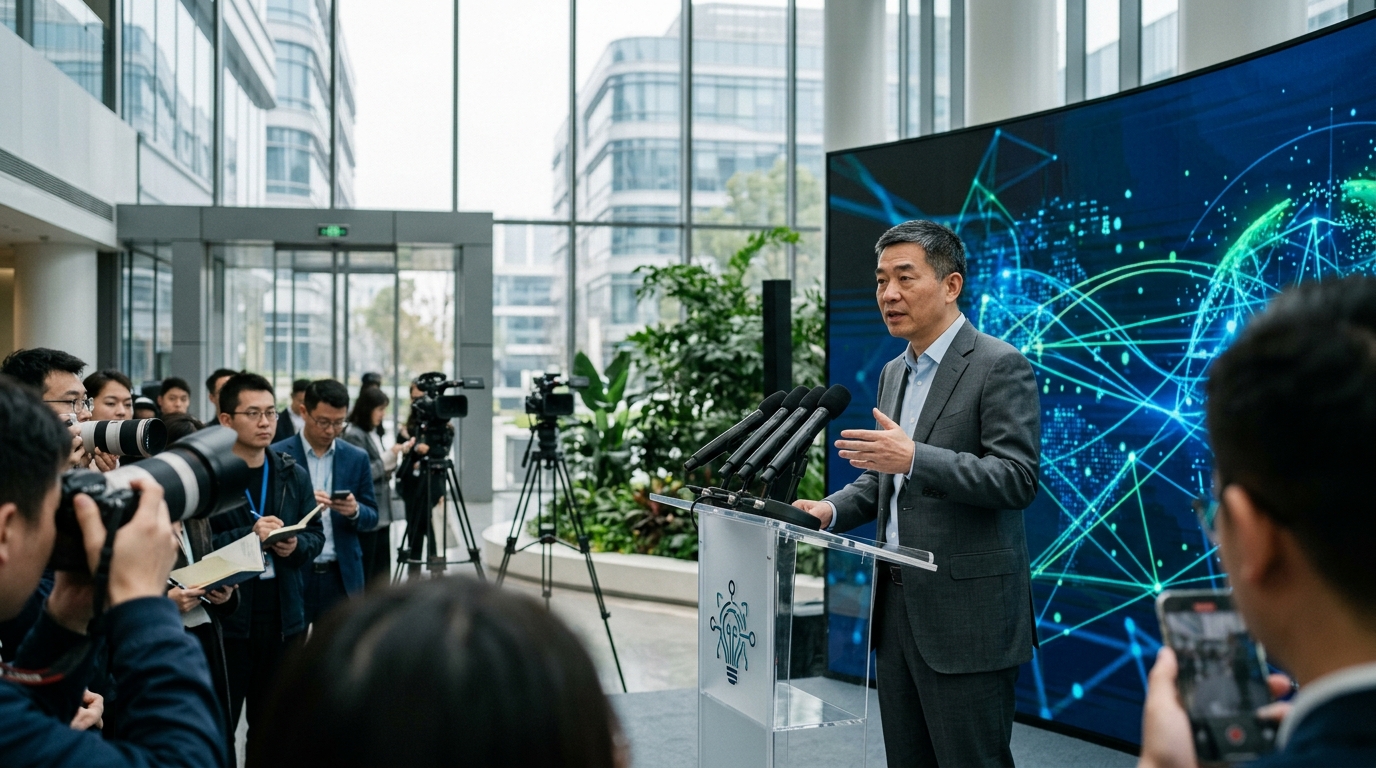
In the global chess match of technological supremacy, China is moving its pieces with dizzying speed. The recent news that MiniMax, one of the most promising AI startups in the country, has finalized a funding round valuing it at billions of dollars is more than just a business headline. It is a clear signal that Beijing has no intention of letting OpenAI and Microsoft monopolize the future of intelligence.
The Emergence of the 'Six Little Dragons'
MiniMax belongs to an elite group of companies that domestic analysts have dubbed the 'Six Little Dragons' of Chinese AI. Alongside Moonshot AI, Zhipu AI, and Baichuan, MiniMax is leading the charge to create domestic Large Language Models (LLMs) that can rival GPT-4. Founded in 2021 by former SenseTime executives, the company has managed to capture the attention of giants like Alibaba and Tencent, who are now aggressively investing in external startups rather than relying solely on their internal R&D departments.
MiniMax’s strategy is distinguished by its focus on 'social intelligence.' Its application, Talkie, has seen massive international success, allowing users to interact with AI characters possessing memory and personality. This pivot toward consumer products, combined with robust infrastructure for enterprise solutions, makes it a comprehensive player in the market.
Alibaba’s Strategic Pivot and Market Consolidation
Alibaba’s participation in this $2 billion funding wave marks a turning point. Following its corporate restructuring, Alibaba is functioning more like a venture capital holding company, placing bets on multiple players. This suggests a maturing Chinese market: instead of fragmented competition among thousands of small firms, we are seeing a consolidation of capital around a few capable champions. MiniMax, with the backing of HongShan (formerly Sequoia China), now possesses the necessary capital to cover the astronomical costs of computing power required for training next-generation models.
Technological Sovereignty Amidst Sanctions
The looming question over Chinese AI is hardware access. With US export restrictions on high-end Nvidia chips (such as the H100), companies like MiniMax are forced to become more creative. They are utilizing Mixture-of-Experts (MoE) architectures to optimize the performance of existing resources and are increasingly turning to domestic solutions from Huawei or Moore Threads. The $2 billion funding will largely be funneled into securing compute power, which in China now costs significantly more than in the West due to gray markets and complex supply chains.
The Road Ahead: Scaling Intelligence in a Fractured World
MiniMax is not just aiming for entertainment. Its latest model, Abab 6.5, promises performance that pushes the boundaries of human reasoning in specialized tasks. The challenge for the company is to translate technological prowess into a sustainable business model. While Silicon Valley focuses on office productivity, the Chinese approach appears to be moving toward integrating AI into manufacturing, education, and social networking. MiniMax’s success will determine whether China can lead not only in the application of technology but also in fundamental algorithmic innovation.





