

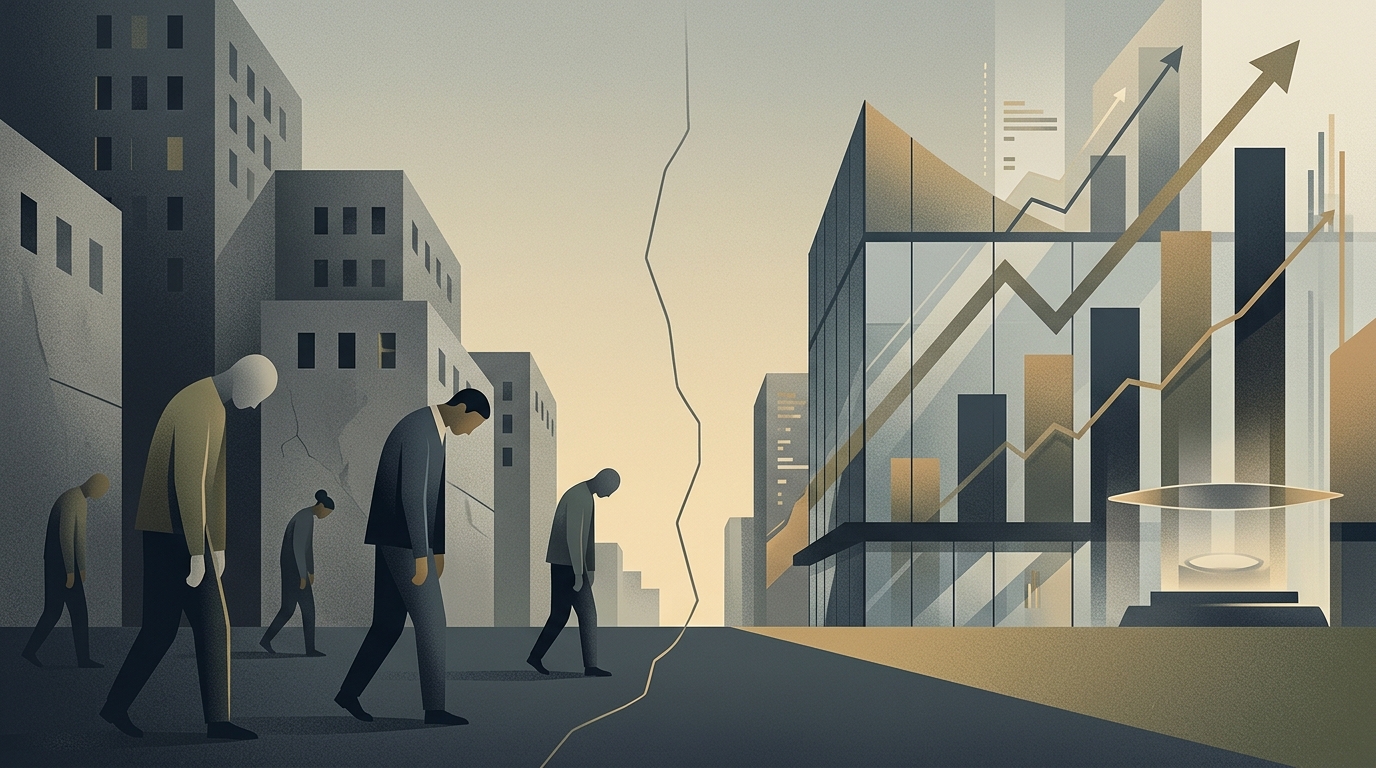
Meta, the social media giant that once stood as the 'gold standard' for Silicon Valley's workplace culture, is currently navigating a profound paradox. On one hand, shareholders are celebrating a skyrocketing stock price and earnings that consistently beat expectations. On the other, the very people who built this edifice describe a company that has transformed into a cold, bureaucratic environment where survival takes precedence over innovation.
The 'Year of Efficiency' and Its Human Toll
When Mark Zuckerberg declared 2023 the 'Year of Efficiency,' many analysts viewed it as a necessary correction following the excessive expansion of the pandemic era. However, the implementation of this strategy has continued with unabated intensity into 2024, with fresh rounds of layoffs affecting roughly 10% of the remaining staff in key divisions. According to employee testimonies shared with Wired, this process is not merely a cost-cutting exercise; it is a fundamental shift in the company's DNA.
The 'flattening' of the management hierarchy, aimed at removing middle managers, has created a vacuum in communication and mentorship. Remaining employees often find themselves performing the work of two or three people, while the persistent threat of layoffs has fostered a 'Hunger Games' atmosphere. Creativity has been supplanted by 'performative work,' where employees exhaust themselves proving their value through hollow metrics rather than focusing on genuine problem-solving.
From Metaverse to AI: A Violent Pivot
Meta is not just changing its structure; it is pivoting its vision. The costly and controversial obsession with the Metaverse appears to have taken a back seat as the company throws its full weight behind Artificial Intelligence (AI). This abrupt shift has left thousands of employees, hired specifically to build Zuckerberg’s virtual world, in a state of professional limbo.
The transition to AI requires different skill sets and a velocity that the 'new' Meta is attempting to enforce through sheer pressure. Resources are being shifted en masse toward the development of Llama and AI tools for advertisers, leaving other departments—such as user safety and content moderation—critically understaffed. This reallocation is not just technical; it is ethical. Many veteran employees feel that the company’s mission of 'connecting people' has been sacrificed at the altar of algorithmic dominance.
The Erosion of Trust and the Path Ahead
The primary issue for Meta is not the layoffs themselves, but the manner in which they are conducted. Employees describe a process devoid of transparency and empathy. A culture of 'ghosting,' where managers disappear before announcements and employees discover their termination by being locked out of internal systems, has severed the bond of trust with leadership.
- Internal satisfaction surveys show historic lows in trust toward leadership.
- A talent drain toward competitors or startups has become a daily occurrence.
- Meta is no longer considered the 'dream destination' for top university graduates.
Zuckerberg may be presenting investors with a leaner, more profitable machine, but a technology company is only as good as the people who comprise it. If Meta continues to treat its staff as expendable line items on a balance sheet, it risks losing its long-term capacity for innovation. Silicon Valley history is littered with former titans that imploded internally before fading from the market.
'It’s not the company we knew anymore. It’s a code factory where everyone is looking for the exit,' says a former senior software engineer.
In this landscape, Meta must prove it can be both efficient and humane. So far, the numbers tell one truth, but the hallways of Menlo Park whisper another, much darker story.





