July 10, 2026, will be recorded in Wall Street history as the day Meta Platforms definitively secured its position as the undisputed leader of the Artificial Intelligence revolution. With its stock recording gains reminiscent of its early IPO glory days, Mark Zuckerberg’s company proved that betting on open-source was not just a strategic choice, but a stroke of financial genius that changed the rules of the game.
The Strategy of Open Dominance
The recent unveiling of the new Llama 4 model, which outperforms even the most sophisticated closed-source models from its competitors, served as the catalyst for this economic explosion. While OpenAI and Google entrench themselves behind subscription walls, Meta chose to offer its "engine" free to the global developer community. This move created an ecosystem where thousands of applications are built upon Meta’s infrastructure, making it the de facto industry standard.
Analysts point out that this approach mirrors Android's dominance in the mobile sphere. By creating a common development environment, Meta reduces the cost of training its own models through collective improvement from the community, while simultaneously ensuring its own algorithms remain the most efficient in the world.
Advertising in the Age of Predictive Intelligence
Beyond technological superiority, the market reacted positively to the impressive integration of AI into the company's revenue core: advertising. The new Advantage+ AI system, powered by the latest generation of models, now allows advertisers to generate personalized content in real-time for every individual user.
- 35% increase in ROI for advertisers compared to the previous year.
- Reduction in customer acquisition costs through automated creative generation.
- Precise targeting that bypasses privacy restrictions via advanced on-device data processing.
This ability to convert raw computing power into pure profit is what reassured investors, who just two years ago were skeptical of the company's massive capital expenditure (Capex) on Nvidia chips and data center infrastructure.
From the Metaverse to the AI Omniverse
It is clear that Zuckerberg’s vision for the Metaverse was not abandoned but evolved. Artificial Intelligence now acts as the connective tissue that brings digital worlds to life. Using the new model, the creation of 3D environments and avatars is now possible through simple voice commands, making the platform accessible to millions of creators without technical expertise.
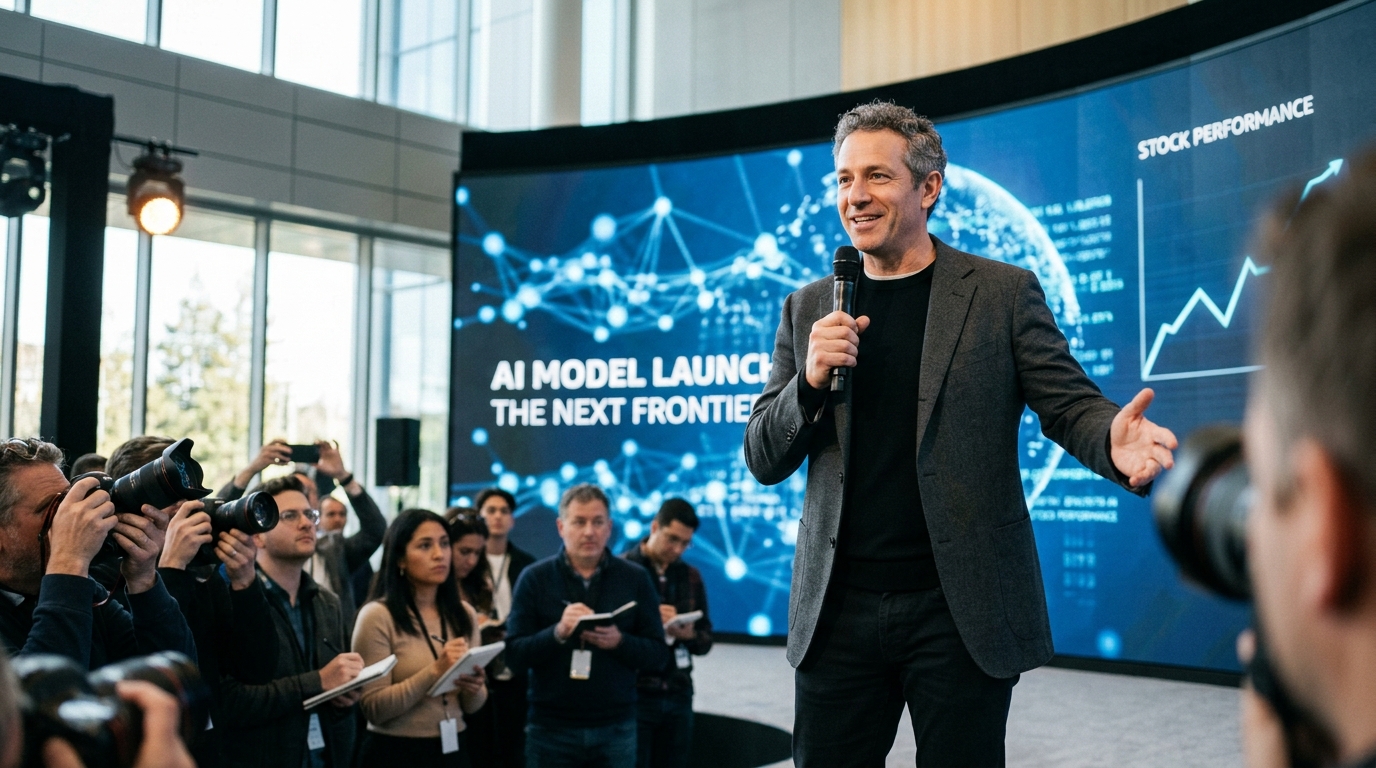
"We are not just building a model; we are building the infrastructure upon which the global intelligence economy will run," Zuckerberg stated during the recent quarterly results presentation.
The market seems to agree. Meta's capitalization is now approaching all-time highs, placing it at the top of the tech giant pyramid. However, challenges remain. The European Union's regulatory framework and concerns over the safety of open-source models represent the next major hurdles the Menlo Park giant must overcome.
Conclusion: Meta's New Era
Meta has achieved something few companies in history have: rebranding itself twice within a decade and emerging stronger each time. The current stock market surge is not just a number on a screen, but the reward for a bold strategy that placed artificial intelligence at the service of profitability without sacrificing innovation. The question is no longer whether Meta will dominate, but who can keep up with this grueling pace of growth.