

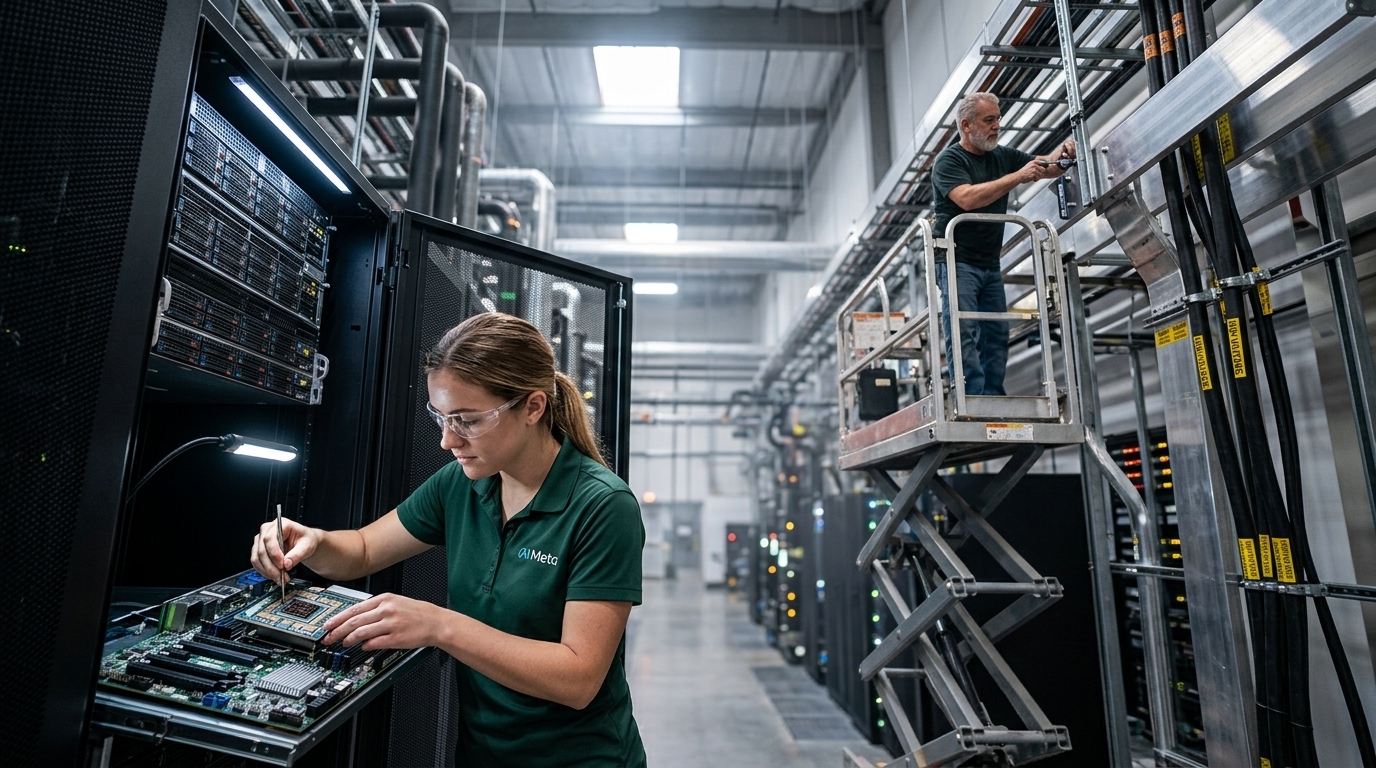
In a move that reshapes the global technology landscape, Meta (formerly Facebook) is preparing to commence production of its own generation of artificial intelligence chips starting this September. This decision is not merely a cost-cutting exercise but a fundamental strategic pivot toward vertical integration, mirroring the path Apple took with its M-series processors. Mark Zuckerberg’s objective is clear: to build an infrastructure capable of sustaining his vision for AI and the Metaverse, reaching an astronomical scale of 14 gigawatts in total computing power.
The MTIA Architecture: Custom Silicon for Custom Needs
The new chip, known as the Meta Training and Inference Accelerator (MTIA), is the culmination of years of intensive research and development. Unlike general-purpose graphics processing units (GPUs) from Nvidia, which currently dominate the market, the MTIA is designed specifically for Meta’s unique algorithmic requirements. This includes accelerating the recommendation engines that power Facebook and Instagram, as well as training the Llama series of large language models (LLMs).
In-house production allows Meta to optimize hardware for software with surgical precision. When an algorithm runs on hardware specifically designed for it, energy consumption drops and processing speed skyrockets. At Meta’s scale, where billions of users interact with AI-driven content daily, even a 10% improvement in efficiency translates into billions of dollars in savings over time. This architectural alignment is the new "gold rush" for Big Tech firms looking to escape the constraints of off-the-shelf components.
The 14 Gigawatt Ambition
Perhaps the most staggering aspect of the new plan is the scale of energy required. Aiming for 14 gigawatts of computing power is unprecedented. To put this in perspective, 14 GW is equivalent to the output of approximately 10 to 14 large-scale nuclear reactors. This energy footprint presents massive challenges, not only technical but environmental and logistical as well.
Meta must balance its promises of net-zero carbon emissions with the insatiable power demands of its data centers. Constructing new facilities to house the MTIA chips requires massive investments in advanced cooling systems and direct grid connections. The company is already seeking strategic partnerships to secure renewable energy, as the lack of available electrical capacity has become the single largest bottleneck for AI development worldwide. The transition from a software company to a heavy-infrastructure giant is now complete.
Breaking the Nvidia Monopoly and Geopolitical Chess
This move sends a powerful signal to Nvidia, which has seen its market capitalization soar due to its near-monopoly on AI chips. While Meta will continue to purchase hundreds of thousands of H100 GPUs in the near term, the launch of its own production marks the beginning of the end of this dependency. Designing one's own silicon means no longer being a hostage to supply chain delays or the high profit margins of external vendors.
- Long-term reduction in Operating Expenses (OpEx).
- Increased supply chain resilience amidst geopolitical tensions.
- Ability to innovate faster at the system architecture level.
However, Meta does not manufacture the chips itself; it relies on external foundries like TSMC in Taiwan. This means that while it achieves independence from Nvidia, it remains tethered to the geopolitical stability of the Pacific region—a risk shared by all major technology players today. The move is as much about economic sovereignty as it is about technical performance.
The Future of Llama and the Metaverse
Investing in hardware is inextricably linked to Meta’s strategy for 'open' software. By offering the Llama model for free to the community, Meta is establishing an industry standard. If that standard runs better and more cheaply on Meta's own hardware, the company gains a dual advantage: it controls the software ecosystem while owning the most efficient platform for its execution.
"Artificial intelligence is no longer just a matter of clever algorithms; it is a matter of physical infrastructure and raw energy," industry analysts suggest.
In conclusion, Meta’s entry into chip production this September is not a simple business expansion. It is a declaration of sovereignty. In a world where computing power is becoming the new 'oil' of the economy, Zuckerberg is choosing not to be just a consumer, but the owner of the refinery. The 14GW goal isn't just a number; it's the foundation of a new digital empire.





