

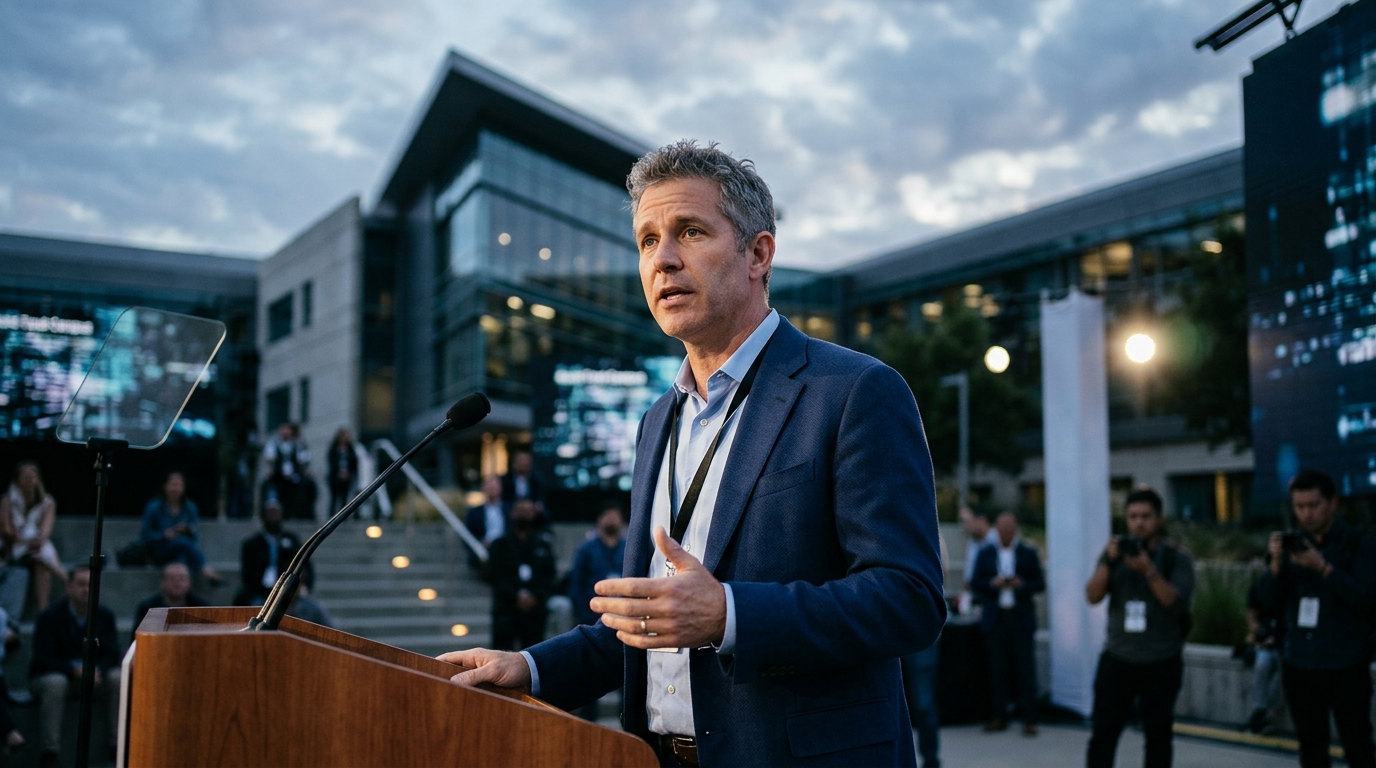
In a move that highlights the brutal transition of the global tech economy, Mark Zuckerberg’s Meta has announced the layoff of an additional 8,000 employees. This decision is not the result of financial distress—on the contrary, the giant's profits remain at record levels—but a deliberate strategic reallocation of resources. The company is clearing desks to fill data centers with the latest generation of processors, confirming that in the new world of Artificial Intelligence, human talent not directly related to algorithms is increasingly viewed as expendable.
The End of the 'Age of Abundance' and the Rise of Efficiency
Since early 2023, Zuckerberg has declared the "Year of Efficiency." What initially appeared to be a temporary correction following the over-expansion of the pandemic era is now evolving into a permanent state of operation. The 8,000 new layoffs primarily target middle management, recruiting departments, and teams working on secondary features of its social networks (Facebook, Instagram). The goal is clear: to reduce operating costs and free up billions of dollars to purchase Nvidia's highly sought-after GPUs and develop Llama 4.
Meta is no longer a social media company experimenting with AI. It is an AI company that happens to own the world’s largest social media platforms. This distinction is crucial to understanding why thousands of experienced professionals suddenly find themselves outside the labor market. The company's leadership appears to believe that a smaller, highly specialized core of AI engineers can produce more value than tens of thousands of employees in traditional roles.
The Hunger for Infrastructure: The Cost of Digital Sovereignty
The cost of entry into the AI arms race is staggering. Meta is expected to spend upwards of $35-40 billion in capital expenditures (CapEx) this year alone. This money is being funneled into building massive data centers that require enormous amounts of energy and computing power. To satisfy Wall Street shareholders, who demand both innovation and profitability simultaneously, the company is implementing a policy of "cannibalizing" its own departments.
- Automation of Internal Processes: Many of the roles being eliminated are already being replaced by internal AI tools that handle scheduling, code writing, and advertising management.
- Focus on AGI: Zuckerberg has stated that the ultimate goal is Artificial General Intelligence (AGI), a pursuit that requires consolidating the best (and most expensive) minds on the planet.
- Competitive Pressure: With Google and Microsoft investing relentlessly, Meta feels it cannot afford to maintain any "fat" within its organization.
Social Implications and the Future of Tech Work
This move sends a chilling message across Silicon Valley. If a company with Meta's profit margins is carrying out layoffs of this scale to fund its technological transition, then no job is entirely safe. We are witnessing a shift where the knowledge of "how to manage people" is losing its market value compared to the knowledge of "how to train models." This creates a new class of job insecurity, even for high-level executives who previously considered themselves irreplaceable.
"We are not laying people off because we failed, but because we must change the nature of our work to survive the next century," says a senior Meta executive speaking on condition of anonymity.
In conclusion, the 8,000 layoffs at Meta are a symptom of a deeper structural change. Artificial Intelligence is not just changing the products we use; it is fundamentally altering how companies are structured internally. The remaining question is whether Meta, in its quest to become an AI titan, will lose the human touch that once made it the center of global social networking.





