

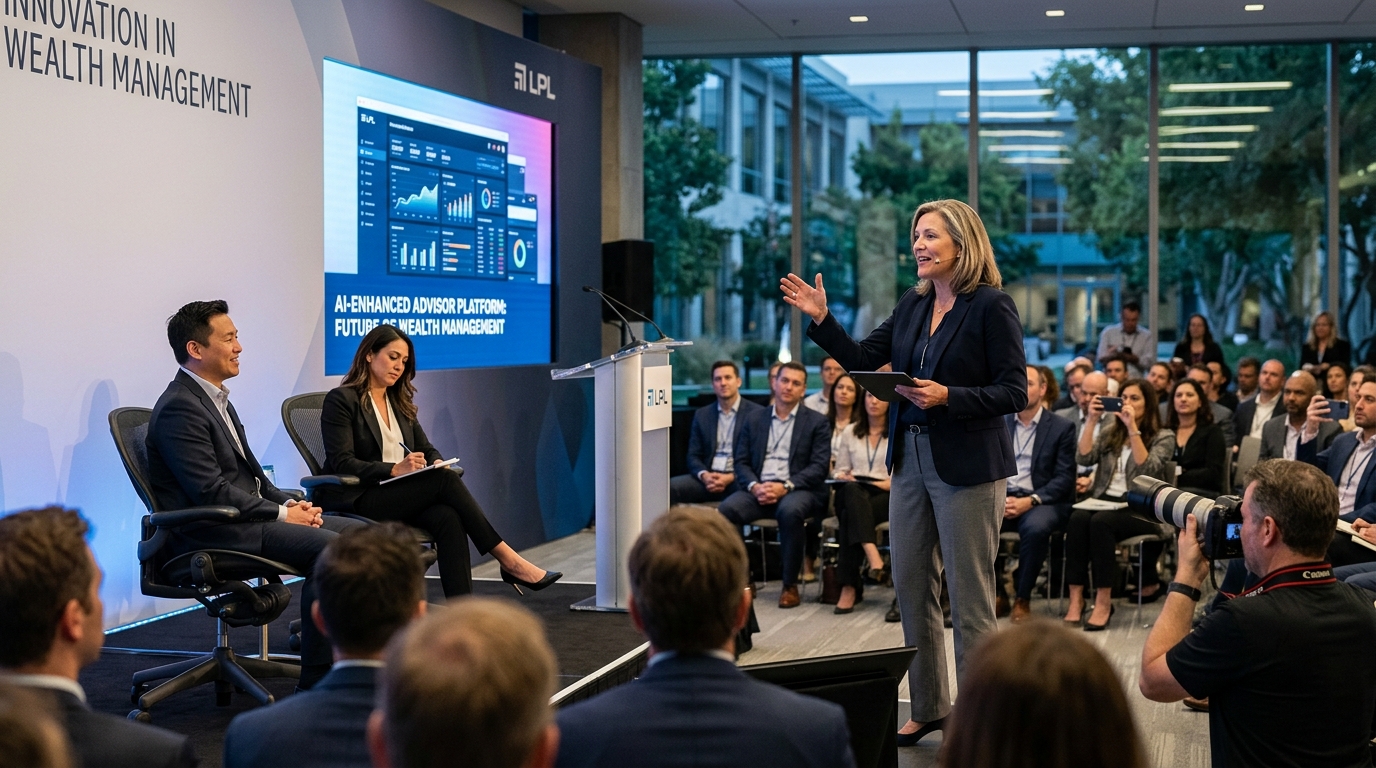
In an era where the financial sector is being rapidly reshaped by the advent of generative artificial intelligence (AI), LPL Financial, the powerhouse of independent financial advisors in the U.S., is drawing a clear line between automation and human-centric counseling. The company's recent announcement regarding investments in AI to "prop up" the advisor serves as a critical milestone for the wealth management industry, highlighting the delicate balance between technological superiority and personal trust.
The 'Augmented Advisory' Strategy
LPL’s approach is not about creating a "robo-advisor" that will push humans aside; rather, it is about building a digital ecosystem that acts as the ultimate assistant. According to company executives, the goal is to free up advisors' time from laborious administrative tasks, allowing them to focus on what AI cannot replicate: emotional intelligence and a deep understanding of human needs.
The investments are focused on three main pillars: automating back-office processes, enhancing data analysis for personalized recommendations, and improving client communication. By utilizing Large Language Models (LLMs), LPL advisors will now be able to compose complex reports in seconds, analyze market trends with unprecedented speed, and identify opportunities in client portfolios before they become visible through traditional methods.
Reducing Administrative Burden and Boosting Productivity
One of the biggest pain points in the wealth management sector is the volume of bureaucracy. Advisors often spend up to 40% of their time on tasks that do not add direct value to the client, such as paperwork, regulatory compliance, and meeting organization. LPL is introducing AI tools that take over these tasks, acting as an "invisible secretary."
- Automated transcription and summarization of client meetings.
- Intelligent email sorting and request prioritization.
- Real-time automated compliance checks to reduce risk.
This boost in productivity benefits not only the advisor but also the firm itself, as it allows each professional to manage a larger number of clients without sacrificing service quality. In a market where profit margins are pressured by low-commission competition, operational efficiency through AI is a necessary path for survival.
The Challenge of Trust in the Digital Age
Despite the technological promises, LPL recognizes that wealth management remains a relationship-driven business. Clients, especially High Net Worth Individuals, seek a human they can rely on during times of crisis or great uncertainty. AI can suggest the optimal asset allocation, but it cannot reassure an investor during a market crash.
"Technology is the wind in the advisor's sails, not the ship itself," a senior LPL official noted.
The "Prop Up" strategy aims exactly there: making the advisor appear smarter, better prepared, and more available. The use of predictive analytics allows the advisor to proactively communicate with the client, suggesting changes before the client even realizes the need. This creates a sense of "hyper-personalization" that strengthens the bond of trust.
Competitive Landscape and Future Outlook
LPL's move does not happen in a vacuum. Competitors like Morgan Stanley and JPMorgan are already investing billions in their own AI models. However, LPL's advantage lies in its model of independence. By providing these sophisticated tools to independent advisors, it gives them the weapons to compete with Wall Street's institutional giants while maintaining their autonomy.
In conclusion, LPL's investment in AI is a vote of confidence in the future of human advisory. In a world flooded by algorithms, the value of human judgment, augmented by artificial intelligence, seems to be the new gold standard in wealth management. The success of this venture will be judged by whether advisors can embrace these new tools without losing their personal touch, turning technology into a bridge rather than a wall between them and their clients.





