

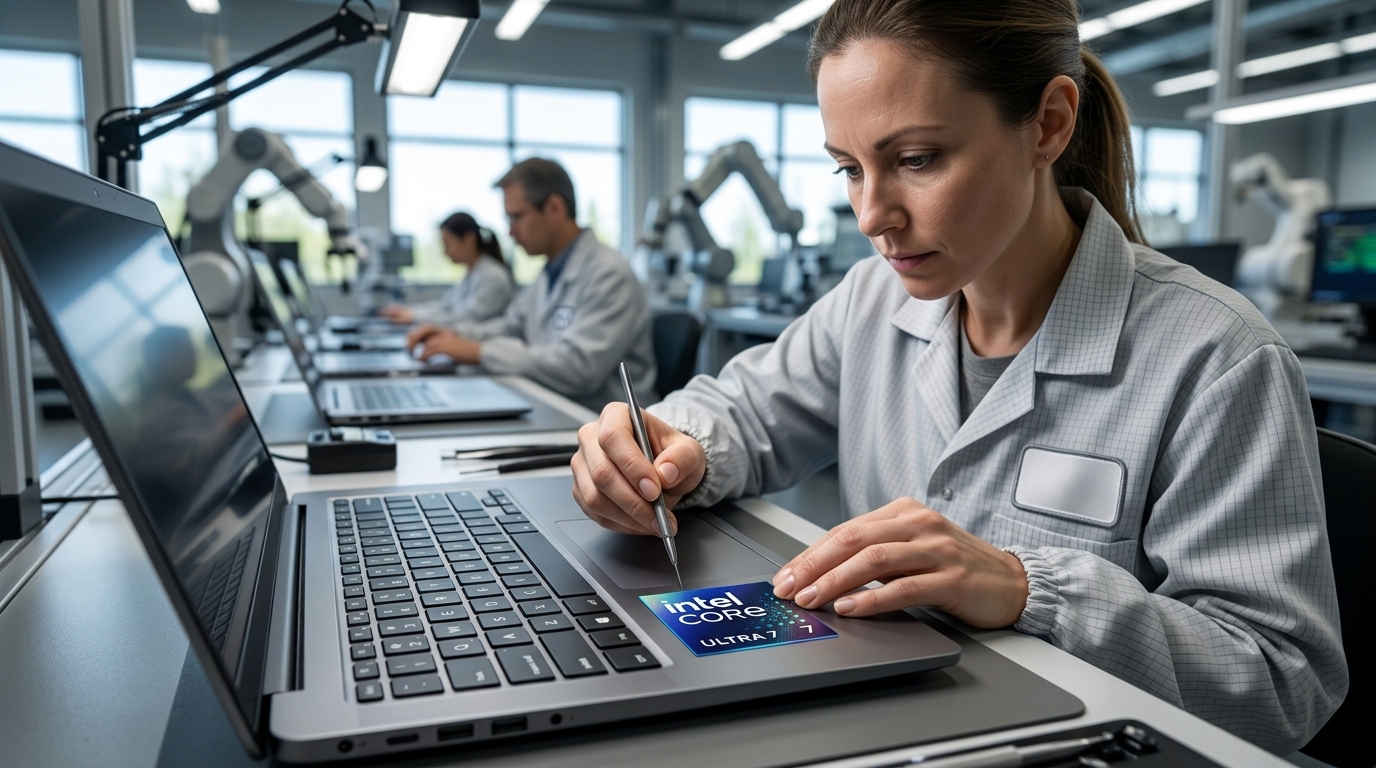
In a development that fundamentally reshapes the global technological landscape, Intel's stock recorded a stunning 9% rally in international markets immediately following Donald Trump's revelations regarding a 'mammoth' strategic deal with Apple. This agreement, centered on the design and production of advanced processors on American soil, is not merely a business headline but a geopolitical statement of power aimed at decoupling the West from the Asian supply chain.
The Strategic Significance of the Intel-Apple Alliance
For years, Intel struggled to prove that CEO Pat Gelsinger's ambitious plan to transform the company into a leading global foundry was feasible. Attracting Apple—the world's most demanding customer, which until now relied almost exclusively on Taiwan's TSMC—represents the ultimate validation. Apple, which designs its own M-series and A-series silicon, appears to have found in Intel the necessary partner to migrate part of its production to the US, shielding itself against potential crises in the Pacific region.
"This isn't just about chips. It's about 21st-century sovereignty," Donald Trump stated, emphasizing that this deal is the result of pressures and incentives to 'repatriate' high technology.
Intel, through its Intel 18A (1.8nm) process node, promises performance that can compete with or even exceed that of TSMC. The deal stipulates that Apple will utilize Intel's production lines in Ohio and Arizona, leveraging the massive subsidies of the CHIPS Act, which now appear to be bearing fruit.
The Geopolitical Chessboard and Supply Chain
This move sends a clear message to Taiwan and China. Over-reliance on TSMC has long been the 'Achilles' heel' of the American tech industry. With Apple giving the green light, it is certain that other giants, such as Nvidia and Qualcomm, will reconsider their strategies. Intel is transforming from a lumbering giant into a critical national champion, capable of guaranteeing data security and the uninterrupted flow of hardware during times of crisis.
However, challenges remain. Intel must prove it can maintain high yields and adhere to Apple's notoriously strict schedules. The company's history over the last few years has been marred by delays, and Apple's bet is high-stakes. If Intel fails to deliver the quality required by the iPhone ecosystem, the consequences will be devastating for both parties.
Economic Impact and the Road Ahead
The market reacted with euphoria, as Intel finally sees a stable revenue stream for its Foundry division, which had previously been recording billions in losses. The influx of capital from Apple, combined with government support, allows Intel to accelerate its investments in next-generation EUV (Extreme Ultraviolet) lithography equipment.
- Intel's market capitalization increased by tens of billions of dollars in a single session.
- Boost to high-skilled employment in the US manufacturing sector.
- Downward pressure on the stock prices of Asian semiconductor manufacturers.
- A new dynamic in the relationship between the state and major tech conglomerates.
In conclusion, the revelation of this deal marks the end of the era of absolute globalization in technology. We are moving into a phase of 'regional self-sufficiency,' where production must be located close to design and consumption. Intel, for the first time in a decade, seems to be holding the reins of progress once again, turning a period of crisis into a historic opportunity for rebirth.





