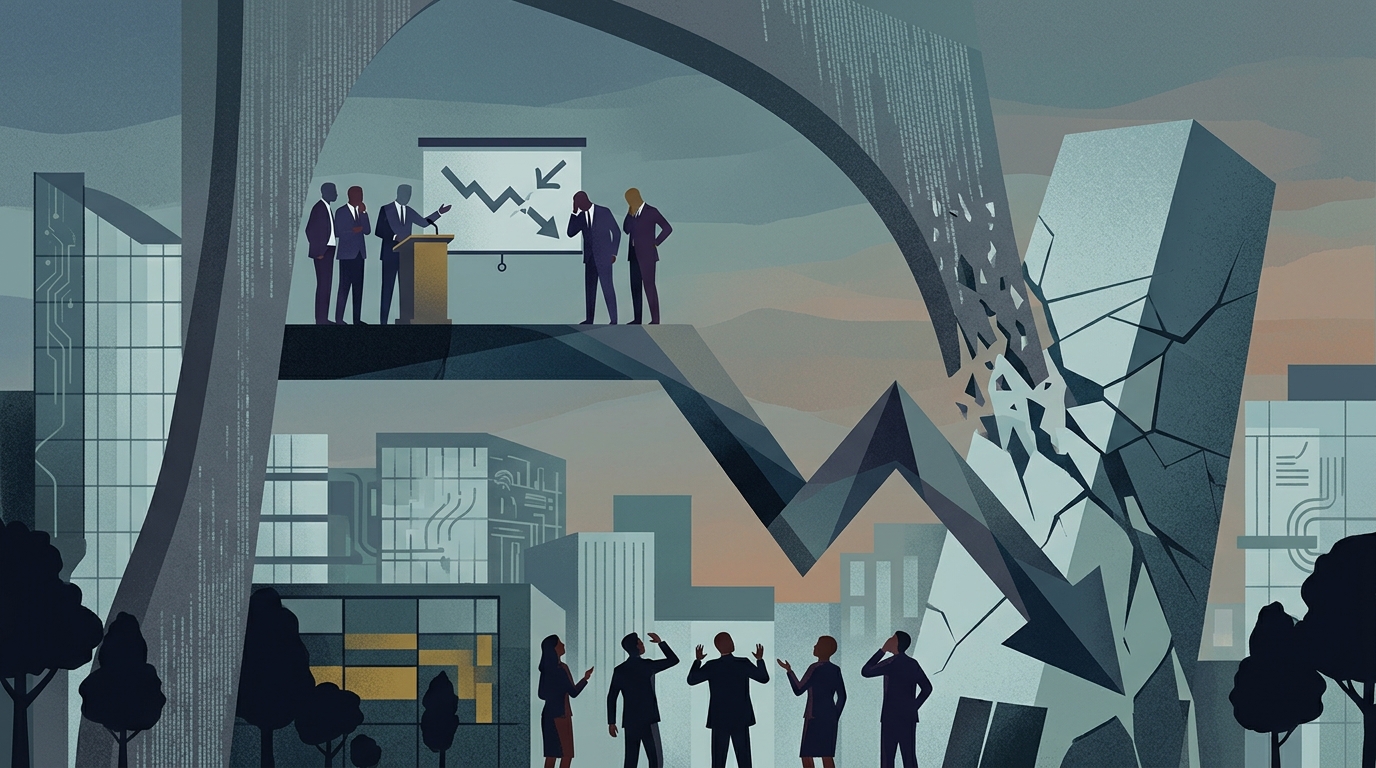
IBM shares tumbled on Tuesday following a blunt admission from CEO Arvind Krishna that the company had failed to adapt quickly enough to market shifts. The resulting 25% crash marks the worst single-day decline in the company's 115-year history, triggered by a surprise earnings miss and a rare, candid letter to investors.
An Admission of Execution Failure
“These conditions require our teams to execute perfectly, and this quarter we faltered,” Krishna wrote. He noted that the company did not move with sufficient speed, leading to numerous large deals failing to close within expected timelines. The weakness was particularly evident in IBM’s software and infrastructure business units.
The CEO attributed the shortfall to a late-quarter shift in client behavior. Analysts suggest this reflects a broader trend where enterprises are diverting capital expenditure away from traditional mainframes—IBM’s "bread and butter"—toward emerging AI platforms.
The 'AI Pull' Reallocating Capital
Holger Mueller, VP and principal analyst at Constellation Research, noted that the delay in critical infrastructure upgrades is rare and clearly demonstrates the "AI pull" in the current market. As companies rush to secure scarce hardware like servers and storage for AI, other projects are being sidelined.
- The impact is twofold: hardware sales typically trigger direct software revenue, meaning a slump in mainframes hits both segments.
- Rising AI-related costs are squeezing IT budgets; while budgets are growing, price increases for AI tech are outpacing them.
- Legacy infrastructure and consulting services are facing the heaviest pressure as clients prioritize AI adoption.
Despite the historic drop, some analysts, including Patrick Moorhead of Moor Insights & Strategy, believe IBM’s strategic position in hybrid cloud and AI will eventually lead to a rebound, as the underlying technology remains essential for enterprise operations.