

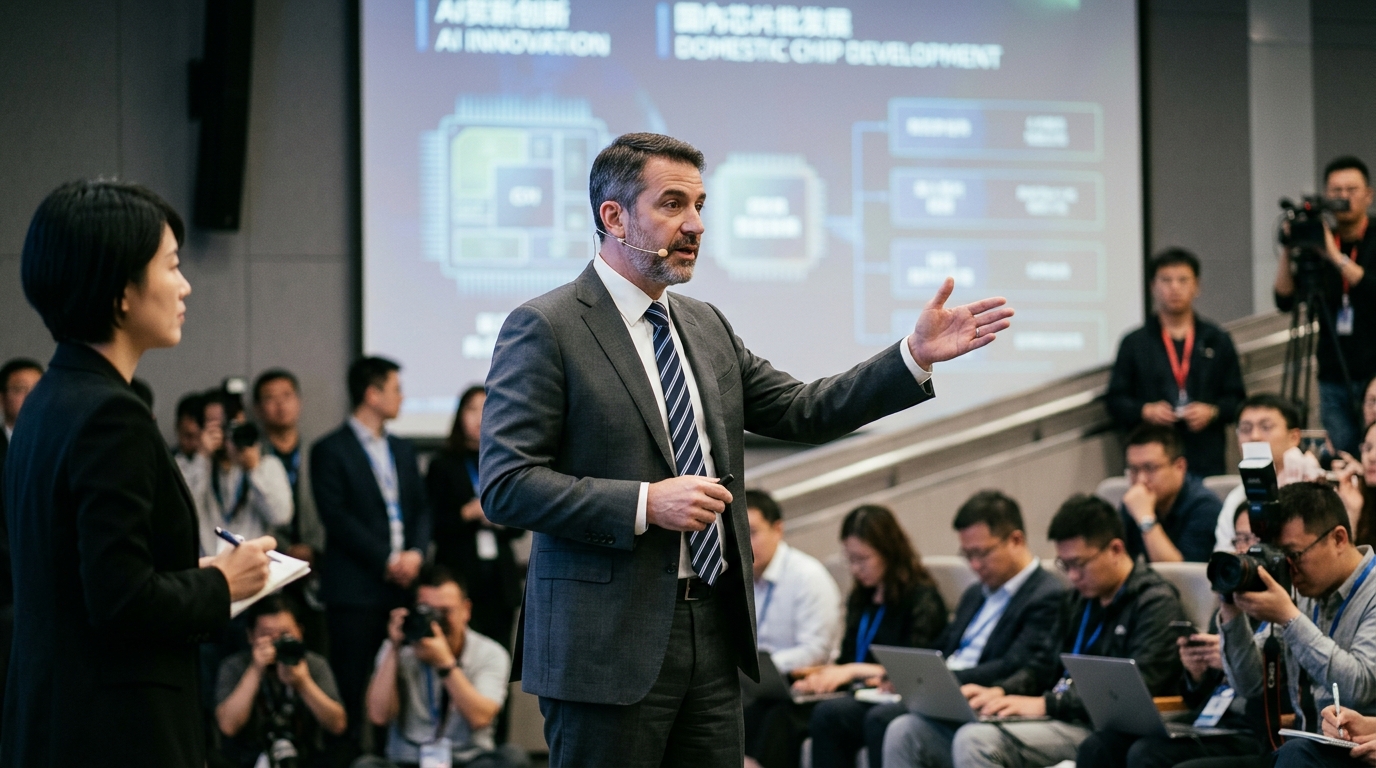
In the spring of 2026, the global war for AI supremacy is no longer just being fought in the software labs of San Francisco or Beijing, but in semiconductor foundries and the procurement strategies of the world's largest tech giants. The recent revelation that ByteDance (TikTok’s parent company) and Alibaba are placing massive orders for Huawei’s AI chips, gradually decoupling from their reliance on Nvidia, marks a tectonic shift. This pivot is not merely a business decision; it is a necessity for survival in a world where access to compute has become the new 'digital oil.'
The Rise of Ascend 910B and the End of Nvidia’s Monopoly
For years, Nvidia was the undisputed sovereign of GPUs (Graphics Processing Units), with its H100 and A100 chips forming the backbone of every major Large Language Model (LLM). However, strict export controls imposed by the United States have drastically limited the ability of Chinese firms to acquire state-of-the-art technology. Huawei’s response came in the form of the Ascend series, specifically the 910B chip.
Analysts now report that the Ascend 910B exhibits performance levels that are dangerously close to Nvidia’s A100 in AI training tasks. For ByteDance, which processes astronomical volumes of data for TikTok’s recommendation algorithms, and for Alibaba, which is building its own AI cloud ecosystem, Huawei offers something Nvidia no longer can: supply chain stability and political security. This shift is further evidenced by reports from Azerbaijan and Central Asia, where Huawei is expanding its infrastructure, creating an alternative network of digital hubs that bypass Western pressure.
The CANN vs. CUDA Ecosystem Struggle
The greatest hurdle for any Nvidia competitor has never been just the hardware, but the software. Nvidia’s CUDA (Compute Unified Device Architecture) is the gold standard for AI developers worldwide. Huawei, however, has invested billions into its own ecosystem, CANN (Compute Architecture for Neural Networks).
- Optimization: Huawei is working closely with Alibaba’s engineers to ensure that the Qwen models (Alibaba) run seamlessly on Ascend processors.
- Compatibility: New code conversion tools allow developers to migrate workloads from CUDA to CANN with increasing efficiency and fewer bugs.
- State Support: Beijing is generously subsidizing companies that choose domestic hardware, making the total cost of ownership for Huawei chips extremely attractive.
"It’s no longer about which chip is faster on paper, but about which chip you can actually buy and operate without the fear of sanctions," says a tech executive based in Baku.
Geopolitical Implications and the SMIC Factor
Huawei’s ability to produce these chips relies heavily on its partnership with SMIC (Semiconductor Manufacturing International Corporation). Despite sanctions prohibiting access to EUV lithography machines from the Dutch firm ASML, SMIC has managed to leverage older DUV technologies to produce chips at 7nm and, according to rumors, 5nm. This achievement is considered a 'miracle' by many Western analysts, as it demonstrates that China can develop a fully autonomous semiconductor supply chain.
The news from Azerbaijan regarding the use of Huawei technology in regional data centers underscores the 'Digital Silk Road' strategy. China does not just want to be self-sufficient; it wants to export its technological standard to emerging markets, creating a global technological schism. ByteDance and Alibaba serve as the 'flagships' of this effort, as their success with Huawei hardware will serve as the ultimate case study for the rest of Asia and Africa.
Conclusion: One World, Two Systems
As we move into the latter half of the decade, the picture is clear. Nvidia remains the technological leader, but Huawei is becoming the leader of the 'alternative reality.' The decision by ByteDance and Alibaba to invest billions in Huawei is not a fleeting reaction but a strategic choice that will define the evolution of AI for the next decade. The battle for chips is now a battle for national sovereignty in the digital age.





