

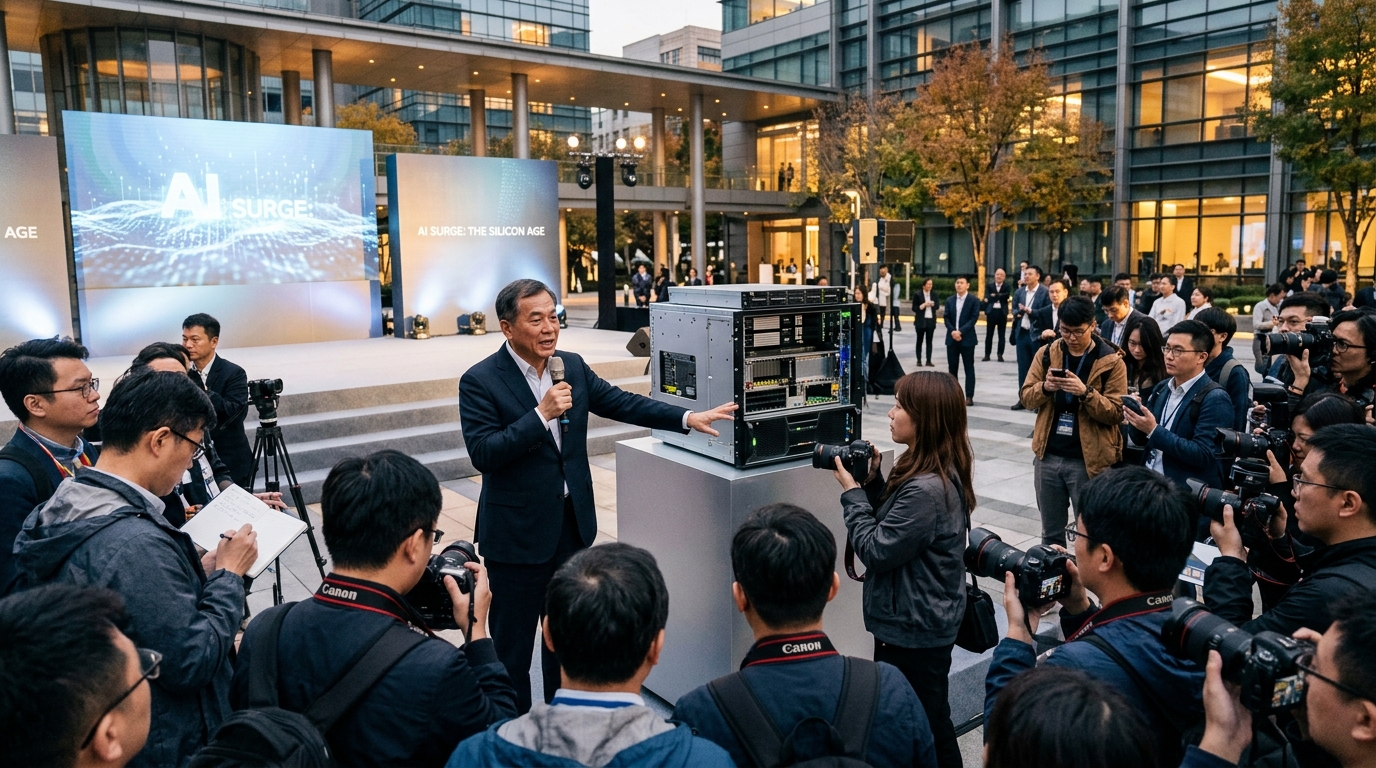
At the center of the global technological stage stands Hon Hai Precision Industry Co., known worldwide as Foxconn. The recent financial results announced by the Taipei-based giant are not merely a victory for the company itself; they serve as a powerful barometer for the health of the entire Artificial Intelligence sector. As we progress through the summer of 2026, the picture is clear: the "bubble" many predicted has not burst; instead, it has solidified into the foundation of the next industrial revolution.
Hon Hai reported revenues that outpaced analyst estimates, marking significant year-on-year growth. The driving force behind these numbers is no longer the smartphone market—which shows signs of maturity and saturation—but the AI server sector. The company, which is Nvidia's primary partner for manufacturing advanced Blackwell systems and their successors, is reaping the rewards of a strategic pivot initiated three years ago.
From Smartphones to AI Servers: The Great Pivot
For decades, Foxconn’s name was inextricably linked to Apple’s iPhone. While this relationship remains vital, the momentum has shifted. Company management highlighted that the "Cloud and Networking Products" segment saw the strongest growth, fueled by demand for data centers supporting Large Language Models (LLMs). Hon Hai’s ability to scale the production of complex liquid-cooling systems for AI servers has given it a competitive edge that few manufacturers globally can match.
This transition is not just technical but financial. Profit margins on high-end servers are often superior to those of mass-market consumer electronics. Furthermore, the need for continuous infrastructure upgrades by giants like Microsoft, Google, and Meta ensures a steady stream of orders for the coming quarters. Hon Hai is no longer just building boxes; it is assembling the "brains" of the modern economy.
Taiwan at the Heart of Tech Geopolitics
Hon Hai’s results also underscore Taiwan’s irreplaceable role in the global supply chain. Despite geopolitical tensions and efforts to diversify production to countries like India and Vietnam, the Taiwan ecosystem remains the heart of semiconductor and hardware manufacturing. The close collaboration between TSMC (which manufactures the chips) and Hon Hai (which integrates them into systems) creates a "silicon shield" that makes the survival of the global economy dependent on stability in the Taiwan Strait.
However, Hon Hai is not standing still. It is investing heavily in new facilities in Mexico and the United States, seeking to bring AI server production closer to its end customers. This "China + 1" or "Taiwan + 1" strategy appears to be paying off, reassuring investors who fear potential disruptions in Asian shipping lanes. The company’s ability to navigate these turbulent waters is as critical as its technical prowess.
Is AI Demand Sustainable?
The looming question over the market is whether this demand is sustainable in the long run. Skeptics argue that tech companies are spending billions on infrastructure without yet finding the "killer app" that will yield proportional profits from end-users. However, Hon Hai’s data suggests otherwise. Demand is coming not just from "Hyperscalers" but from traditional industries integrating AI into their core processes.
- Factory automation via digital twins.
- Drug discovery through advanced simulations.
- Personalized education and real-time financial analysis.
All of the above require the computational power that Hon Hai provides. According to analysts, we are still in the early stages of the replacement cycle for traditional data centers with "accelerated computing" centers. This suggests that Hon Hai's strong performance is not a fluke but the beginning of a new normal.
"Artificial intelligence is no longer a promise for the future; it is our primary source of revenue today," a company executive stated during the earnings call.
In conclusion, Hon Hai Precision Industry Co. has successfully transformed itself from a low-margin contract manufacturer into a strategic pillar of the AI era. The 2026 results confirm that technological superiority, combined with geographic adaptability, is the key to success in the 21st century. For investors and analysts, Hon Hai is now the mirror reflecting the future of global digital infrastructure.





