

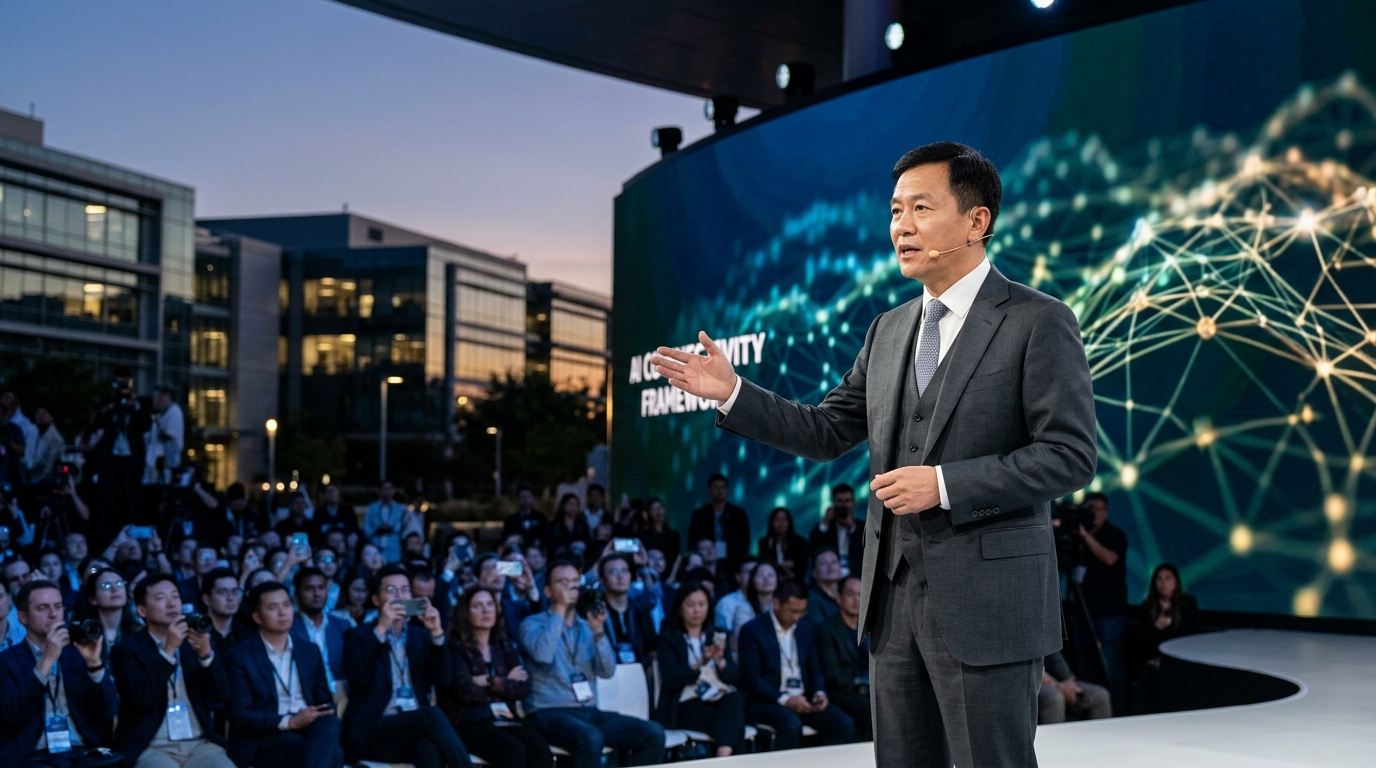
The global technology landscape is witnessing one of its most dramatic realignments in a decade, centered squarely on the Chinese smartphone market. The launch of Huawei’s HarmonyOS 7 is not merely a software update; it is a bold declaration of digital independence. At a moment when Apple, the traditional leader of the premium segment, finds itself trapped between the demands of the Chinese government and the constraints of its own AI infrastructure, Huawei has seized the opportunity to fill the void in a game-changing way.
The Fall of Android and the Birth of a New Ecosystem
HarmonyOS 7, also known as 'HarmonyOS Next,' marks a complete break from Huawei’s Android Open Source Project (AOSP) roots. For years, Huawei was forced to use a hybrid system to maintain compatibility with Android apps. With version 7, the code is 100% proprietary. This move is not just technical but deeply political. According to market analysts in Beijing, Huawei has managed to improve system efficiency by 30% while reducing power consumption by 20% through tighter hardware and software integration.
The real 'weapon,' however, is the integration of artificial intelligence at the kernel level. While Apple Intelligence faces significant delays in China due to the lack of a local partner for Large Language Models (LLMs) and strict rules from the Cyberspace Administration of China (CAC), Huawei has its own model, Pangu. Pangu is not just a voice assistant; it is a digital 'brain' that understands app context, manages user files, and provides predictive support without needing to send data to the cloud, thus satisfying requirements for privacy and national security.
The Strategic Advantage Over Apple
Apple finds itself in an unusually defensive position. The announcement of Apple Intelligence raised expectations worldwide, but in China, the iPhone 16 launched without the core AI features that differentiate it. Apple’s need to partner with a local provider, such as Baidu or Alibaba, creates technical challenges and dilutes the user experience that the company so carefully cultivates. In contrast, Huawei offers a seamless experience.
- Local Adaptation: HarmonyOS 7 is designed from the ground up for the Chinese language and local app usage habits (like WeChat).
- Device Ecosystem: Interconnectivity between phones, tablets, cars, and home appliances is now more immediate, using AI to transfer data in real-time.
- App Independence: Over 15,000 domestic apps have already migrated to the native HarmonyOS environment, ensuring users won't feel the absence of Android.
"Huawei is no longer competing with Apple on hardware. It is competing on ecosystem intelligence, where Apple is most vulnerable due to geopolitical friction," says a leading tech analyst in Shanghai.
Geopolitics and the New Digital Order
The rise of HarmonyOS 7 is the perfect example of the 'technological decoupling' between East and West. As the US tightens chip export restrictions, Huawei responds with software innovation that maximizes the performance of domestic semiconductors. The success of HarmonyOS 7 could serve as a blueprint for other Chinese companies, such as Xiaomi and Oppo, to reduce their reliance on Google.
The question remains whether Apple can regain lost ground. China represents about 20% of Apple's revenue, and losing the 'AI advantage' in the region could lead to a permanent erosion of its market share. For Huawei, the gamble is whether HarmonyOS 7 can convince users outside China in the future, although for now, domestic market dominance seems to be its primary and most achievable goal.
Conclusion
HarmonyOS 7 is not just a competitor to iOS or Android. It is the symbol of a new era where artificial intelligence becomes the frontier dividing markets. Huawei exploited the regulatory gap and Apple’s hesitation, offering a product that is both technologically advanced and politically aligned. The battle for the heart of the Chinese consumer has just entered a new, more intelligent phase.





