

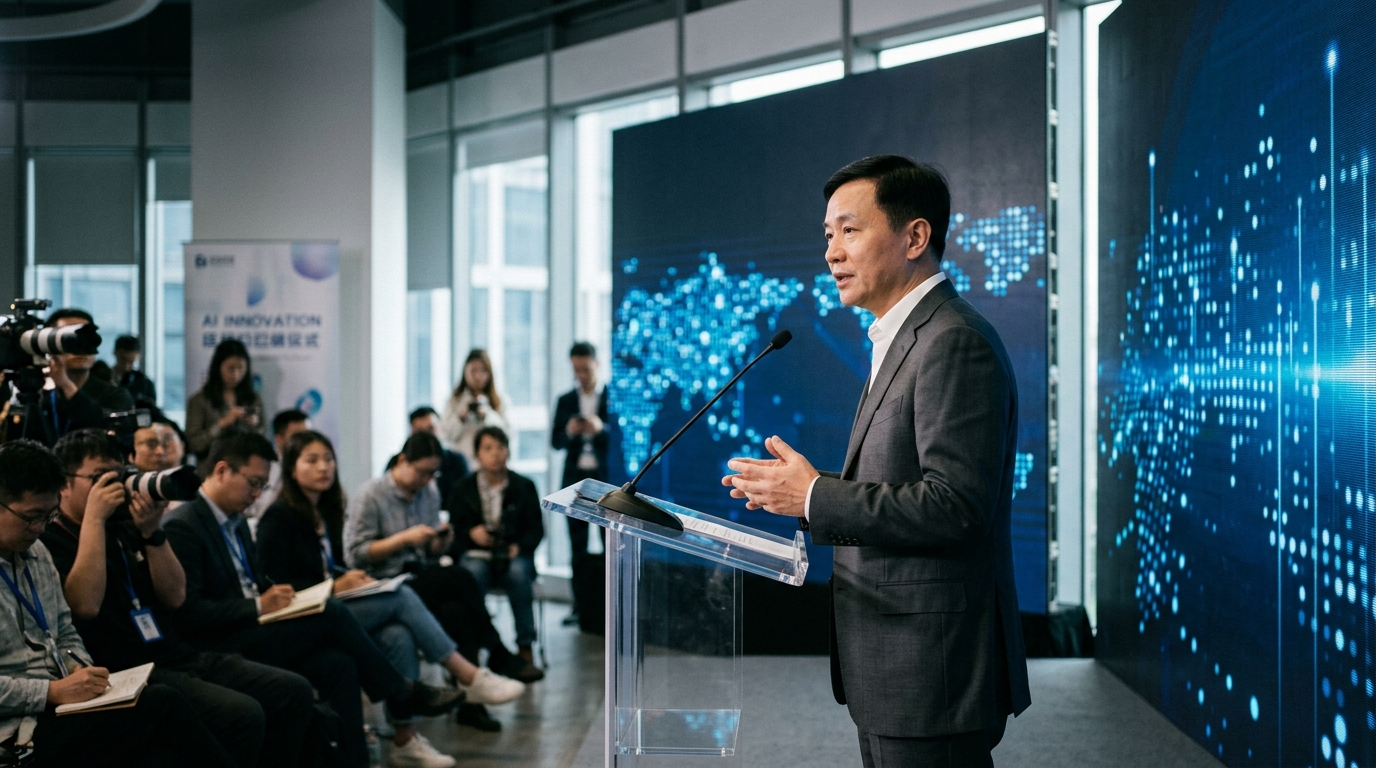
In the rapidly shifting landscape of global technology, China is attempting to redefine its dominance through a new generation of startups dubbed the 'Six Little Dragons' or 'AI Tigers.' The recent news that Global Mofy (GFAI), a NASDAQ-listed company specializing in digital asset creation and virtual effects (VFX), has made a strategic investment in Moonshot AI—the developer behind the wildly successful Kimi chatbot—marks a pivotal moment for the industry.
Strategic Alliance and the Digital Ecosystem
Global Mofy’s investment in Moonshot AI is more than just a capital allocation; it is a tactical maneuver aimed at merging Generative AI with high-fidelity content creation. Global Mofy boasts a massive library of 3D digital assets exceeding 30,000 items, and the integration of Kimi’s capabilities is expected to automate and elevate virtual content production workflows.
Moonshot AI, led by Yang Zhilin—a former Google and Meta researcher with profound expertise in Large Language Models (LLMs)—has successfully attracted interest from giants like Alibaba, Tencent, and HongShan (formerly Sequoia China). The company’s valuation has already soared past $2.5 billion, making it one of the most valuable AI unicorns globally.
The Kimi Phenomenon: A Massive Context Window
What sets Moonshot AI apart from competitors like Baidu (Ernie Bot) or even OpenAI is its focus on the 'context window.' Kimi AI made headlines by announcing the ability to process up to 2 million Chinese characters in a single prompt. This technical edge allows the model to analyze entire legal documents, books, or extensive programming codebases without losing coherence.
- Real-time processing of massive datasets.
- Optimized understanding of Chinese language and cultural nuances.
- Applications across legal, financial, and creative sectors.
Global Mofy intends to leverage this technology within its 'Mofy Lab' R&D center to create tools that allow filmmakers and game developers to generate photorealistic environments using simple voice or text commands.
Geopolitical Implications and the US-China Rivalry
This move occurs amidst intense geopolitical competition. While the US imposes restrictions on exporting advanced chips (such as Nvidia’s) to China, Beijing is responding by strengthening its domestic software ecosystem. Moonshot AI represents the spearhead of this autonomy drive. An investment from a US-listed company like Global Mofy creates an intriguing bridge between the two markets despite political tensions.
"Artificial intelligence is no longer a laboratory experiment but the backbone of the future digital economy," say market analysts in Beijing.
Global Mofy, through this investment, is strategically positioning itself to benefit from the explosion of AI content demand in Asia while offering its NASDAQ shareholders direct exposure to Kimi’s success.
Conclusion and Future Outlook
The convergence of Moonshot AI and Global Mofy foreshadows a future where the distinction between 'producer' and 'tool' becomes blurred. As Kimi continues to evolve, its ability to understand and generate complex scenarios will radically change how we consume digital entertainment. For Global Mofy, the bet is clear: dominance in digital assets requires the best possible intelligence to manage them. The battle for the AI summit has just gained a powerful new focal point.





