

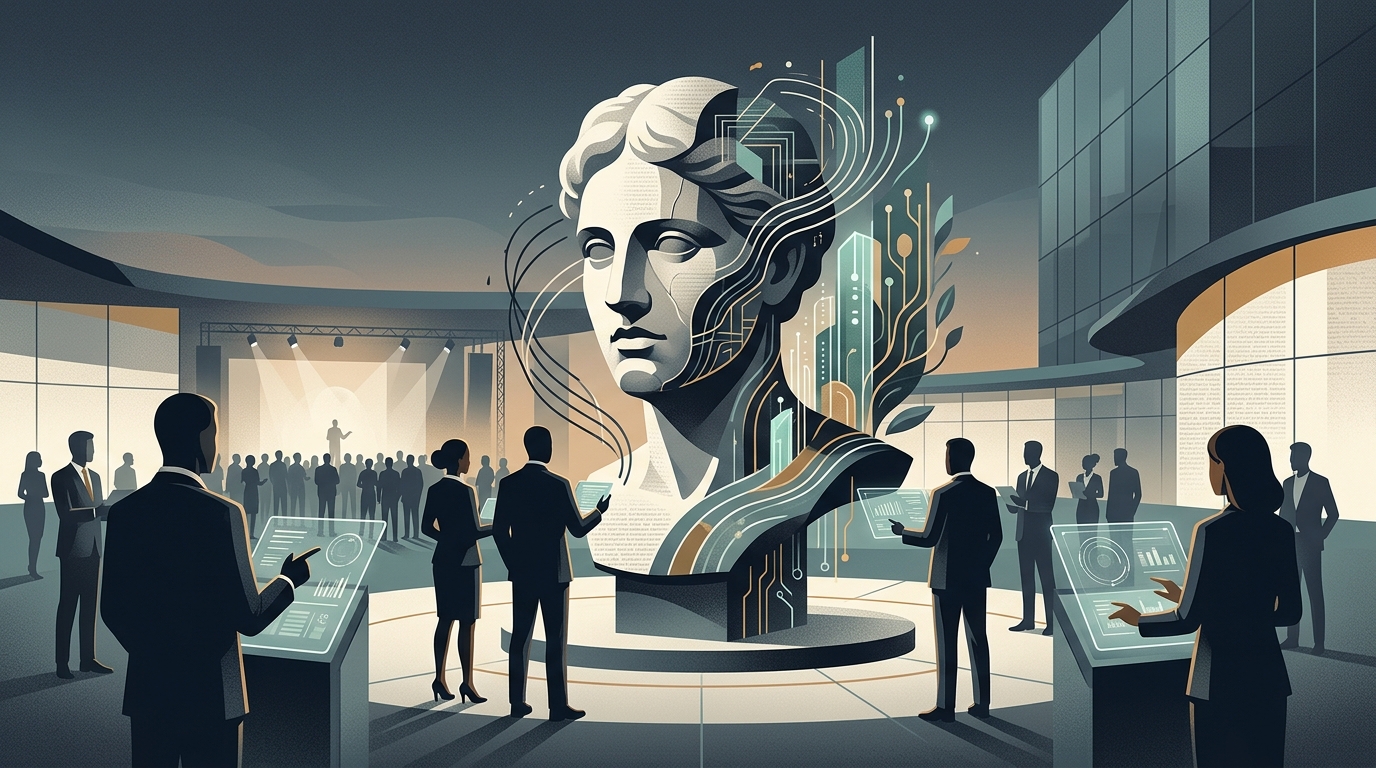
In an era where technological progress and geopolitical shifts are reshaping the global business landscape, the concept of leadership is acquiring new, more complex dimensions. Giorgos Margonis, President and CEO of Papastratos, in an extensive discussion, places the concept of "reinvention" at the center. For Mr. Margonis, an organization's success no longer depends solely on the ability to acquire new knowledge, but primarily on the courage to abandon obsolete practices and mindsets—the ability to "unlearn."
The Philosophy of Unlearning as a Strategic Advantage
Papastratos is perhaps the most characteristic example of corporate transformation in Greece. From a traditional tobacco industry, it evolved into a technology and science company, promoting the vision of a smoke-free world. This transition was not just a change of product, but a profound cultural shift. Mr. Margonis emphasizes that reinvention requires an internal process where the leader must challenge the status quo, even when it appears successful.
"Learning is the easy part," he notes characteristically. "The hard part is unlearning what brought you to the top when those same elements become obstacles to the next step." In the digital economy of 2026, where Artificial Intelligence automates technical skills, critical thinking and adaptability emerge as supreme values. Mr. Margonis explains that organizations that remain stuck in hierarchical models of the past risk extinction, as market speed requires agility and rapid decision-making.
Technology and Humanity: A Symbiotic Relationship
Despite heavy investment in technology and innovation, Mr. Margonis remains firm in the belief that humans are the ultimate recipients and the driving force of every change. Papastratos has invested hundreds of millions of euros in its Aspropyrgos plant, turning it into a European production hub for next-generation products. However, technological upgrades were accompanied by an extensive upskilling and reskilling program for employees.
According to the company's CEO, leadership today must be characterized by empathy. In a world where work can become impersonal due to remote employment and automation, creating an environment of safety, inclusion, and shared purpose is essential. "People no longer follow orders; they follow visions," he says. Papastratos places particular emphasis on diversity and equality, viewing them not just as ESG indicators but as sources of innovation. Diversity within work teams leads to better solutions and prevents "groupthink."
The Future of Work and Social Responsibility
Looking to the future, Mr. Margonis sees a labor market that will be based more on skills (skills-based) than on academic degrees. The capacity for lifelong learning is becoming the new social contract between employer and employee. Papastratos, through its "Sunehizoume" (We Continue) initiative, shows the way for how large enterprises can support Greek society by enhancing employability and entrepreneurship.
Sustainable development constitutes the third pillar of his strategy. For Mr. Margonis, profitability is not an end in itself but the means to create value for society and the environment. The company's commitment to climate neutrality and the continuous reduction of its environmental footprint is part of this reinvention framework. In conclusion, Giorgos Margonis sends a message of optimism for Greek entrepreneurship: "Greece possesses the talent and creativity. What we need is the courage to change and look at the future without the weights of yesterday." Leadership, ultimately, is the art of preparing your organization for a reality that has not yet fully revealed itself.
"Reinvention is not a destination, but a constant state of being for every modern leader."





