

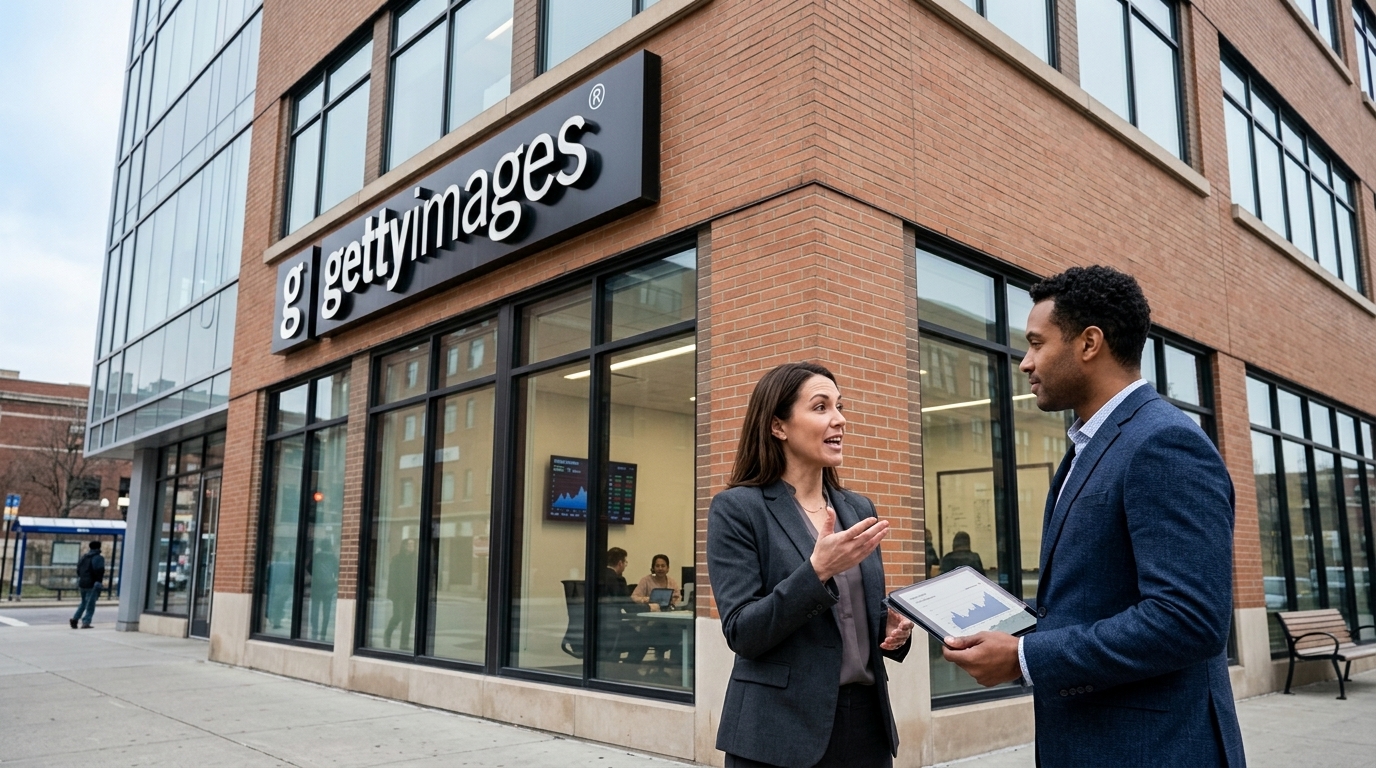
June 22, 2026, will be remembered on Wall Street as the day the market finally recognized the true value of intellectual property in the age of Artificial Intelligence. Getty Images, the global visual media giant, saw its stock skyrocket by an unprecedented 200%, leaving analysts stunned and confirming that content remains "king," provided it knows how to negotiate its position.
The catalyst for this explosive growth is none other than the announcement of a multi-faceted, multi-year partnership with OpenAI. The deal, rumored to be worth hundreds of millions of dollars, grants Sam Altman’s company access to Getty’s vast and historic library to train next-generation image and video generation models. This represents a dramatic 180-degree turn for a company that was previously at the forefront of legal battles against AI firms.
Dissecting an Impressive Rally
The stock market surge for Getty Images was not merely the result of speculation. It reflects a profound shift in the market narrative. For years, investors feared that Generative AI would make stock image banks obsolete. The logic was simple: why pay for a photo when you can generate one for free with a prompt? However, reality has proven to be far more nuanced.
OpenAI, facing a barrage of lawsuits from creators and publishers, realized that the sustainability of its models depends on the legality of the training data. Getty Images offers something that web scraping cannot guarantee: high quality, comprehensive metadata, and, most importantly, legal indemnity. The market responded with enthusiasm, viewing Getty not as a victim of technology, but as its essential supplier.
From Litigation to Strategic Alliance
To understand the significance of this deal, one must recall Getty Images' stance in 2023 and 2024. The company had filed landmark lawsuits against Stability AI, accusing it of intellectual property theft on an "industrial scale." Getty CEO Craig Peters stated at the time that protecting creators was non-negotiable.
So, what changed? Getty Images appears to have adopted the mantra: "If you can't beat them, make them pay you." Instead of being consumed by endless legal battles that could last a decade, it chose to create a licensing model that sets new industry standards. The collaboration with OpenAI isn't just about training models; it's also about integrating OpenAI’s tools into the Getty platform, allowing subscribers to modify existing photos with copyright safety.
The Value of 'Clean' Data and the Future of Creators
In the world of AI, data is the new oil, but "clean" data (ethically sourced data) is aviation fuel. Large enterprises are wary of using AI tools that could expose them to legal risks. The Getty Images seal provides that necessary guarantee.
- Access to over 477 million assets.
- Full indemnification for customers against IP claims.
- A revenue-sharing model with the original photographers and creators.
This last point is crucial. Getty promised that a portion of the revenue from the OpenAI deal would go into a compensation fund for photographers whose work was used to train the models. While skeptics wonder if these amounts will be enough to compensate for lost work, the move sets a significant moral and economic precedent.
Conclusion: A New Balance of Power
The rally in Getty Images' stock signals the end of the "Wild West" era in AI. Tech companies can no longer ignore content owners. As the demand for high-quality content grows to train even more sophisticated models (such as GPT-5 and Sora), the value of historical archives will continue to rise.
Getty Images has managed to turn an existential threat into a golden opportunity. It remains to be seen whether this rise will be sustained or if the market will soon realize that AI-generated content might eventually diminish the value of human photography, regardless of how "clean" the training data is.





