

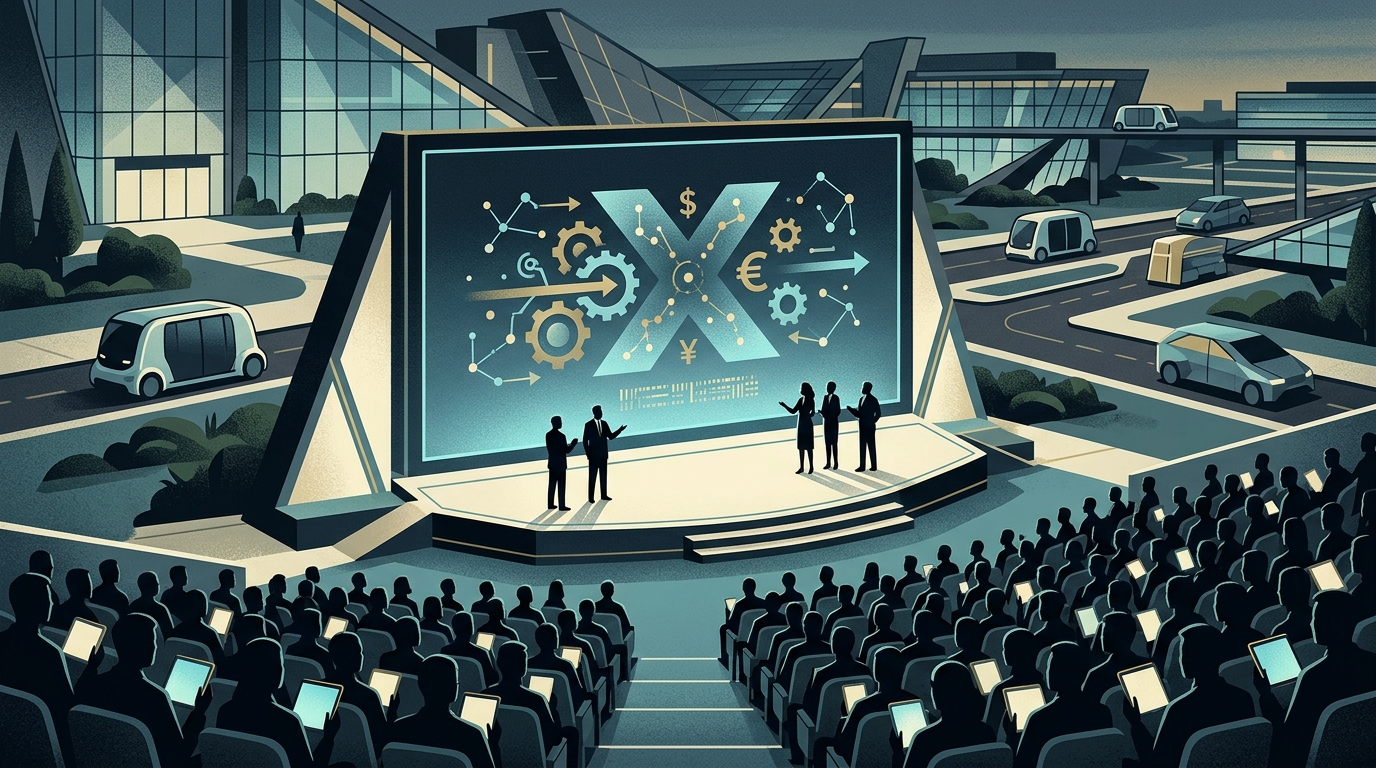
In July 2026, the digital economy is no longer a theoretical extension of the traditional market, but the epicenter of a fierce power struggle. At the heart of this storm lies "X Money," the realization of Elon Musk's vision to transform the X platform (formerly Twitter) from a social network into an "everything app." This transition is not merely about user convenience; it represents a direct challenge to the established banking system, central banks, and the dominance of the dollar as the global reserve currency.
The Philosophy Behind X Money
For Musk, money is essentially "information." According to his analysis, the current financial system is archaic, slow, and riddled with unnecessary intermediaries who extract value from every transaction. X Money aims to replace this infrastructure with a real-time system where payments, savings, and investments are integrated into daily communication. Imagine sending money to a content creator, paying your rent, or buying stocks with the same ease as sending a direct message.
"If done right, X will become half of the global financial system," Musk stated back in 2023, and in 2026, this statement no longer sounds like hyperbole, but a direct threat to Wall Street.
The strategy is based on the WeChat model in China but with a critical difference: global reach and the integration of advanced Artificial Intelligence. Grok, X's AI model, is not just a chatbot; it is the financial advisor of the future, analyzing user spending and suggesting optimized financial moves in real-time.
The Clash with Regulatory Authorities
The path to financial dominance is not without obstacles. The European Central Bank and the US Federal Reserve are watching with increasing concern. The primary issue is systemic risk. If a private company, under the control of a single individual, manages the capital of millions of citizens, what happens in the event of a collapse? Or, even worse, what happens to privacy?
- Money Transmitter Licenses: X has already secured licenses in most US states and several European countries, operating as a payment institution.
- Anti-Money Laundering (AML): Regulators demand strict KYC (Know Your Customer) protocols, which clash with Musk's desire for a "free" and potentially anonymous digital marketplace.
- Currency Sovereignty: There is a fear that X Money could introduce its own stablecoin, undermining central banks' control over monetary policy.
Geopolitical Implications and the Future of Money
X Money is not just a business venture; it is a geopolitical tool. In countries with unstable currencies or limited access to banking, Musk's platform offers a way out. However, this creates a new form of "digital colonialism," where an American tech company controls the financial flow of foreign nations. The battle for X Money is, in reality, the battle for who will control the "operating system" of the global economy in the coming decade. We are witnessing the deconstruction of the traditional banking sector as technology swallows one industry after another.
Conclusion
As we approach the end of 2026, the question is not whether X Money will succeed, but how much it will change the world in the process. The transformation of money into pure information is inevitable, but the concentration of this power in the hands of a tech giant remains the most controversial experiment of our time. The balance between innovation and security will determine whether X Money will be the liberator of financial transactions or their ultimate controller.





