

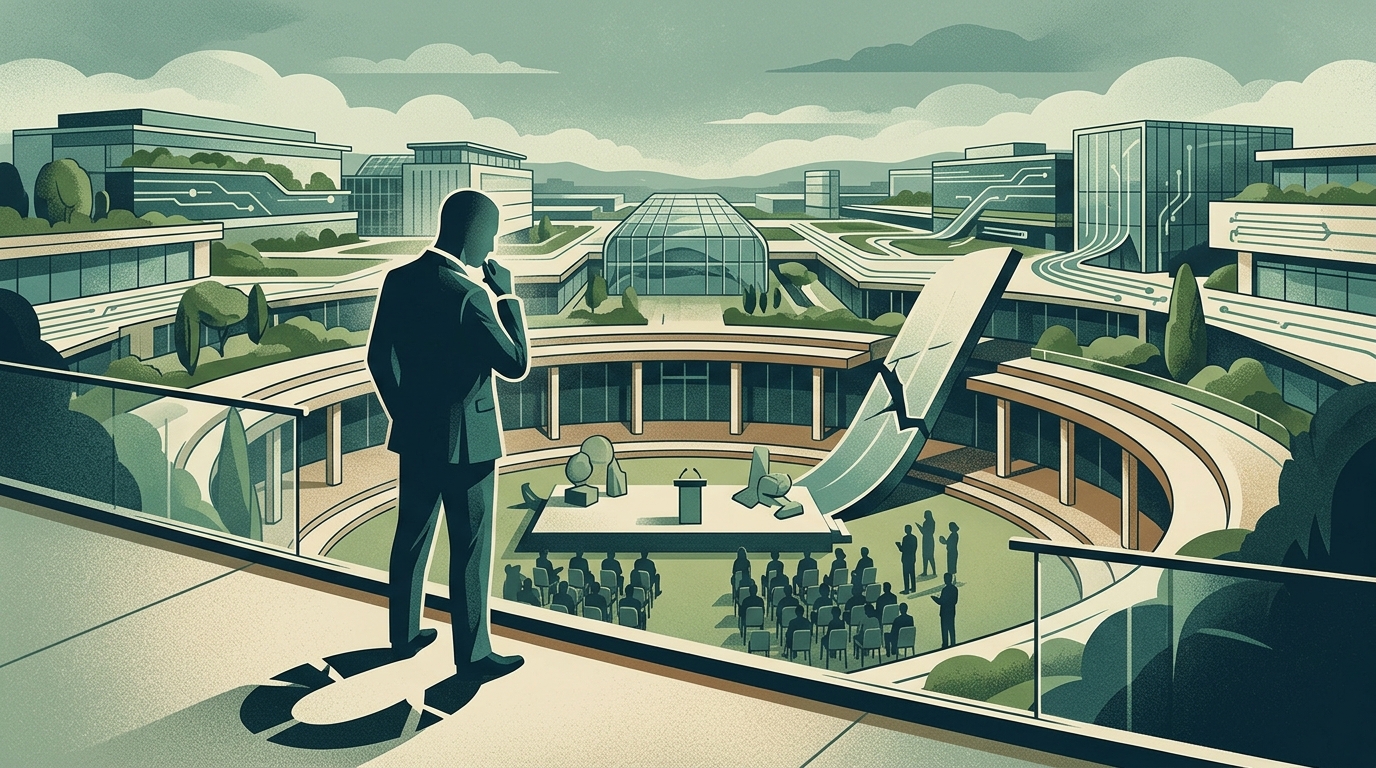
The courtroom has become the ultimate battlefield for the future of Artificial Intelligence, but for Elon Musk, the offensive against OpenAI appears to be backfiring. When the billionaire owner of Tesla and X (formerly Twitter) filed his lawsuit against the company he helped found, his narrative was clear: OpenAI betrayed its mission to develop Artificial General Intelligence (AGI) for the benefit of humanity, becoming a de facto subsidiary of Microsoft. However, the progression of the case reveals a series of strategic 'own goals' that undermine the credibility of his claims.
The Email Revelation and the Narrative Shift
The first and perhaps most resonant blow to Musk came from OpenAI itself, which published a series of past emails. In these, Musk does not appear as the selfless protector of the open-source model he claims to be today. On the contrary, the documents show that in 2018, he proposed merging OpenAI with Tesla, arguing that this was the only way to compete with Google. "Tesla is the only path that could even hope to hold a candle to Google," he wrote at the time.
This revelation dismantles the argument that OpenAI's transition to a capped-profit model was a unilateral "betrayal" by Sam Altman. It seems Musk did not disagree with the commercialization of the technology, but rather with who would control that commercialization. This contradiction is legally and communicatively devastating, as it presents the plaintiff not as a moral guardian, but as a sidelined shareholder who regretted his departure.
The Legal Void of the 'Founding Agreement'
The core of Musk's lawsuit rests on the existence of a "Founding Agreement" that supposedly bound OpenAI to remain non-profit and keep its code open. The problem? No such official, signed document seems to exist. OpenAI's legal team was quick to point out that the lawsuit relies on fragmentary conversations and emails, which do not constitute a binding contract under California law.
Furthermore, the charge of "breach of fiduciary duty" hits a wall given that Musk voluntarily resigned from the board in 2018. His attempt to impose his will on an organization he has been disconnected from for six years is seen by many legal analysts as a desperate move. The absence of a written contract makes the case extremely vulnerable to a motion to dismiss, which would be a humiliating defeat for Musk.
xAI vs. OpenAI: The Conflict of Interest
Perhaps the most ironic element of the case is Musk's own founding of xAI. While he accuses OpenAI of a lack of transparency and profit-seeking practices, xAI operates as a purely for-profit entity, seeking billions in funding and developing closed models (like Grok).
- xAI directly competes with OpenAI for talent and resources.
- Musk uses data from the X platform to train his own models, a practice he often criticizes in others.
- His rhetoric about "open access" seems to be applied selectively, only when it serves to weaken his rivals.
This conflict of interest gives OpenAI the perfect counter-argument: that the lawsuit is not about ethics, but about unfair competition. If Musk succeeds in forcing OpenAI to publish its code, xAI would be the first to benefit, effectively "stealing" a competitor's intellectual property under the guise of public benefit.
Broader Implications for AI Governance
Beyond the personal drama between Musk and Altman, this trial highlights the massive gap in the governance of AI organizations. OpenAI's mutation from a research lab to a tech titan valued at over $80 billion raises questions about whether non-profit structures can withstand the weight of developing technologies that require billions in capital.
"The tragedy here isn't the legal dispute, but the fact that the vision for a democratic AI is being sacrificed at the altar of billionaire ego and competition," industry analysts note.
In conclusion, Elon Musk appears trapped in a fight he started but cannot control. His "own goals," from the revealing emails to the questionable legal basis of the suit, show a man struggling to remain relevant in a revolution he helped spark but which is now passing him by. The court's decision will determine not only the fate of OpenAI but also whether "ethics" in technology can be enforced through the courts.





