

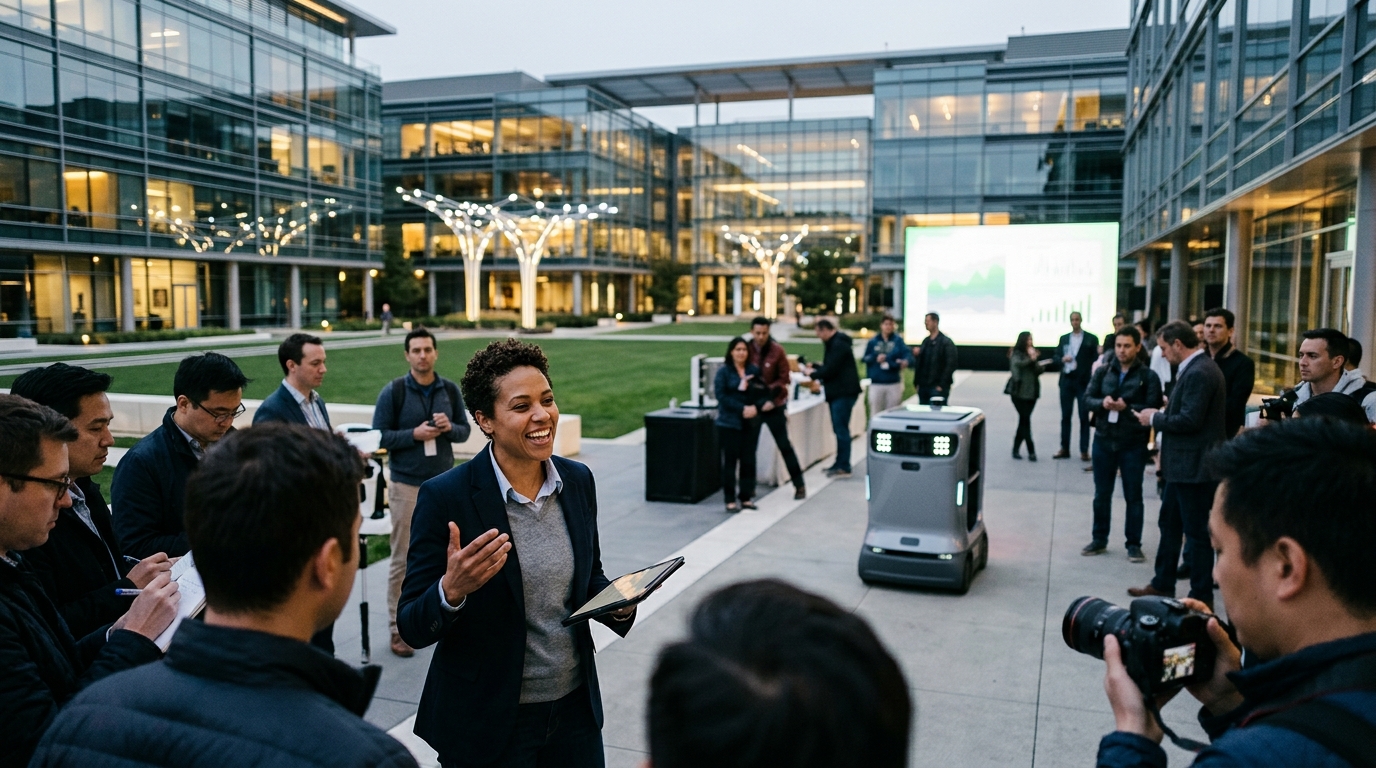
In the shifting landscape of the 2026 digital economy, DoorDash is no longer viewed merely as a food delivery app. The recent surge of its stock on Wall Street represents the culmination of a strategic shift that places Artificial Intelligence (AI) at the very core of its operations. The company has successfully convinced investors that its technology can solve the perennial problem of profitability in the last-mile delivery sector, turning chaotic urban movements into an orchestrated choreography of data.
The Algorithmic Engine of Efficiency
The primary driving force behind DoorDash's financial health is the use of machine learning to optimize the "three-sided marketplace" it manages: consumers, merchants, and Dashers. The company's algorithms now process billions of data points in real-time, predicting not just the preparation time of a meal at a specific restaurant, but also traffic conditions with second-by-second precision.
As market analysts point out, DoorDash's ability to reduce "dead time" for couriers has led to a significant reduction in operating costs. "AI is not just a marketing tool for us; it is our operating system," a company executive recently stated. The use of predictive models allows the platform to batch orders in such a way that a courier serves multiple customers with minimal deviation from their route, thereby increasing revenue per hour worked.
DashAI: Revolutionizing the User Interface
Beyond logistics, DoorDash has invested heavily in Generative AI to enhance the customer experience. The introduction of DashAI, a sophisticated shopping assistant, allows users to interact with the app using natural language. Instead of simple keyword searches, users can ask for "a healthy dinner for three with low fat that can be delivered in less than 30 minutes."
- Personalized recommendations based on order history and taste preferences.
- Automated customer service that resolves issues without human intervention in 80% of cases.
- Voice AI for restaurants, which handles phone orders, reducing missed calls during peak hours.
This technological superiority has created a "moat" around the company, making it difficult for competitors to keep up with its pace of innovation. Consumer confidence appears to be strengthening, as the accuracy of estimated delivery times has reached historic highs.
Financial Analysis and Expansion into New Markets
The stock surge also reflects DoorDash's successful expansion beyond ready-to-eat food. The company is using the same AI infrastructure to dominate the delivery of groceries, alcohol, and retail goods. This diversification reduces reliance on the seasonal fluctuations of the restaurant industry and increases the frequency of app usage by consumers.
"DoorDash is becoming an infrastructure layer for local commerce. Anyone who wants to move something within a city will eventually have to use their algorithms," a leading investment bank report states.
However, the rise does not come without challenges. The increasing reliance on algorithms has sparked debates regarding workers' rights in the gig economy. Critics argue that "management by algorithm" can lead to grueling work paces, despite the increase in overall efficiency. The company is now called upon to balance shareholder satisfaction with maintaining a sustainable work environment for its thousands of Dashers.
The Future: Autonomous Delivery and Global Dominance
Looking ahead, DoorDash is investing in partnerships for autonomous vehicles and drones, which will be integrated into the existing AI network. The strategy is clear: the gradual replacement of the most expensive parts of the delivery chain with automated solutions. If the company manages to maintain its current momentum, its position as a leading force in the technological management of cities seems assured, turning traditional delivery into one of the most profitable applications of AI in the real economy.





