

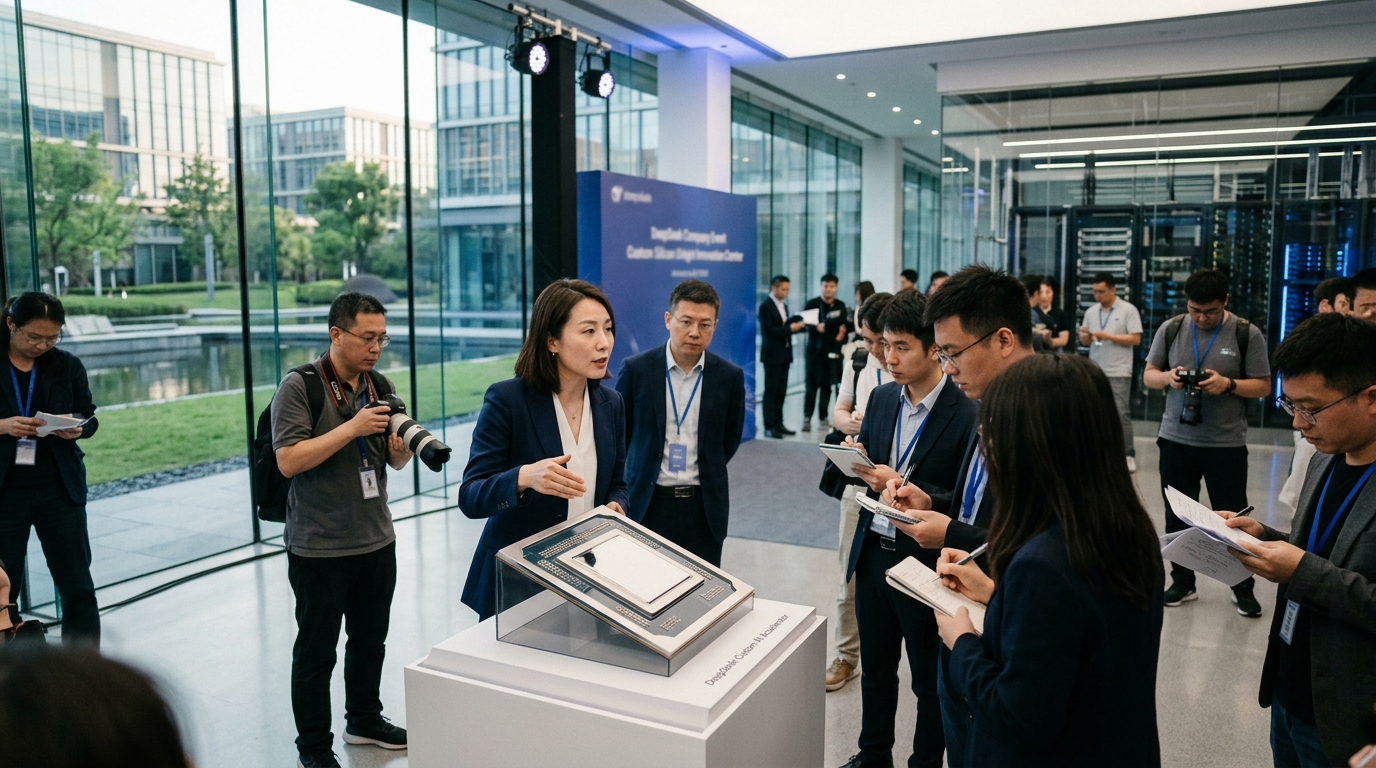
In the high-stakes arena of global technology competition, DeepSeek—the Chinese AI firm that recently stunned Silicon Valley with its hyper-efficient language models—is making a move that could fundamentally redraw the AI landscape. Reports indicate that the company is developing its own proprietary AI inference chip, aiming to sever ties with Nvidia’s restricted hardware and bypass domestic bottlenecks associated with Huawei. This is not merely a corporate pivot; it is a calculated act of technological self-preservation in an era increasingly defined by a "silicon iron curtain."
The Drive for Bespoke Silicon
DeepSeek rose to prominence through its innovative Mixture-of-Experts (MoE) architecture, which allows its models to achieve state-of-the-art performance using significantly less compute than Western peers like OpenAI or Google. However, relying on general-purpose GPUs (Graphics Processing Units) from Nvidia, which are subject to stringent U.S. export controls, has become a strategic liability. Even domestic alternatives, such as Huawei’s Ascend series, often struggle with supply chain consistency and lack the granular optimization required for DeepSeek’s unique neural structures.
By designing its own silicon, DeepSeek can achieve a level of vertical integration previously reserved for giants like Apple or Google. An inference chip specifically engineered for MoE architectures can eliminate the overhead associated with general-purpose hardware. This means faster response times and drastically lower operational costs, potentially allowing DeepSeek to offer AI services at prices that competitors using off-the-shelf hardware simply cannot match.
Geopolitical Chess and the Semiconductor War
DeepSeek’s initiative arrives as China intensifies its pursuit of semiconductor self-sufficiency. Faced with U.S. sanctions that limit access to advanced lithography and high-end chips, Chinese firms are being forced to innovate through architectural efficiency rather than raw transistor count. DeepSeek is at the vanguard of this movement, proving that smart software design can compensate for hardware limitations.
The decision to move away from even Huawei is particularly telling. While Huawei is often viewed as China’s national champion in the chip sector, the requirements of a pure-play AI research lab like DeepSeek are highly specialized. DeepSeek’s gamble suggests a belief that to remain at the absolute frontier of Large Language Models (LLMs), one cannot rely on third-party hardware designed for a broad market. This internal competition within China’s tech ecosystem could serve as a powerful catalyst, accelerating domestic innovation to counter external pressures.
Market Implications: A Warning to Nvidia
For Nvidia, DeepSeek’s move is a harbinger of a more fragmented future. While Nvidia currently enjoys unprecedented demand in Western markets, the erosion of its dominance in China—a massive market for AI deployment—represents a significant long-term challenge. If DeepSeek successfully demonstrates that a software-first company can build superior, specialized hardware, it may inspire other tech titans like ByteDance or Alibaba to double down on their own silicon projects.
The primary obstacle for DeepSeek, however, remains fabrication. Designing a world-class chip is a monumental task, but securing a foundry capable of manufacturing it at scale—without triggering further sanctions—is an even greater hurdle. Whether they partner with SMIC or find alternative manufacturing routes, the success of this chip will depend on navigating the complex web of international trade restrictions.
- Custom silicon reduces vulnerability to shifting U.S. export policies.
- Optimization for MoE architectures provides a distinct competitive edge in inference costs.
- The move signals a shift toward vertical integration in the Chinese AI sector.
- Manufacturing remain the critical bottleneck for DeepSeek’s hardware ambitions.
Ultimately, DeepSeek is not just building a processor; it is building a fortress. In a world where compute is the new oil, controlling the means of production for that compute is the only way to ensure long-term survival and strategic autonomy.





