

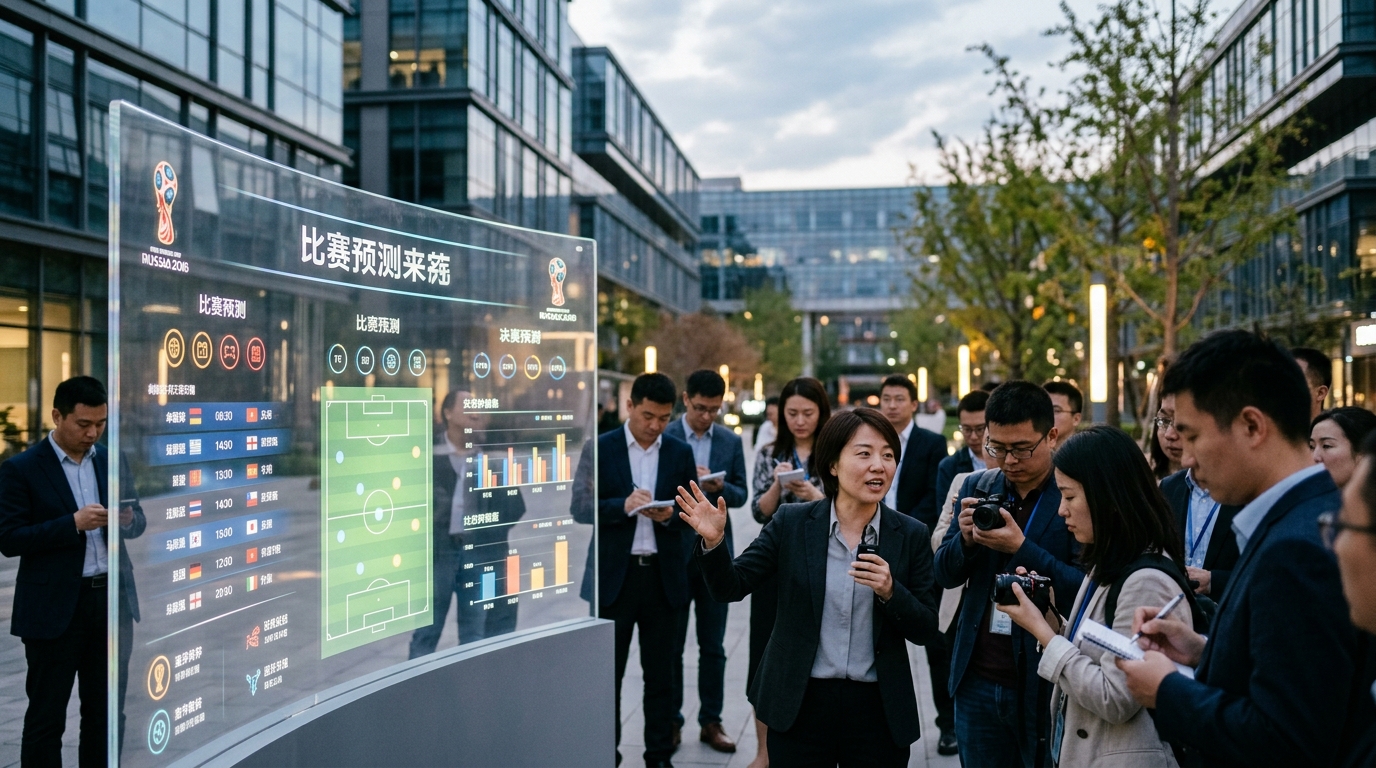
As the 2026 World Cup reaches its fever pitch across North American stadiums, a parallel and equally fierce competition is unfolding thousands of miles away in the data centers of Beijing, Shanghai, and Shenzhen. For Chinese AI giants, the World Cup is not merely a sporting event; it is the ultimate stress test for their Large Language Models (LLMs). From Alibaba and Tencent to Baidu and ByteDance, the race to provide the most accurate match predictions has transformed into a high-stakes display of technological prowess and a massive user acquisition engine.
The 'Mass Entertainment' Strategy and RAG
Using AI for sports predictions is not a novel concept, but 2026 marks a qualitative shift. Chinese firms have deeply integrated Retrieval-Augmented Generation (RAG) techniques, allowing their models to "read" and analyze data in real-time. It is no longer just about historical statistical analysis; it's about live information processing—ranging from the pitch conditions at the Azteca Stadium to the latest social media posts by star players and shifting betting market odds.
Baidu, with its Ernie 4.5 model, has launched a dedicated platform where users can interact with a "digital coach." This assistant doesn't just predict a winner; it analyzes tactical formations, potential substitutions, and the psychological state of the squads. The strategy is clear: transforming a complex, abstract technology into a digestible, entertaining product that can be consumed by the general public during halftime intervals.
The Battle of the Dragons: Alibaba vs. Tencent
Alibaba Cloud is utilizing the World Cup to showcase its Tongyi Qianwen model, focusing on the ability to process massive amounts of sensor data from within the stadiums. Through partnerships with sports data providers, Alibaba’s AI claims to predict the probability of a goal during any given attack with second-by-second precision. This is more than a fan feature; it serves as an indirect advertisement to global enterprises regarding the speed and reliability of Alibaba’s cloud infrastructure.
On the other side, Tencent is leveraging the ubiquitous WeChat ecosystem. By embedding the Hunyuan model directly into the daily chats of billions, Tencent has created a social prediction game. Here, the AI acts as a "referee" for friendly wagers between users, offering deep-dive analyses based on decades of historical data. Meanwhile, ByteDance, TikTok’s parent company, is taking a different route by using its Doubao AI to automatically generate video analyses that predict match outcomes, targeting Gen Z users who prefer visual storytelling over text-heavy reports.
Beyond the Pitch: Risks and Ethics
Despite the excitement, the use of AI in World Cup predictions raises significant concerns. The primary risk is AI hallucinations. In a field as inherently unpredictable as football, over-reliance on AI can lead to substantial financial losses for users who use these insights for gambling. While companies prominently feature disclaimers, the line between entertainment and the encouragement of gambling remains dangerously thin.
Furthermore, there is the issue of data bias. Many Chinese models tend to favor teams with a large commercial footprint in Asia, perhaps reflecting the preferences of the datasets they were trained on rather than pure sporting merit. The Chinese government is closely monitoring these developments; the AI must not only be accurate but must also align with "social harmony" values, avoiding the promotion of erratic gambling behavior.
"Football is the last bastion of human unpredictability. If AI can conquer this, it can convince the world it can manage anything else," says a Shanghai-based tech analyst.
Conclusion: The Future of AI in Daily Life
The World Cup prediction battle is a microcosm of the global race for AI supremacy. For Chinese firms, success isn't just about picking the winner of the final. It's measured by the millions of user data points collected, the refinement of algorithms under real-world pressure, and the demonstration that Chinese AI is as capable—if not more so—than its Western counterparts. In this game, the score on the pitch is merely the catalyst for winning the broader war of technological influence.





