In the high-stakes world of technology, survival is no longer just about innovation; it is about a company's ability to finance its insatiable hunger for computational power. ByteDance, the Chinese behemoth behind TikTok, is reportedly in talks to secure a $20 billion loan. This move underscores the staggering cost of transitioning from a social media giant into a dominant force in Artificial Intelligence (AI).
Strategic Liquidity in an Era of Uncertainty
ByteDance's decision to pursue such a massive loan comes at a critical juncture. Despite geopolitical pressures and the looming threat of a TikTok ban in the United States, the company remains a formidable profit engine. However, developing Large Language Models (LLMs) and constructing state-of-the-art data centers require capital that exceeds even the most optimistic cash flow projections. This loan, expected to be one of the largest in Asia for a private entity, will primarily be used to refinance existing debt and bolster working capital, thereby freeing up internal resources for AI development.
ByteDance is no longer merely competing with Meta or Google for advertising dollars. It is now in a direct confrontation with OpenAI, Microsoft, and domestic Chinese rivals like Alibaba and Baidu. Its flagship AI model, Doubao, has already gained significant traction in China, surpassing many competitors in active users. To maintain this lead, the company must invest billions in hardware—specifically high-end GPUs—which are becoming increasingly scarce due to US export restrictions.
The Battle for Compute and Hardware
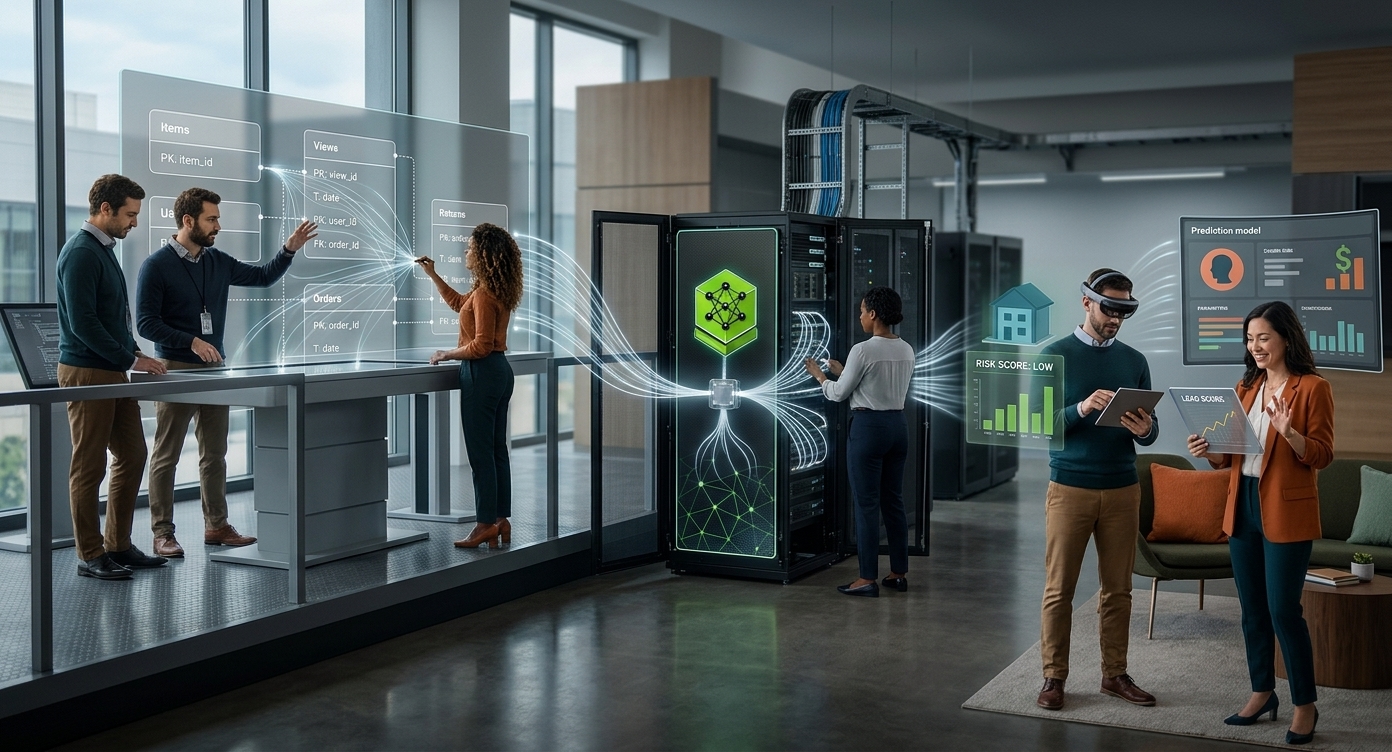
The primary hurdle for ByteDance, as for any Chinese tech firm today, is access to Nvidia’s cutting-edge semiconductors. As US restrictions tighten around the export of H100 and H200 chips, ByteDance is forced to explore alternatives, whether through developing its own proprietary silicon or sourcing from domestic providers like Huawei. This pivot requires even deeper investments in Research and Development (R&D).
- GPU Acquisitions: The necessity for thousands of chips to train next-generation models.
- Global Data Centers: The need for infrastructure outside China to support TikTok’s global user base.
- Price Wars: ByteDance has initiated a price war in AI API services in China, offering Doubao at extremely low rates to attract developers.
This price war, while effective for capturing market share, consumes capital at an alarming rate. The company’s strategy appears clear: dominate the market now, worry about profitability later. It is a high-stakes gamble that requires the backing of international banks, which seem willing to lend despite the volatile political climate surrounding the company.
Impact on TikTok and the Future of Content
Investment in AI is not just about chatbots. For ByteDance, AI is the "brain" behind the recommendation algorithm that made TikTok a global phenomenon. The next phase involves integrating Generative AI into the content creation process. Tools like Jimeng, a competitor to OpenAI’s Sora, allow users to generate video from text, fundamentally altering the creator economy.
"ByteDance is not just building an app; it is building an intelligence infrastructure that will define how we consume information for the next decade," market analysts suggest.
However, relying on debt during a period of relatively high interest rates carries inherent risks. Should US regulators proceed with a definitive ban or forced sale of TikTok, ByteDance's ability to service this debt could be called into question. Nevertheless, the company’s leadership seems undeterred, viewing the prospect of falling behind in the AI race as a far greater existential threat than carrying a heavy debt load.
Conclusion: A Giant in Transition
The pursuit of a $20 billion loan is a massive statement of power. It demonstrates that ByteDance possesses the financial credibility to attract enormous capital despite significant headwinds. At the same time, it reveals the reality of the modern tech industry: AI is a game for the few, for those who have the courage and the means to invest sums that resemble national budgets. Whether this investment will yield the desired returns or lead to a debt bubble remains to be seen, but for now, ByteDance is moving at full throttle.