

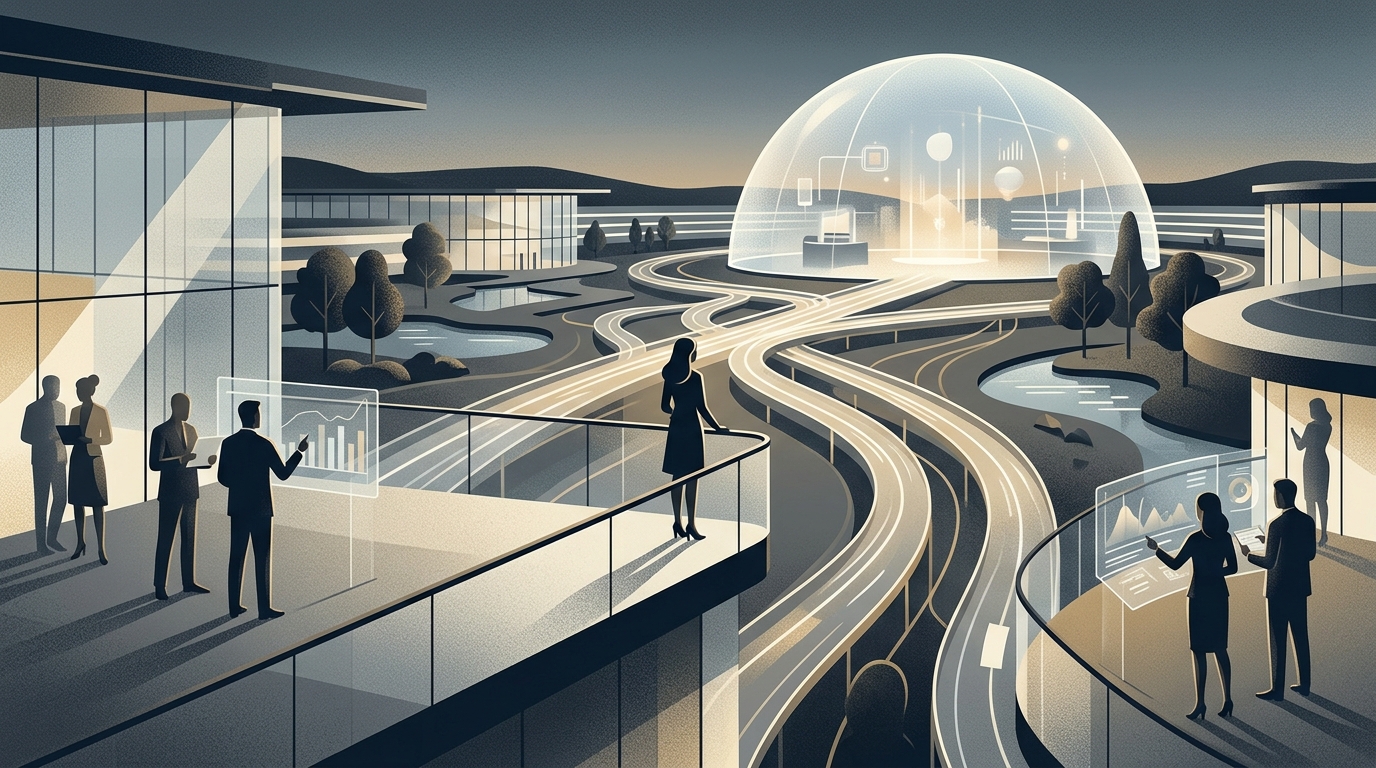
In the feverish landscape of Silicon Valley, where "Artificial Intelligence" has become the mandatory prefix for every corporate presentation, Apple is once again choosing the path of measured restraint. The recent stance taken by the leadership in Cupertino, especially as the company prepares for its eventual succession, clarifies a fundamental doctrine: AI tools must serve the product, not the reverse. At a time when Microsoft and Google are pivoting their entire ecosystems to become "AI-first" entities, Apple maintains that technology is merely a medium for enhancing the human experience.
The Philosophy of 'Useful' Intelligence
Apple’s strategy, crystallized with the announcement of Apple Intelligence, is not about creating an omnipotent chatbot capable of answering metaphysical queries. Instead, it focuses on what the company calls "personal intelligence." This is an approach where AI is quietly woven into daily operations—from drafting an email to organizing photos—without the user feeling like they are interacting with a foreign body.
- Focus on on-device processing for maximum speed and security.
- Privacy protection through Private Cloud Compute architecture.
- Deep integration at the OS level, rather than a standalone app experience.
This approach reflects Apple's broader culture: technology should be invisible. While competitors boast about the parameter counts of their Large Language Models (LLMs), Apple talks about how AI will help you not miss a meeting or how it will enhance a blurry photo. It is a return to Steve Jobs’ roots, where design and functionality take precedence over technical specifications.
The Next Era and Leadership’s Hard Line
As speculation regarding Tim Cook’s successor intensifies—with names like Jeff Williams (COO) and John Ternus (SVP Hardware Engineering) frequently mentioned—the line being drawn is unmistakable. The next CEO of Apple will not be judged by whether they caught up to OpenAI, but by whether they managed to maintain the integrity of the Apple ecosystem in a world saturated with synthetic content.
"AI at Apple is not the product. The iPhone, the Mac, and the iPad are the products. AI is simply the next major step in the evolution of their software," industry analysts note.
Apple appears to recognize that AI has a "trust" problem. Users are concerned about their data and the accuracy of information. By setting strict boundaries—specifically that AI serves the product—Apple reassures its customers that they are not becoming guinea pigs for unfinished generative models.
Economic Implications and the Market
For investors, this "conservative" stance is a double-edged sword. On one hand, there is the fear that Apple missed the first wave of the revolution. On the other, history has shown that Apple is rarely the first to market, but almost always the one that perfects a technology for mass adoption. The "Tools Serve Products" strategy ensures the company won't waste resources on expensive infrastructure wars (like building massive general-purpose data centers) but will instead invest specifically where AI adds direct value to hardware sales.
Ultimately, Apple is not trying to build a god in the machine. It is trying to build a better machine. In a world that often loses its sense of proportion with new technologies, this grounding in the user’s reality may prove to be the most revolutionary act of the decade.





