

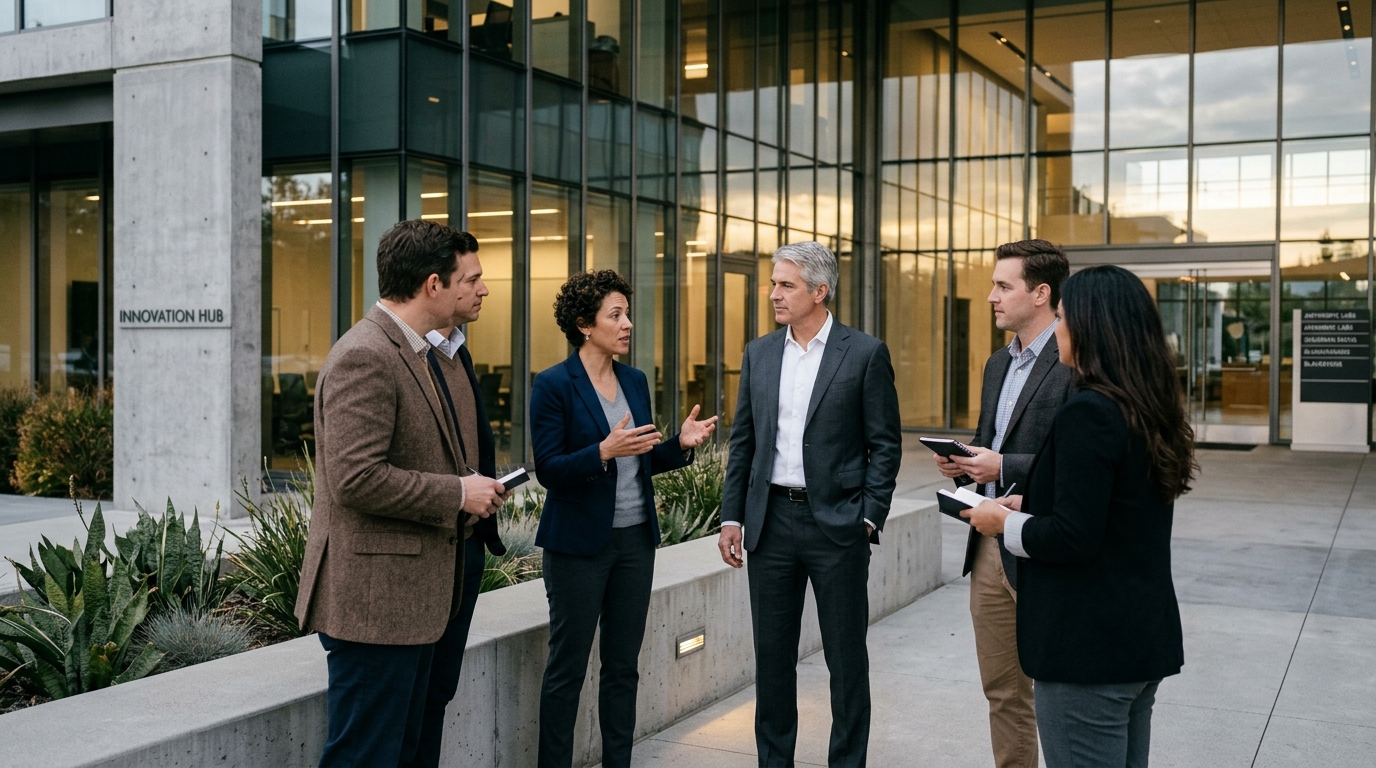
In a move that signals the definitive convergence between Silicon Valley’s technological vanguard and Wall Street’s financial might, Anthropic has announced an unprecedented partnership with titans such as Goldman Sachs and Blackstone. The $1.5 billion venture aims to aggressively introduce artificial intelligence into the vast portfolio of companies controlled by private equity (PE) firms. This is a strategic maneuver that transcends mere technology; it is a fundamental redesign of operational efficiency within the global corporate sector.
Anthropic’s Strategy: From the Lab to the Real Economy
Anthropic, the company behind the Claude model, has long positioned itself as the "ethical" and "safe" alternative to OpenAI. However, this new partnership demonstrates that the company also possesses sharp pragmatic ambitions. The choice of Goldman Sachs and Blackstone is no coincidence. These organizations do not just possess capital; they hold the keys to thousands of mid-sized and large enterprises that form the backbone of the global economy.
The venture will focus on developing specialized AI solutions to help PE portfolio companies optimize supply chains, automate customer service, and analyze data at speeds previously thought impossible. For Anthropic, this represents a direct pipeline for its technology into real-world applications, moving away from experimental chatbots and closer to industrial-scale processes.
Private Equity and AI: The Perfect Marriage for Value Creation
Private equity firms are renowned for their ability to acquire businesses, restructure them, and sell them for a profit. Artificial intelligence now offers a new, potent tool in this "value creation" process. With this $1.5 billion investment, Blackstone and its partners are betting that AI can drastically reduce operating expenses and boost profit margins in sectors ranging from manufacturing to healthcare.
- Automated Decision-Making: Utilizing Claude for real-time financial risk analysis.
- Operational Efficiency: Optimizing production schedules and logistics through predictive modeling.
- Personalization at Scale: Implementing AI in consumer engagement for thousands of diverse brands simultaneously.
This approach, however, raises serious questions about the future of work. As PE firms push for greater profitability through AI, the risk of massive job cuts in administrative and support functions becomes increasingly palpable.
Competing with OpenAI and the Battle for Enterprise Dominance
This move is a direct challenge to OpenAI and Microsoft, which currently dominate the cloud and enterprise AI markets. Anthropic appears to be choosing a different path: instead of trying to become the office operating system, it seeks to become the brain behind investment decisions and industrial production.
"This partnership is not just about providing a tool; it's about embedding intelligence into the very fabric of how businesses are managed today," says a Wall Street analyst.
Goldman Sachs' involvement adds a layer of financial credibility that Anthropic needed to convince more conservative investors. Simultaneously, Blackstone, as the world’s largest owner of commercial real estate and numerous other assets, provides a massive testing ground for Anthropic’s technology.
Ethical Challenges and the Future of AI Capitalism
As AI enters the inner sanctum of private equity, transparency becomes the primary concern. How will we ensure that decisions made by algorithms regarding the fate of thousands of employees are fair? Anthropic promises "Constitutional AI," which follows specific ethical principles, but in the Wall Street arena, these principles often clash with the necessity for quarterly earnings.
In conclusion, the Anthropic-Goldman-Blackstone alliance is the prologue to a new era. Artificial intelligence is ceasing to be an "interesting gadget" and is transforming into the central pillar of modern capitalism. The implications of this shift will be felt not only on stock exchanges but in the daily lives of millions of people working within the target companies of this new $1.5 billion giant.





