

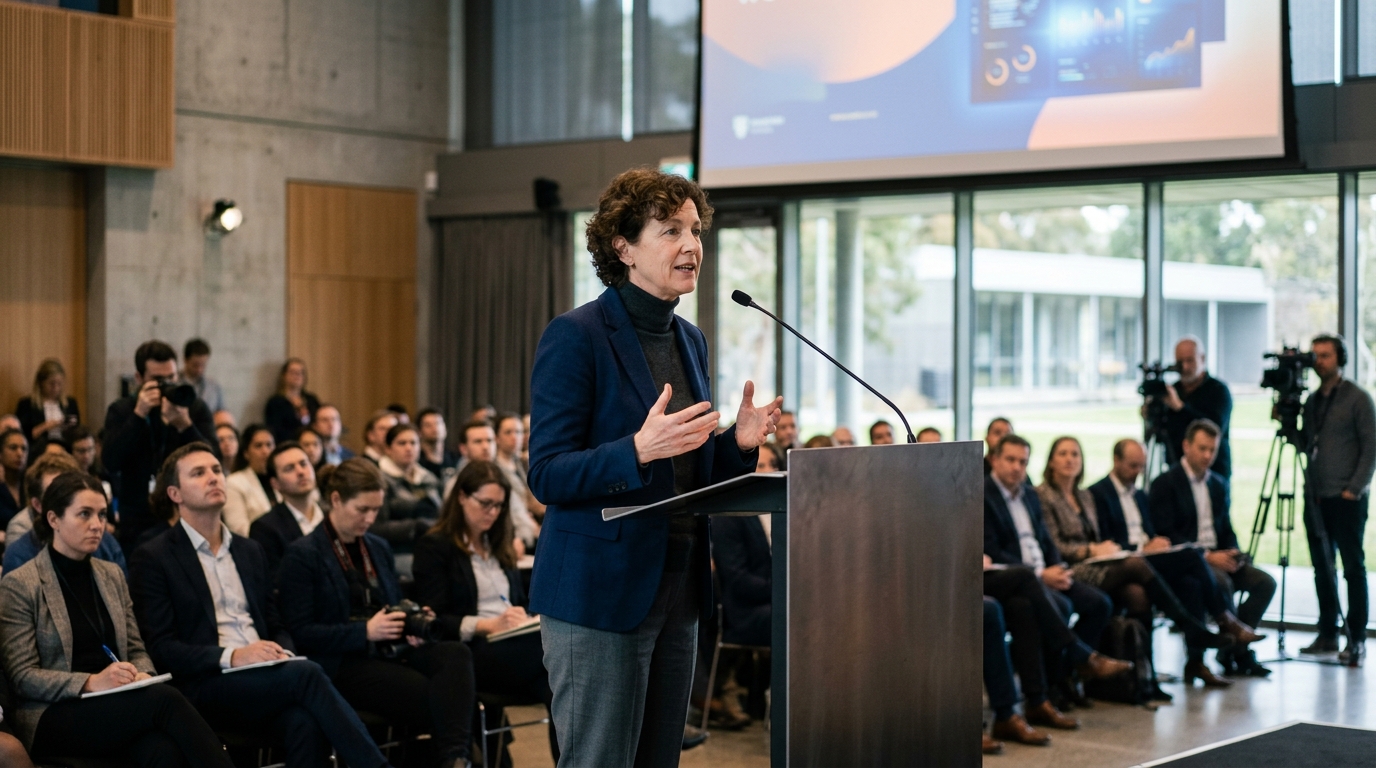
In the breakneck speed of the artificial intelligence landscape, June 30, 2026, will be remembered as the moment agentic intelligence became a commodity for the masses. Anthropic, the safety-first AI lab, has officially launched Claude Sonnet 5. This new iteration isn't merely an incremental upgrade in linguistic prowess; it represents a fundamental shift in how machines interact with the digital environment, prioritizing the execution of complex tasks with minimal human oversight.
Beyond Chat: Understanding the Agentic Shift
For the past few years, our interaction with Large Language Models (LLMs) has been largely transactional: a user provides a prompt, and the model generates a response. With Claude Sonnet 5, Anthropic is introducing a refined version of "AI Agents." These are systems capable of planning, utilizing external tools, navigating software interfaces, and self-correcting their errors in real-time. Sonnet 5 has been specifically optimized for the "Computer Use" capability, allowing it to interact with standard operating systems much like a human would—moving cursors, typing, and managing workflows across multiple applications.
The defining characteristic of Sonnet 5 is its unprecedented balance between cognitive depth and operational cost. While the high-end Opus model remains the choice for avant-garde scientific research, Sonnet 5 delivers approximately 90% of that capability at a fraction of the price. This economic breakthrough allows enterprises to deploy hundreds of autonomous agents for customer success, software engineering, or data synthesis without ballooning their operational expenditures.
Strategic Positioning in a Crowded Market
Anthropic’s launch is a direct volley at its primary rivals, OpenAI and Google. The "cheaper and smarter" strategy targets the developer ecosystem, where the cost of inference often dictates the viability of a product. By slashing API pricing for Sonnet 5, Anthropic makes it financially feasible to run thousands of internal reasoning steps per second—the biological equivalent of a constant internal monologue—which is the backbone of truly autonomous agents.
"The era where AI was simply a mirror of our knowledge is ending. With Sonnet 5, AI becomes our hands in the digital world," an Anthropic spokesperson noted during the press briefing.
Market analysts observe that Anthropic is leveraging its "Constitutional AI" framework to gain an edge in the enterprise sector. Unlike competing models that might exhibit erratic behavior when granted autonomy, Sonnet 5 operates under a strict set of ethical and safety guidelines designed to mitigate hallucinations and prevent the misuse of system-level permissions.
The Socio-Economic Impact: Productivity vs. Displacement
The arrival of affordable, highly capable AI agents inevitably raises questions about the future of the workforce. If a Claude Sonnet 5 agent can manage calendars, curate research, update CRM databases, and write boilerplate code for less than a dollar an hour, traditional administrative and junior-level technical roles will face immense pressure.
- Workflow Autonomy: Organizations can now automate entire business processes, from lead generation to final billing, with agents acting as the connective tissue.
- Software Democratization: Non-technical users can now "build" complex software architectures by simply describing the desired outcome to an agentic supervisor.
- Human-in-the-Loop Security: Anthropic has introduced advanced monitoring dashboards that allow human supervisors to audit an agent’s reasoning chain before any critical action is finalized.
In conclusion, Claude Sonnet 5 is more than just a technical milestone; it is the herald of a new epoch where AI transitions from a tool we use to a partner we delegate to. The challenge for society and global industry will be to integrate this newfound agency responsibly, ensuring that the drive for economic efficiency does not come at the expense of human agency and social stability.





